
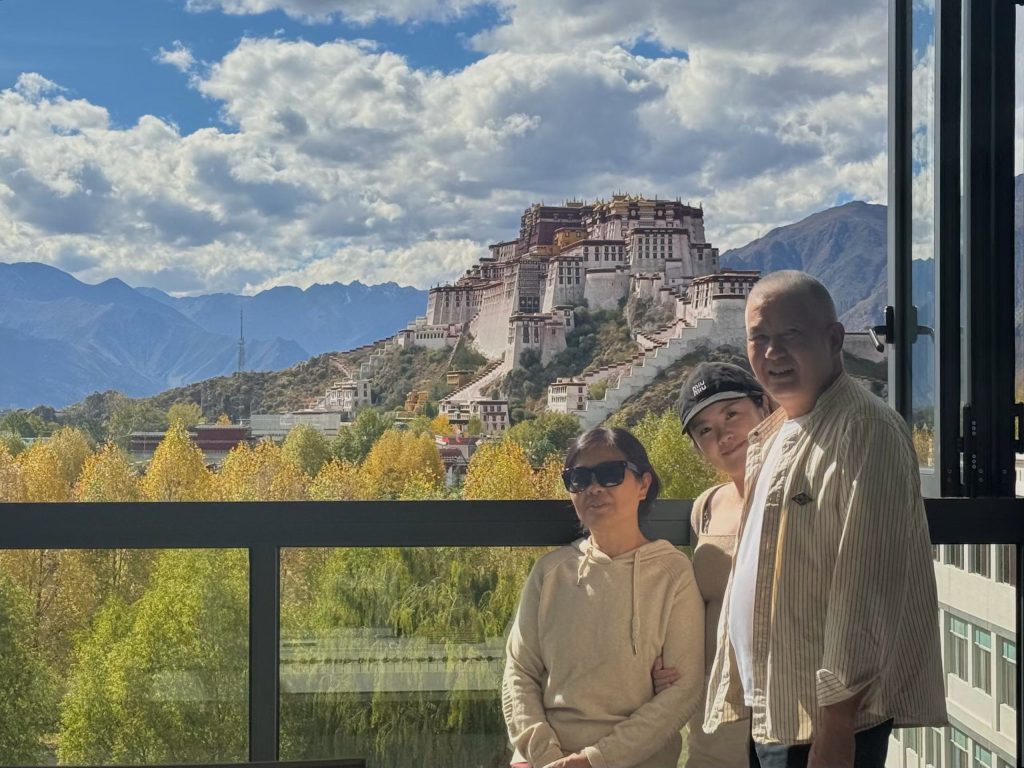
The first time I saw the Potala Palace high up above the city of Lhasa, I literally stopped in my tracks. The palace had been on my travel bucket list for years and after flipping through countless photos of it in books and online, I expected to feel some sort of anticipation as we drove up to its gates. But I was unprepared for how enormous and otherworldly it actually was. Perched atop Red Hill, the Potala Palace loomed over Lhasa like a magnificent mirage of white and red stone glinting golden in the Tibetan sun.
In this post, I’ll share everything I learned about visiting the Potala Palace personally. From the palace’s history and architecture to tips for buying tickets, the best time of year to visit, and the off-limits areas you’ll need to know about.
🏨 Planning Your Lhasa trip? Here Are Three Great Hotel Picks for Every Budget
– Budget: Shangbala Palace Hotel Lhasa
– Mid-Range: House of Shambhala
– Luxury: The St. Regis Lhasa Resort
👉 Click the links to view prices and book your stay now — the earlier you book the better the prices you’ll get!
History of Potala Palace
The Potala Palace is the epicenter of Tibetan culture. During my visit, I learned that the very first building on the site was constructed in the 7th century as a fortress and wedding gift for Princess Wencheng of the Tang Dynasty when she married Tibetan King Songtsen Gampo. The original Potala Palace on Red Hill would later grow to become the sprawling complex we see today.
The current structure was constructed in the 17th century by the Fifth Dalai Lama who converted it into a spiritual and administrative center. The palace has been home to successive generations of Dalai Lamas, a Tibetan Buddhist government, and a place of political power ever since.
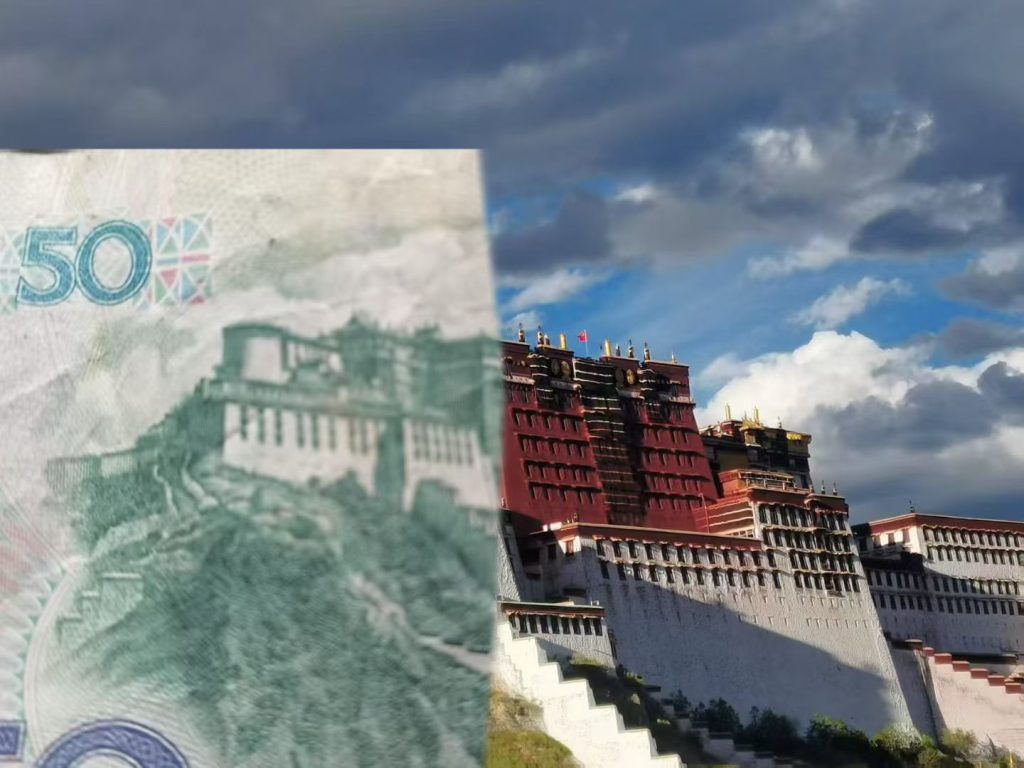
The Potala Palace is divided into two sections:
- The White Palace (Potrang Karpo) – where the Dalai Lama resided and ruled. Administrative offices and living quarters were also found here.
- The Red Palace (Potrang Marpo) – for religious study and contemplation. It is filled with shrine rooms, murals, and the tomb stupas of past Dalai Lamas.
It was fascinating to walk through each stone corridor and up steep staircases lined with ancient murals, religious relics, and golden stupas.
Visiting Potala Palace
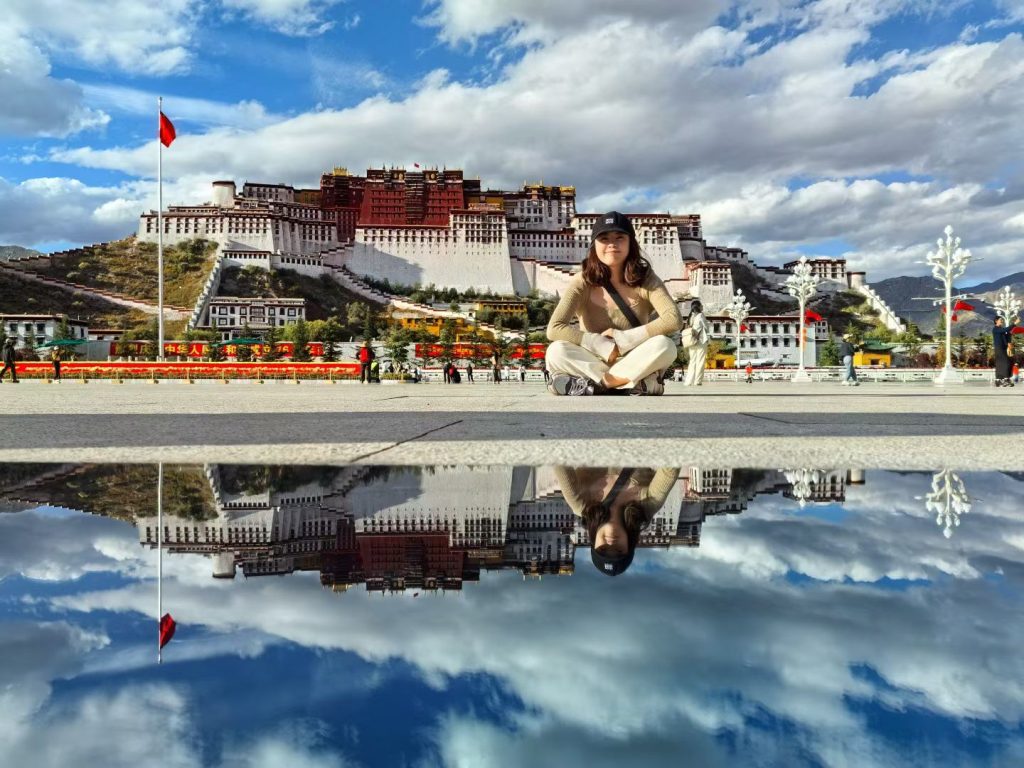
I purchased my Potala Palace ticket through my tour company the day before my scheduled visit (required for peak season). I was told I could not buy a ticket the day of due to the quota (only about 2300 visitors allowed inside per day).
I arrived in the morning around 9 a.m. when the sun was already bright but temperatures were still cool. The palace is built 3,700 meters above sea level so the air is thin and you’ll definitely feel it as you climb the many steep stairs. At the bottom of the hill is a stone walkway in the shape of a long “S” that zigzags up to the main gate of the palace. From base to summit, it took me about 40 minutes to reach the top. Not because the palace is very far away but because you’ll be stopping every few steps to either catch your breath (altitude) or soak in a view. Every turn of the corner or switchback on the stone path reveals a new perspective of the palace or the city below.
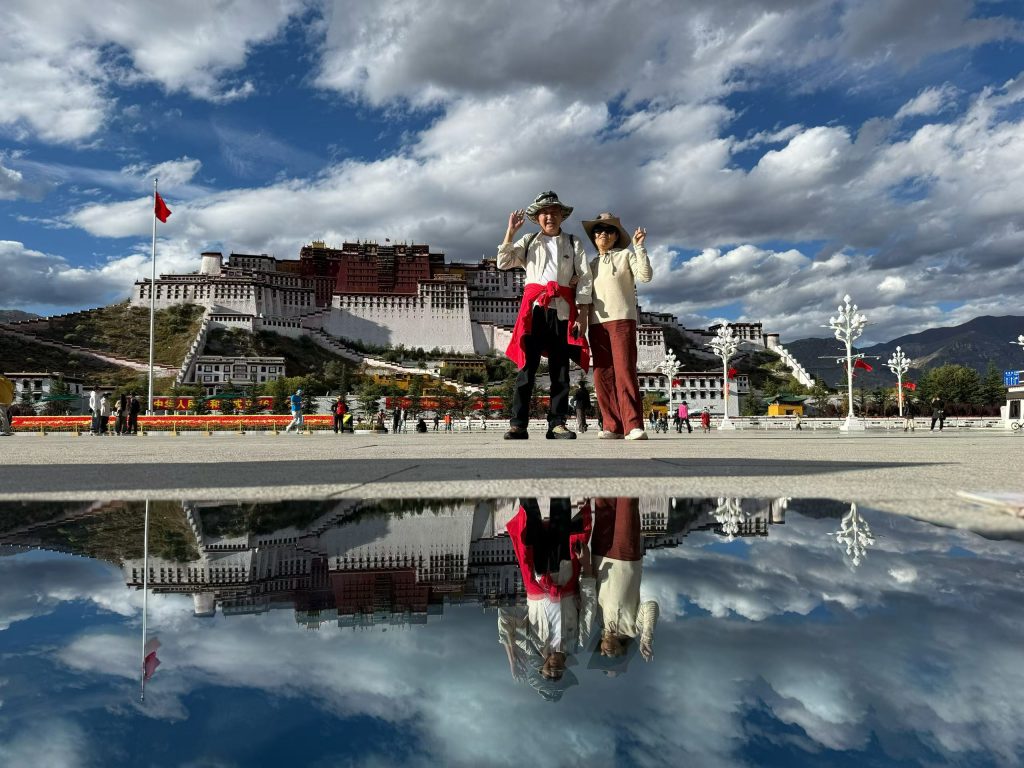
When I finally reached the palace entrance, my heart was pounding — both from the climb up and pure adrenaline. The moment I stepped inside, I felt something shift. At first, I was bummed I couldn’t take photos inside, but as I went further into the Red Palace, I realized it was a blessing in disguise. Removing the distraction of a camera lens helped me be more present. I took in the aroma of butter lamps, the gentle hum of Tibetan chanting, and the rich, polished wood warmed by the hands of countless pilgrims over the centuries.
A brief history lesson: The Red Palace is the spiritual heart of the Potala. This section is smaller, darker, more atmospheric, and the air is somehow heavier with history. It is also the resting place of all previous Dalai Lamas and the tombs are ornately decorated with gold leaf and jewels. There were visitors milling about, but the vibe was sacred and reverent. People instinctively whispered.
The White Palace is by contrast more official. It’s like stepping back in time into government offices and living quarters. The juxtaposition of spiritual and practical between the two sides of the palace gave me more insight into how the Potala served as not only a monastery, but the central functioning core of the Tibetan people.
Best Time to Visit Potala Palace
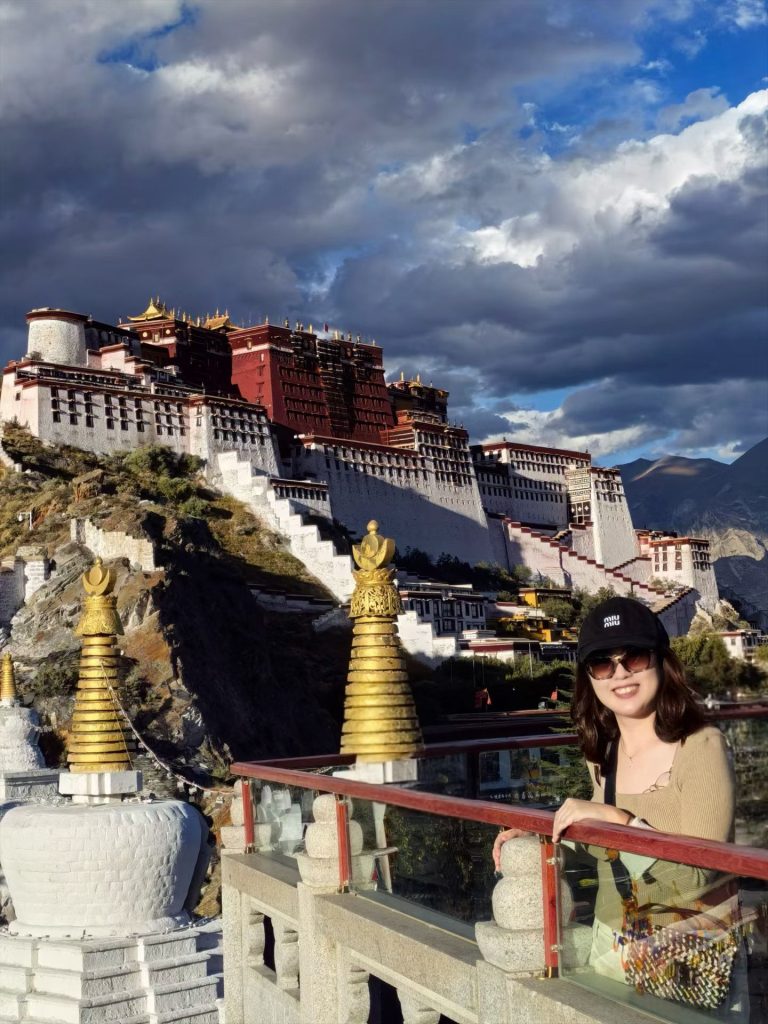
When I visited the Potala Palace, I had no idea what to expect weatherwise since I was there in the off-season (late September – early October). In fact, it turned out to be one of the best times of year to visit the palace and all of Tibet. Temperatures were sunny and warm without being sweltering, the sky a deep cobalt blue (Tibet really is the land of the blue sky, and at 3,700 meters up, the high altitude light is unlike anything else in the world). Crowds were minimal, so despite being off-season, it felt like the ideal time of year to visit.
If you are planning a trip to Tibet, here’s what I found to be the best times to visit the Potala Palace:
Spring (April – June) is one of the best times of year to visit Tibet and the Potala Palace. The weather is mild and the air is clean, making it a very pleasant time to hike. Flowers start to bloom in Lhasa’s surrounding mountains, too, adding to the natural beauty.
Autumn (September – November) is another great time of year for photography and the best time to visit Tibet if you’re concerned about crowds. Temperatures remain cool and the skies are stable, blue and cobalt. Afternoon clouds and rain are more likely in the summer.
Summer (July – August) is when most tourists come to Tibet, bringing larger crowds. Expect ticket lines and stricter limits on how long you can spend in the palace. There is also a higher chance of rain in the afternoon.
Winter (December – February) is the off-season for tourism and temperatures can get very cold. However, there are fewer tourists if you can handle the chill. The Potala Palace under a blanket of snow is quite stunning.
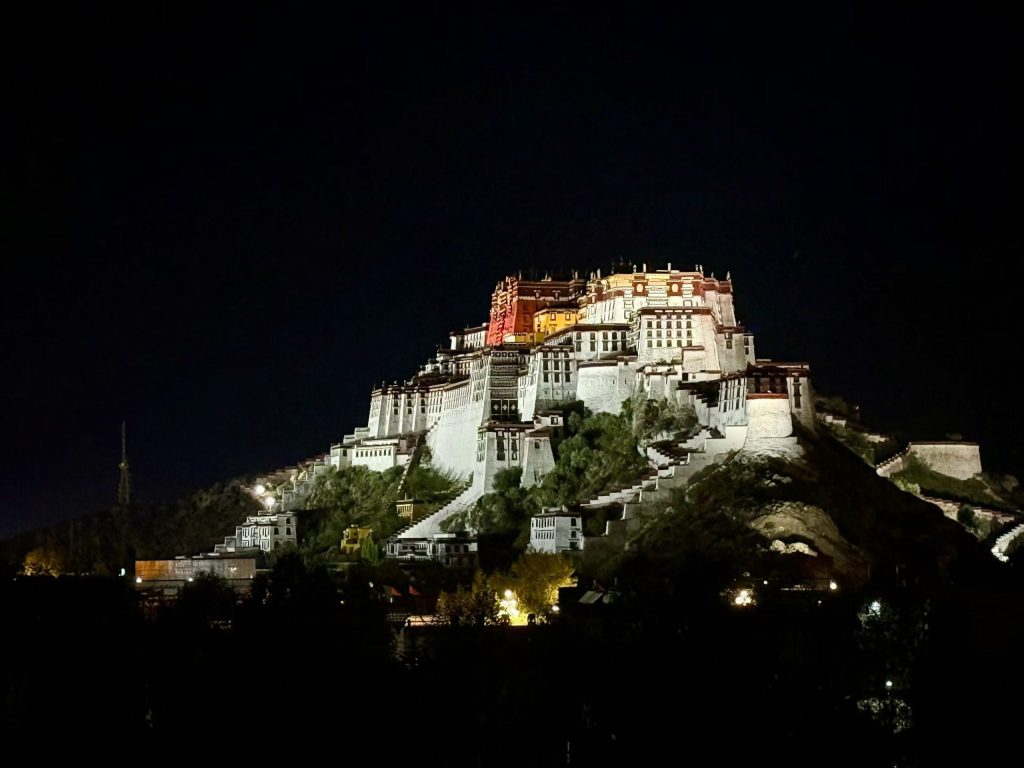
Photography-wise, mornings are best for lighting on the eastern side of the palace. However, you can also return at night to see it lit up. The palace switches on from 9 p.m. to 10 p.m. and it is quite magical. Locals gather in Potala Square to do their nightly walks and prayers. I sat across from them in Zongjiao Lukang Park and watched the Potala Palace glow gold against the night sky.
Visiting Tips
1. Book in Advance
Tickets to Potala Palace sell out quickly, so book well in advance, especially during peak months (May–October). Visitors must reserve at least one day in advance through the official WeChat mini-program or a local travel agent.
2. Take it Slow
Altitude sickness is real. The palace sits at an elevation of 3,700 meters and climbing all those steps can be a challenge if you rush. I took my time and stopped frequently to rest, catch my breath, and enjoy the view over the Lhasa Valley.
3. Dress Modestly
Tibetan culture is conservative, so dress modestly. Leave the shorts and sleeveless tops at home, or at least in your hotel room when visiting the palace. You are expected to remove your hat and lower your voice in sacred areas of the Potala.
4. Photography Etiquette
Photography is not allowed inside the palace but you can snap photos from the exterior courtyards and the surrounding park. The best places to take external palace photos are Potala Square, the view from Chakpori Hill and Zongjiao Lukang Park.
5. Stay Hydrated & Rested
Altitude, stairs and a lot of history and culture can be exhausting. Bring a bottle of water with you and take lots of breaks. Some visitors may experience mild altitude sickness (headaches, fatigue). I recommend spending at least a day in Lhasa before visiting Potala Palace to acclimatize.
Getting There
The majority of travelers, myself included, arrive in Lhasa either by plane or the Qinghai–Tibet Railway (the world’s highest elevation railway). The train ride is long (20+ hours from Xining) but the views along the way are worth it. Pass by grazing yaks, high plains and snowy mountain peaks.
The palace is very accessible by taxi or foot from anywhere in central Lhasa. I was staying in the Barkhor area and it was a 20-minute walk. The palace is visible from most of the city, so it is hard to get lost.
Potala Palace at Night
Even though I had spent hours inside the Potala Palace earlier that day, I was keen to come back after sunset. At 9 p.m., the Potala Palace is illuminated in a soft golden light, casting its warm reflection in the Potala Square’s large reflecting pool. Locals gather around, some quietly praying, others just strolling.
I sat for nearly an hour, just taking it all in. It was a spiritual experience and I found myself lost in time and space, feeling as if I was floating on air.
FAQs
Do I need a Tibet Travel Permit to visit the Potala Palace?
Yes. Foreign visitors must join a licensed tour group in order to obtain the Tibet Travel Permit before entering Lhasa.
How long does it take to visit Potala Palace?
Plan to spend at least 1–2 hours inside. A strict time limit is enforced to manage the flow of visitors.
Can I visit Potala Palace on my own?
No. Independent travel is not possible for foreign visitors to Tibet who must be accompanied by a licensed Tibetan guide during their stay.
Is Potala Palace open all year?
Yes, but during winter (December–February) parts of the palace may close for maintenance or due to inclement weather.
Final Thoughts
Visiting the Potala Palace was one of the most profound travel experiences of my life. It was not only a lesson in history, architecture and photography, but also a place that stirred my spirit, sense of humanity, and made me feel time travel back to ancient Tibet.
If you ever make it to Tibet, take time to explore the palace. Don’t rush up the stairs. Don’t be in a hurry to tick the box and collect your postcard photo for the albums. Slow down, breathe, look and listen to the wind, and the murmured prayers of fellow visitors, and then absorb the silence that floats so peacefully over the rooftops of Lhasa.
I felt humbled, grateful, and transformed after my visit to the Potala Palace.





- Posted inin Destinations
- China
UpdatedPotala Palace Lhasa: History, Visiting Tips & Best Time to Go