

If I’d thought about what Tibet would be like before I arrived, I would have imagined things like snow-capped mountains and snow-white lakes, wide rivers and endless blue sky. But nothing could have prepared me for what I saw when I finally got to the Yarlung Tsangpo Grand Canyon, one of the deepest canyons in the world.
It stretches along the Yarlung Tsangpo River, cutting across the eastern Himalayas, and revealing a world of untouched forests, glaciers, and cloud-covered peaks. My family and I started our journey from Nyingchi (林芝), driving east towards the Grand Canyon, which I had assumed would be a simple scenic drive. But in the end, the drive itself turned out to be one of the most memorable parts of our entire trip.
The Road to the Grand Canyon
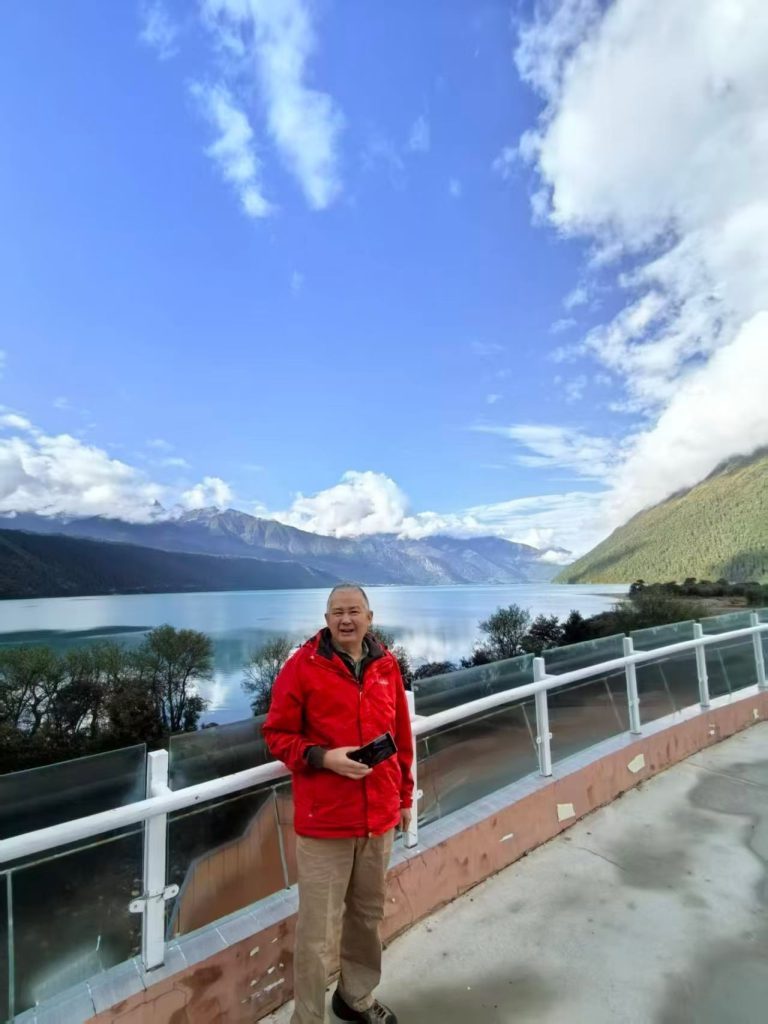
The moment we left Nyingchi city behind, the road became a completely different world. Forests opened up to reveal wide valleys, the river beside the road sparkled with light, and snow-capped peaks could be seen peeking through the clouds.
Our car slowly made its way along the Yarlung Tsangpo River, which curved and twisted through the mountains. Every now and then we stopped to take a picture or two, sometimes of yaks in the distance, sometimes we just stopped to breathe in the fresh, cool air.
There’s a special quality to this part of Tibet. Greener and softer than Lhasa, but still wild and full of contrasts. Mountains here don’t just rise, they soar.
The Desert on the Other Side of the River
It was on one of those stops that I saw something completely unexpected. A whole expanse of sand dunes, right next to the river. At first I thought I was mistaken, or dreaming. Sand in Tibet? But no, there it was, and in an even larger area than I’d first imagined.
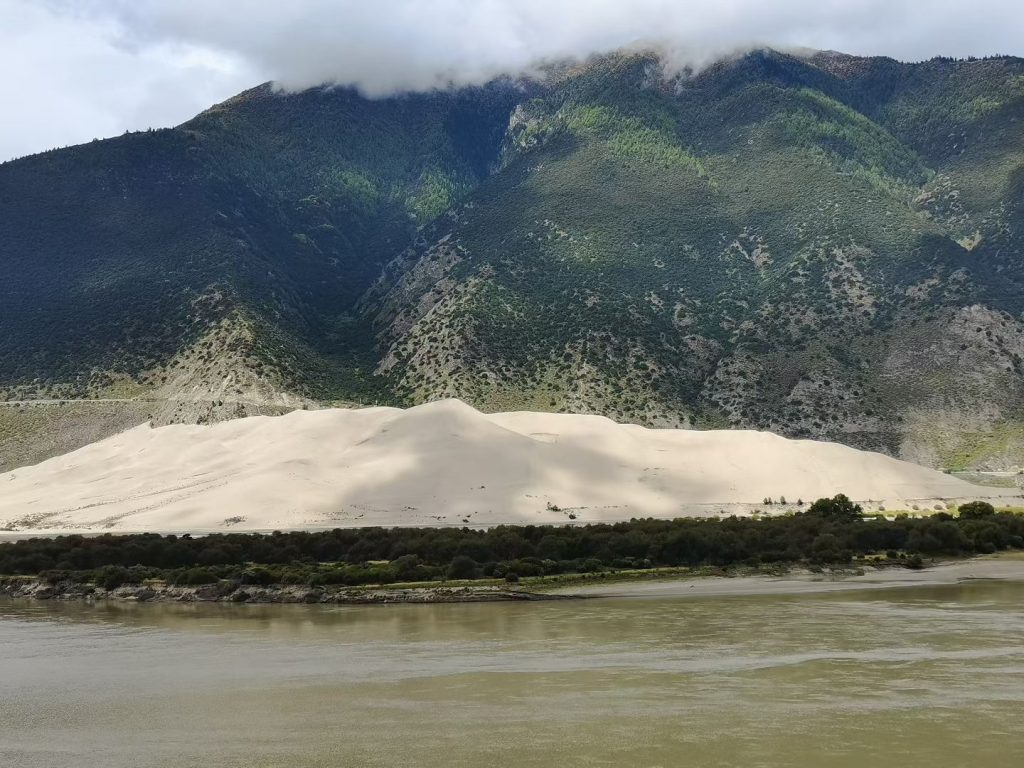
Our driver laughed and said these were the Yarlung Tsangpo sand dunes, and that the combination of the wind and currents over many, many years was to blame for their presence. We walked among those soft, golden dunes while the deep green of the mountains could be seen through the gentle curves in the sand. The river ran silently in the background.
Tibet is a place of such natural beauty, but also of such stark contrasts, that sometimes it can surprise you.
Driving into the Grand Canyon
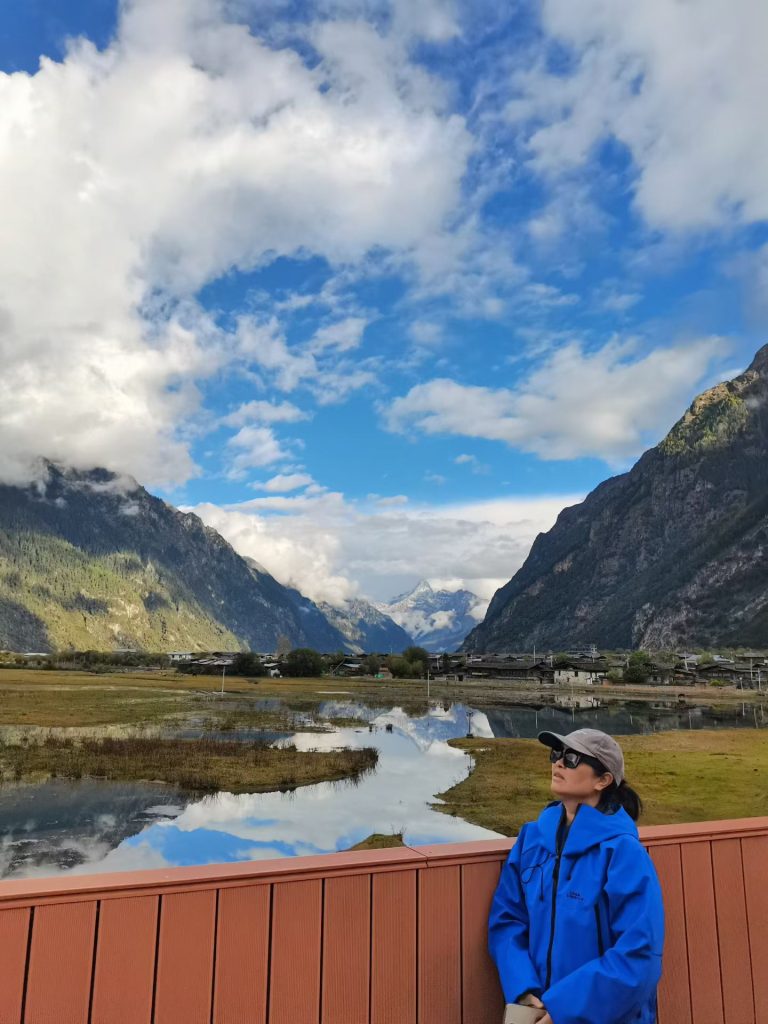
Entering the Yarlung Tsangpo Grand Canyon Scenic Area felt like stepping into a completely different world. The temperature dropped and mist began to form around the peaks. We walked across wooden walkways into the valley, where the sound of rushing water could be heard.
Stepping into that world was like stepping into a living painting. Clouds cloaked every corner, and the fog seemed to muffle every sound. It’s difficult to grasp the size of the Yarlung Tsangpo Grand Canyon. It’s so vast and so deep that you get swallowed up. You can’t help but feel small, almost humbled by it all.
According to our guide, this canyon is not only one of the deepest in the world, but also one of the least explored. “If you’re lucky,” she said with a smile, “you might even see Namjagbarwa Peak today, but she’s known to be a shy goddess.”
Waiting for Namjagbarwa Peak
We spent the night in the Yarlung Mountain Lodge, a quiet, out-of-the-way guesthouse that sat on a hillside with a view of the river. The air was crisp, and the mountains in the distance were wrapped in rolling white clouds. I sat outside on the balcony after dinner, watching the colors change in the sky as the sun began to set.
And then, just as the last rays of sunlight began to stretch across the canyon, it happened.
The clouds parted just enough — and there she was. Namjagbarwa Peak, the “Father of Tibetan Mountains,” as the locals know her. We could see just a sliver of her snow-covered summit.
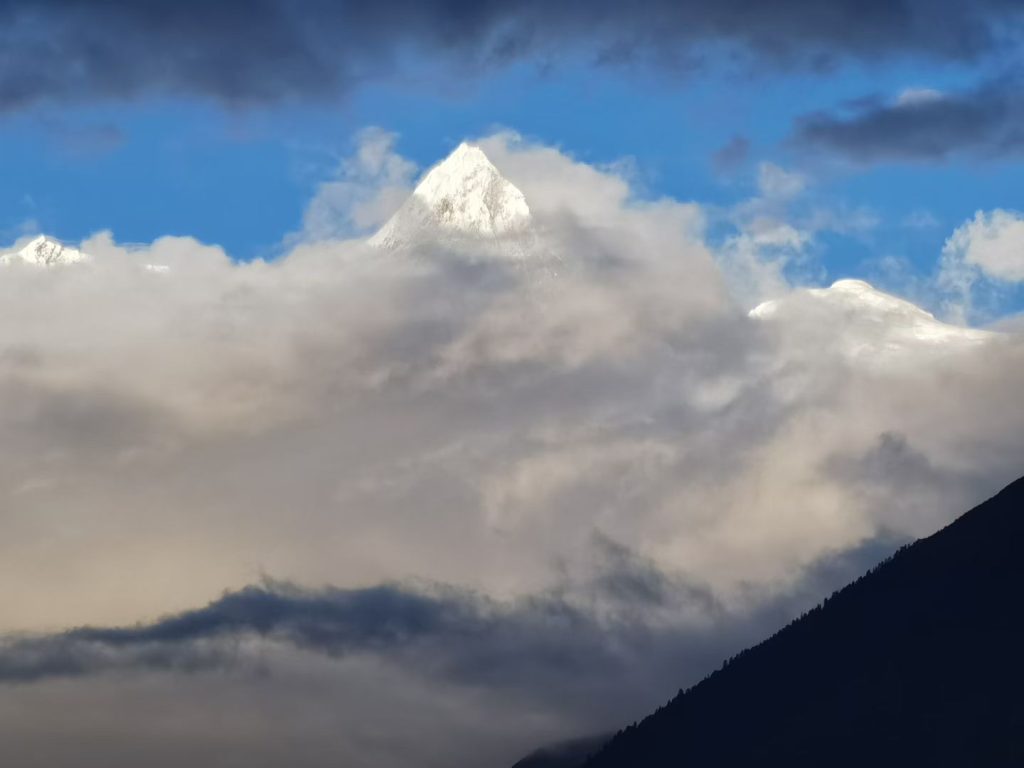
It was only for a few minutes, but the scene before me was breathtaking. The people around me all fell into silence. Some clapped softly, some just stared in wonder. I didn’t even reach for my phone. I just wanted to take it all in, in my own two eyes.
I’ve since been told that Namjagbarwa Peak only makes an appearance to those who have patience. Who knows if that’s true. For me, that few minutes of being in the presence of that peak was the most moving moment of my entire trip.
Morning’s Calm
The next morning, I woke up early. The world had been washed clean by rain overnight. Mist had rolled away, and the river below reflected the mountains like glass. I made myself a cup of tea, and stepped outside to the railing and took in the cool mountain air.
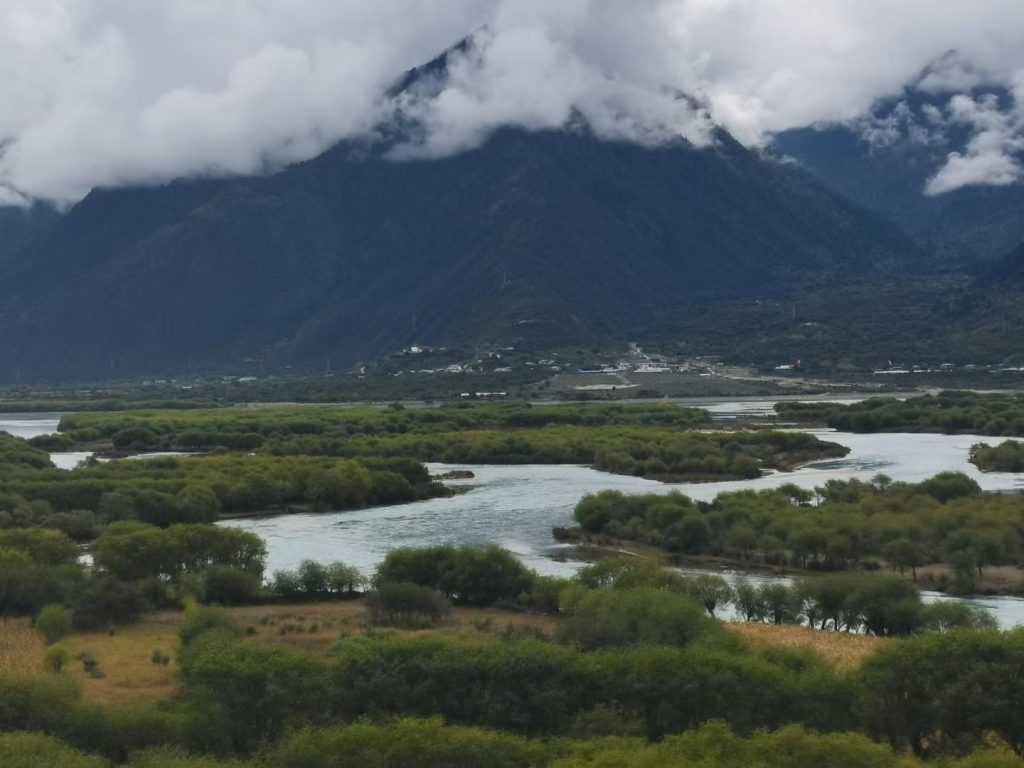
It was quiet, eerily quiet. There were no cars on the road, no people chatting around, just the wind whispering through the trees. In that silence, in that stillness, I felt an overwhelming sense of calm. Tibet has a way of slowing you down. It forces you to just be in the moment, without rushing or pushing.
It wasn’t the kind of beauty that made you gasp or take a million photos. But it was the kind that you carry in your heart.
The Sacred Old Tree
In the afternoon we walked one of the many scenic wooden paths that led through the canyon. The air smelled like pine and wet earth. At the end of the path was a giant fallen tree, said to be hundreds of years old.
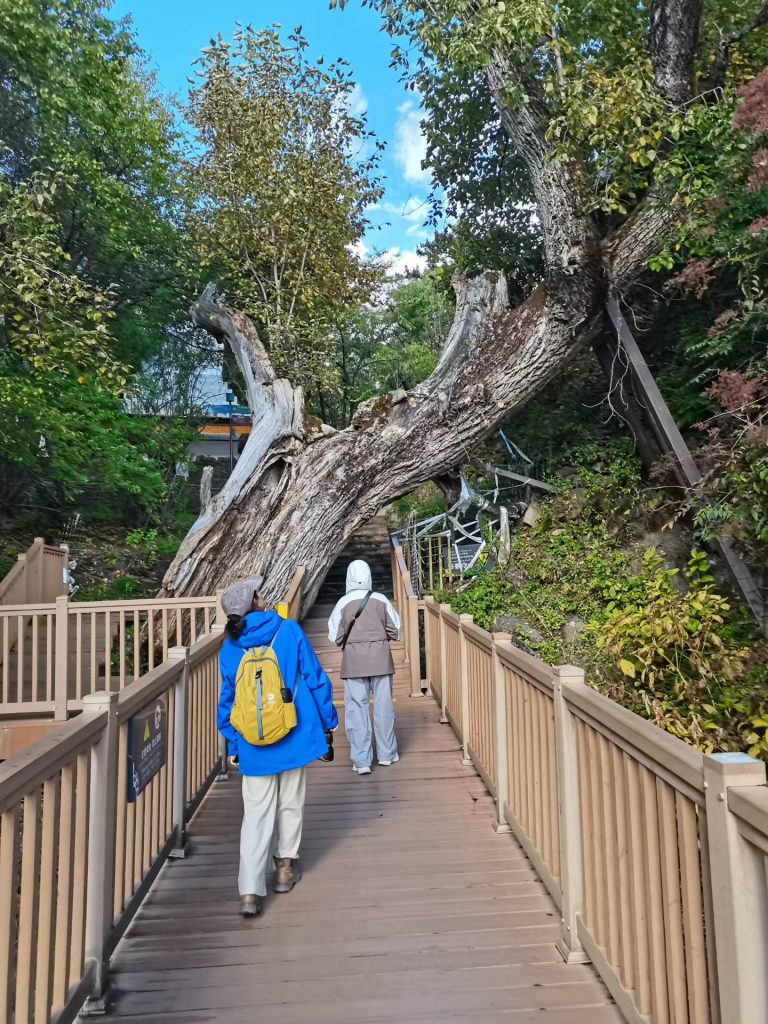
Locals called it the “Sacred Tree”. The tree was dead, its trunk split open by weather and time. But it was carefully preserved, supported by wooden beams on each side. The bark was a unique texture, gleaming like silver lines carved by time itself when the sun shone through.
I stood there quietly in front of that tree, with nothing but time, and thought about how even in death, in decay, there is still beauty, and still strength.
The River’s Flow
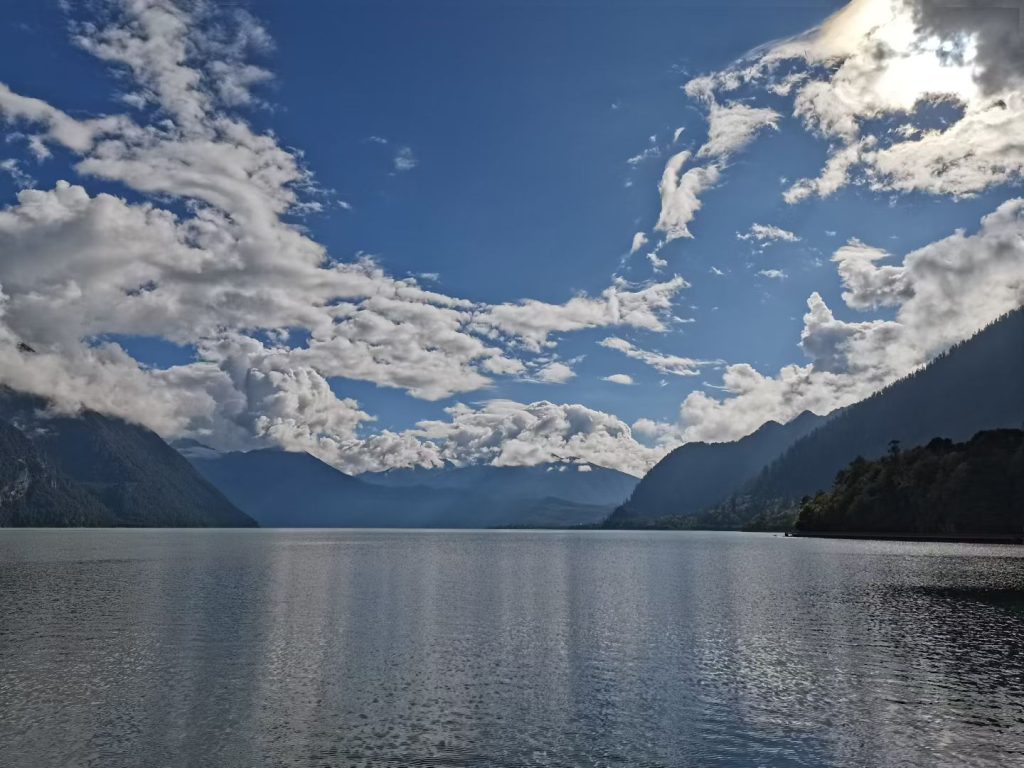
On the way back, we stopped one last time at a look-out point. From here, the Yarlung Tsangpo River below looked peaceful, its silver ribbon of water weaving between mountains and forest. The light was soft, and the clouds were white and drifting lazily.
It was a completely different atmosphere than the day before — gentle, soft, almost meditative. I realized that Tibet travel is not about rushing from one site to the next. It’s about learning to wait, and to watch, and to listen.
Travel Tips for Visiting Yarlung Tsangpo Grand Canyon
- Location: Yarlung Tsangpo Grand Canyon Scenic Area, Pai Town, Nyingchi City, Tibet Autonomous Region
- Distance from Nyingchi City: Around 70 km (about 2 hours by car)
- Where to Stay: Yarlung Mountain Lodge
- The lodge offers balcony views of Namjagbarwa Peak when the weather is clear.
- When to Visit: April to October. April is the season of rhododendron blooms and October offers the golden foliage of autumn.
- What to Bring: Warm clothes, rain jacket, sunglasses, and a camera with spare batteries.
- Insider Tip: Stay overnight if possible. Sunsets and early mornings have the best chance of revealing Namjagbarwa Peak.
A Moment of Fulfillment
I had heard that Namjagbarwa Peak is the most beautiful mountain in China, and one of the hardest to view clearly. For the rest of the year she’s wrapped in clouds, and only shows herself to the patient and the lucky.
As I stood on the balcony that evening, watching her come out for just a few precious minutes, I felt a sense of overwhelming gratitude. I didn’t get to see the entire peak, but it didn’t matter.
Sometimes, you don’t need the whole picture to be fulfilled. Sometimes it’s just about the moment when nature herself decides to be generous enough to share just a little bit of magic.





Tibet’s Yarlung Tsangpo Grand Canyon: Where I Finally Saw Namjagbarwa Peak Emerge from the Clouds