

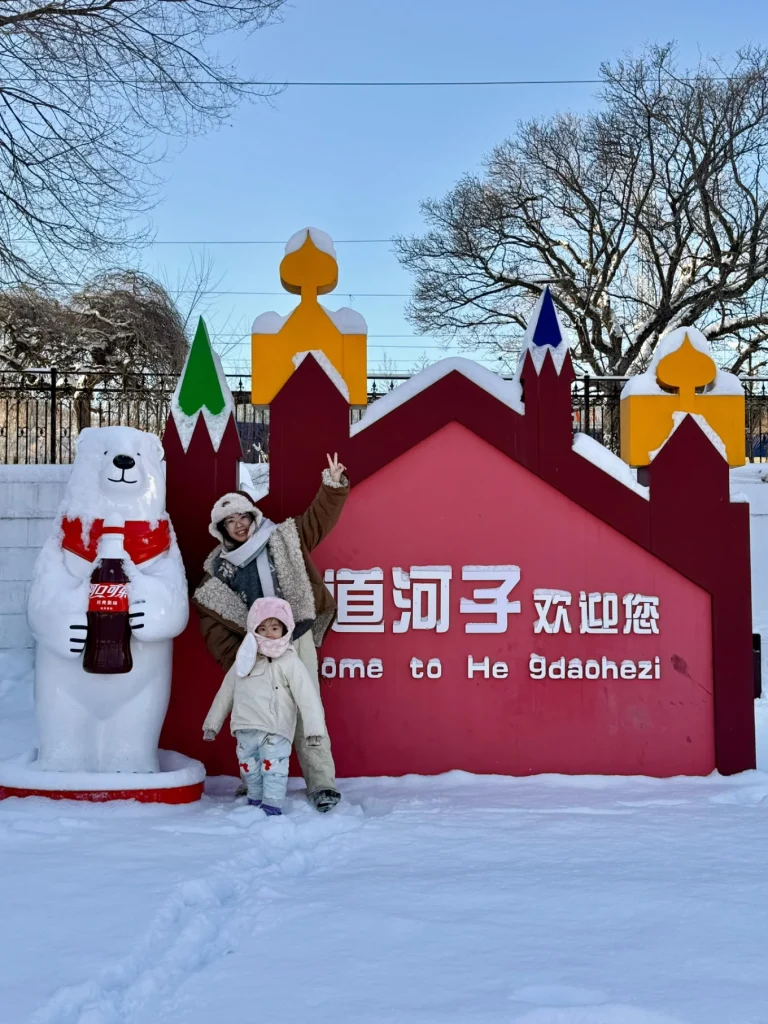
During my Harbin trip, I visited some of the most famous winter travel spots in China. But if I had to recommend one place that really made an impression, it would be Hengdaohezi (横道河子).
It is calm without being dull, historic without feeling like a show, and snow-covered in a soft way that feels cinematic instead of biting.
This is our comprehensive one-day Hengdaohezi travel guide written from our family travel experience.
- Where Is Hengdaohezi and Why Is It So Special?
- How to Get to Hengdaohezi From Harbin (What I Learned the Hard Way)
- First Impressions: Just Like Hokkaido
- How to Get Around Hengdaohezi with Ease
- A Slow Start: Breakfast and Snowy Streets
- Cafés, Guesthouses, and Daily Life in Historic Buildings
- Chinese Eastern Railway Museum (Do Not Go on Monday)
- Guesthouse Slide, Kind Owner, Simple Lunch
- Sampling the Local Flavor: Forest Frog and Honest Curiosity
- Walking Up: Hillside Scenic Area
- Oil Painting Village and a Train-Car Café
- Wrapping Up the Day at Northeast Tiger Forest Park
- Is Hengdaohezi Is Worth Visiting in One Day?
- Practical Tips for Traveling to Hengdaohezi
Where Is Hengdaohezi and Why Is It So Special?
To begin with, Hengdaohezi is a common misconception: many believe it is part of Harbin. In fact, it is located near Mudanjiang, but most visitors will arrive via Harbin.
The thing that sets Hengdaohezi apart from other places with a Russian connection is its history. The area is well-known as “a town brought by the railway” — it originally grew up alongside the Chinese Eastern Railway. This heritage has been preserved, but in a subtle way: Hengdaohezi did not turn itself into a theme park or tear down its old street to accommodate flashy, new buildings.
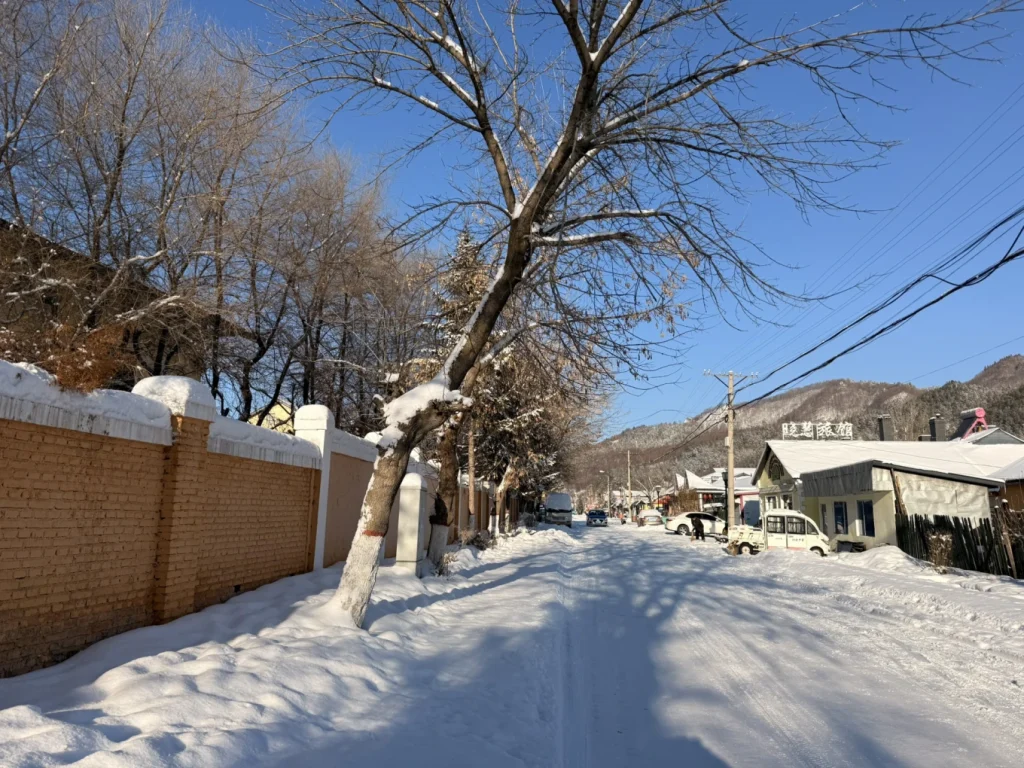
It still retains its original layout, and more than 200 Russian-style houses and buildings remain, many more than a hundred years old. Not only are these places preserved; people still live and work in them, open cafés and milk tea shops, and even run boutique guesthouses.
That is part of the reason it was named a UNESCO Cultural Heritage Protection Honor Award: this kind of authentic balance of heritage and living city is very hard to find.
You can feel that authenticity as soon as you step off the train.
How to Get to Hengdaohezi From Harbin (What I Learned the Hard Way)
The most convenient way to Hengdaohezi is via the high-speed train from Harbin. This takes little more than an hour, but there is one thing that I wish I knew before that made all the difference:
Buy your tickets in advance.
I purchased tickets two days in advance. This is what I considered early. It was not. The only train that had availability at all was leaving right after 6 a.m. We had to wake up before sunrise and rush to the station.
This felt inconvenient at first. But in retrospect, it turned into one of the most memorable parts of the trip. The sunrise view from the train as the countryside snowscape gradually awoke was unexpectedly beautiful and set the tone for the rest of the day.
Book earlier if you value having options, but if you like quiet mornings and winter light, an early train is surprisingly charming.
First Impressions: Just Like Hokkaido
I arrived and the first thing I noticed is the snow.
- Not slushy snow
- Not half-melted snow
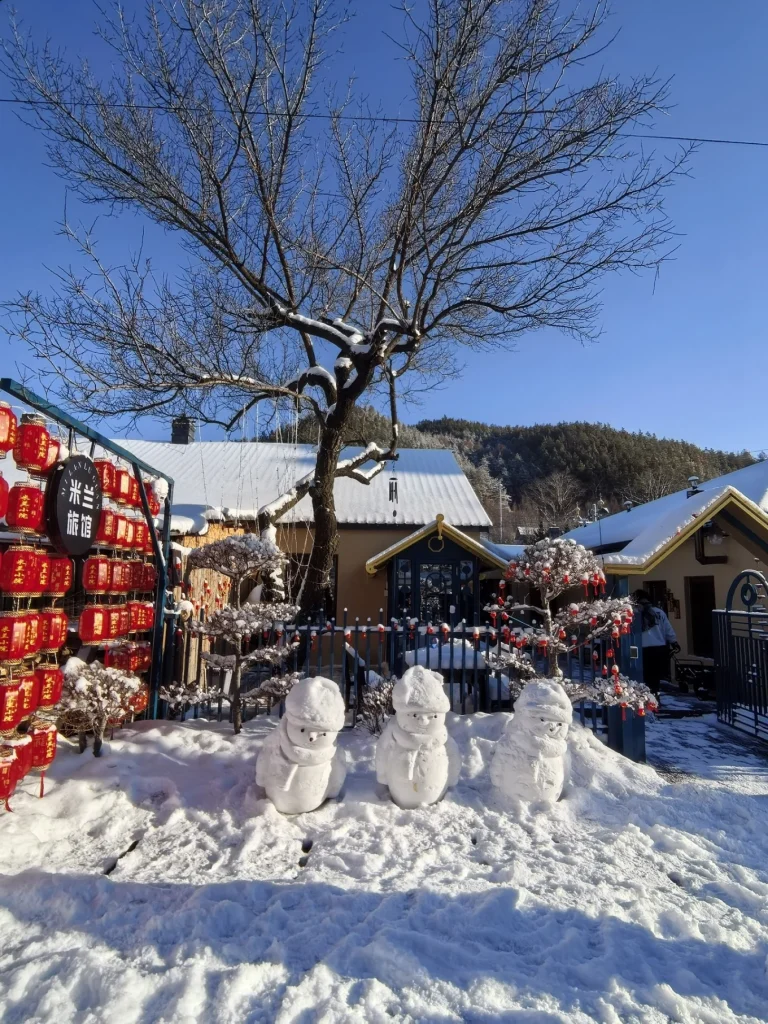
- Snow like big, clean piles along the streets and rooftops
Add to that the sloped roofs, wooden facades, and muted pastel colors, and the town gave a strong vibe of a Hokkaido Japanese town. This was Hokkaido-like, but very much more Chinese.
It was so jarring that I almost forgot to look around and catch a taxi, which were already in a line outside the station. I had done enough advance research that I did not need to plan much in advance, but I wanted to look around without checking any list.
How to Get Around Hengdaohezi with Ease
Hengdaohezi sightseeing can be organized around three main hubs:
- The train station
- The center of the town
- Northeast Tiger Forest Park
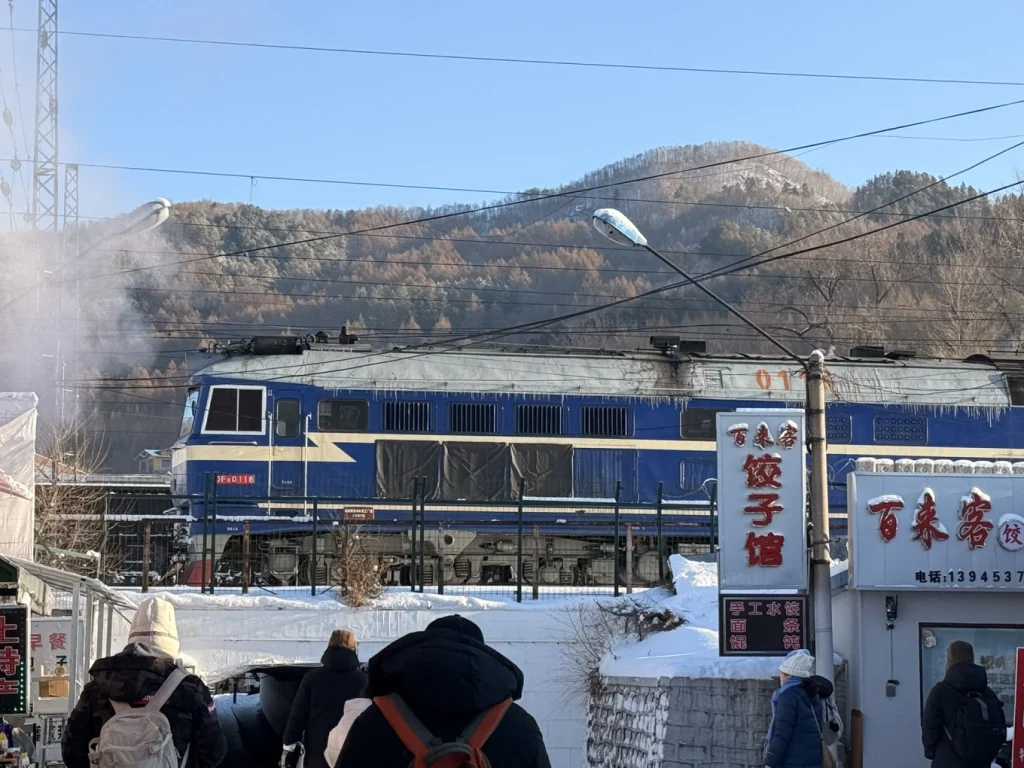
Distances are small, but walking between all three is not recommended in the winter. Taxis are very plentiful and extremely cheap.
A typical way of splitting up the visit would be as follows:
- Train station to town: shared rides per person or small flat fee
- Town to tiger park: short taxi ride
- Tiger park to station: even cheaper
Once you are in town, everything else is walkable. The town is compact, and exploring without a strict plan is part of the fun.
A Slow Start: Breakfast and Snowy Streets
We decided to first get into town, find a breakfast spot, and simply walk around.
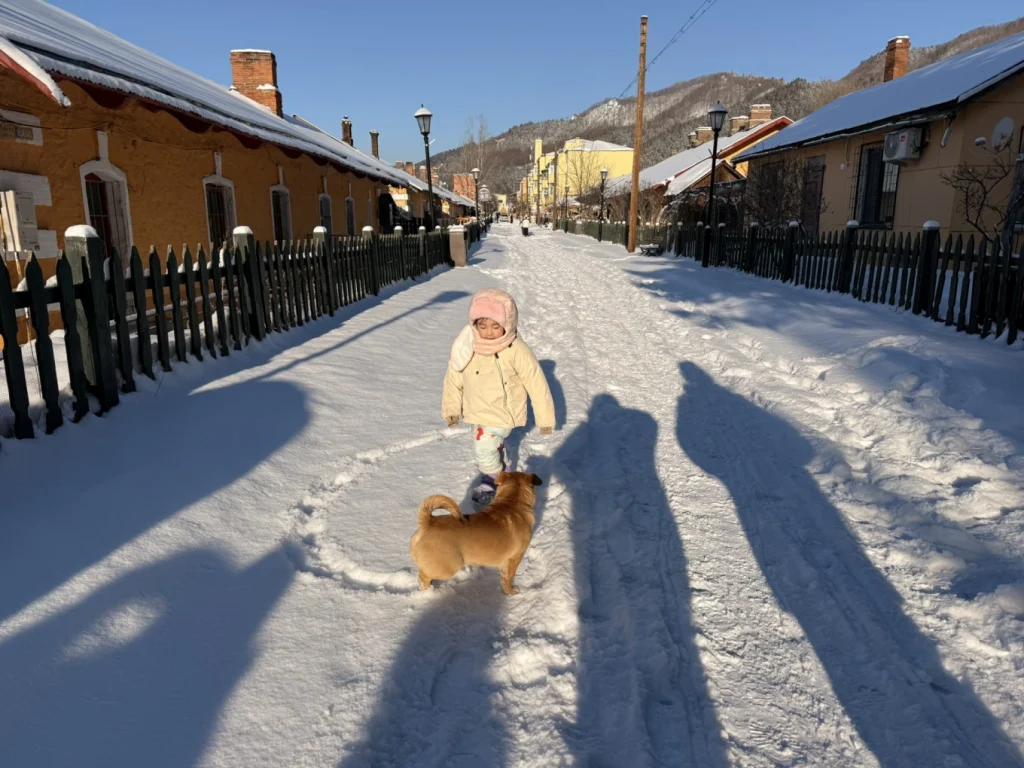
Snow was the big theme of the day, of course. These were deep, fluffy snow. It softened all sounds. Dampened footsteps. Cars were not rushing by. The whole town felt slowed down and relaxed.
At one point, a stray dog followed us. Small, cute, friendly. It was as if it was leading us around like a local guide. It shadowed us for quite a long stretch, pausing when we paused and trotting a bit ahead when we moved on.
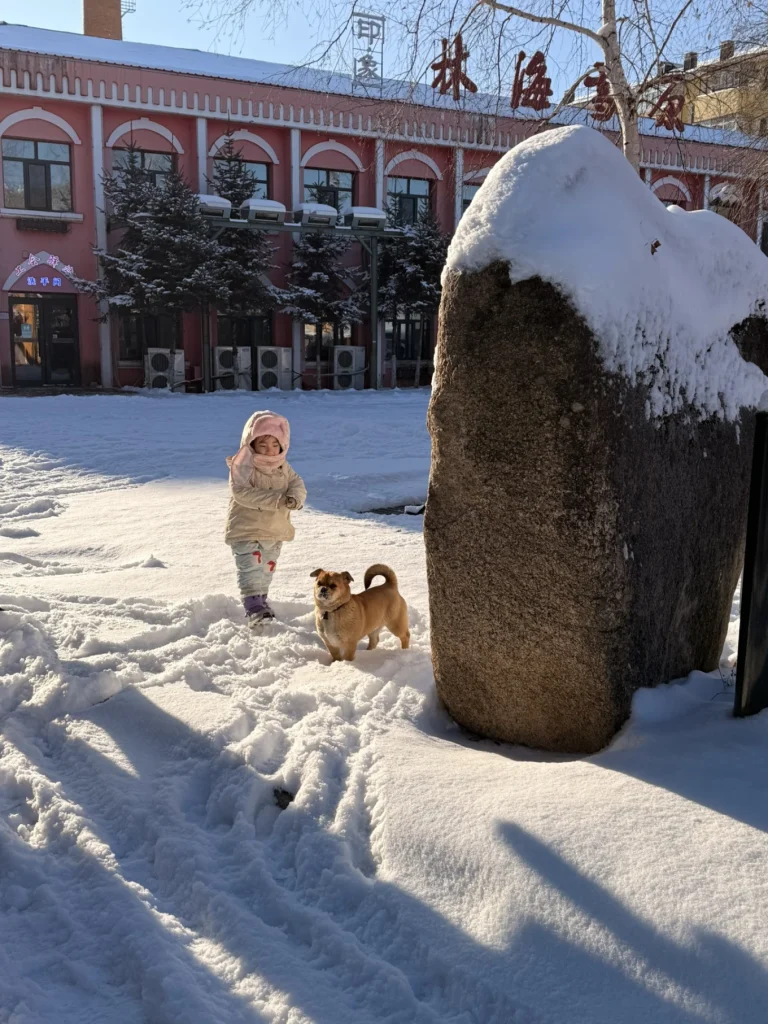
It sounds like a small detail, but those moments are the reason Hengdaohezi felt so warm on a cold day.
Cafés, Guesthouses, and Daily Life in Historic Buildings
The town is not large, but it does have a growing number of:
- Coffee shops
- Milk tea cafés
- Boutique guesthouses
Many of these operate from historic Russian-style houses, so even a simple coffee break can feel like an event. These are not sanitized tourist chains, but independent, local operations.
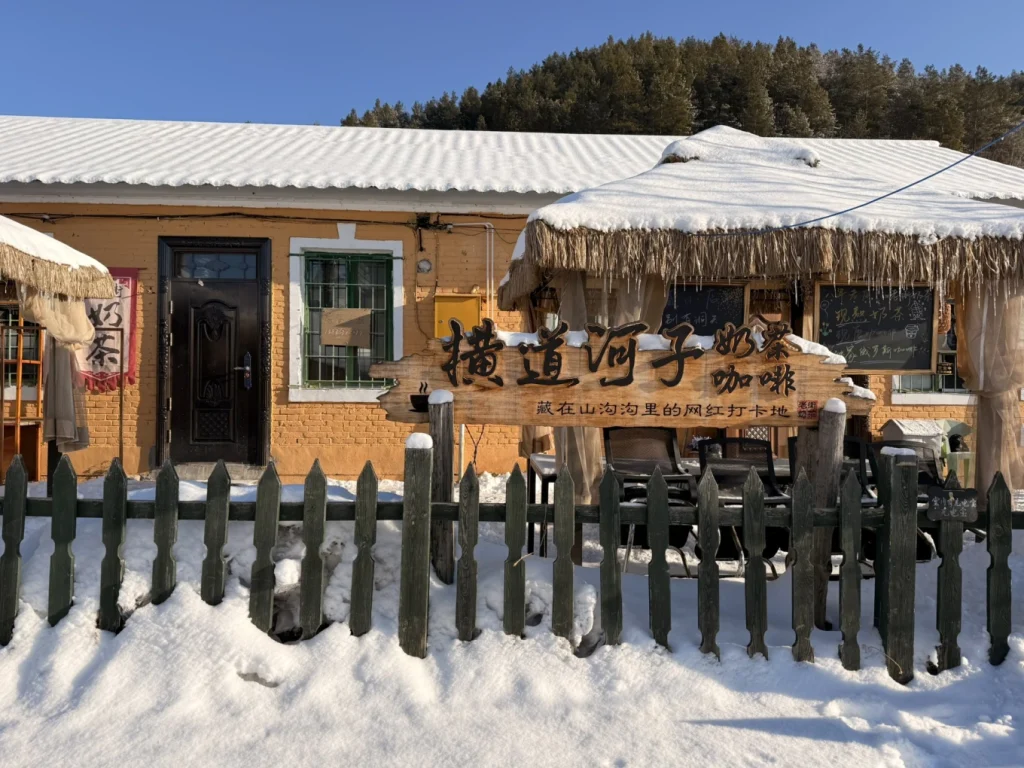
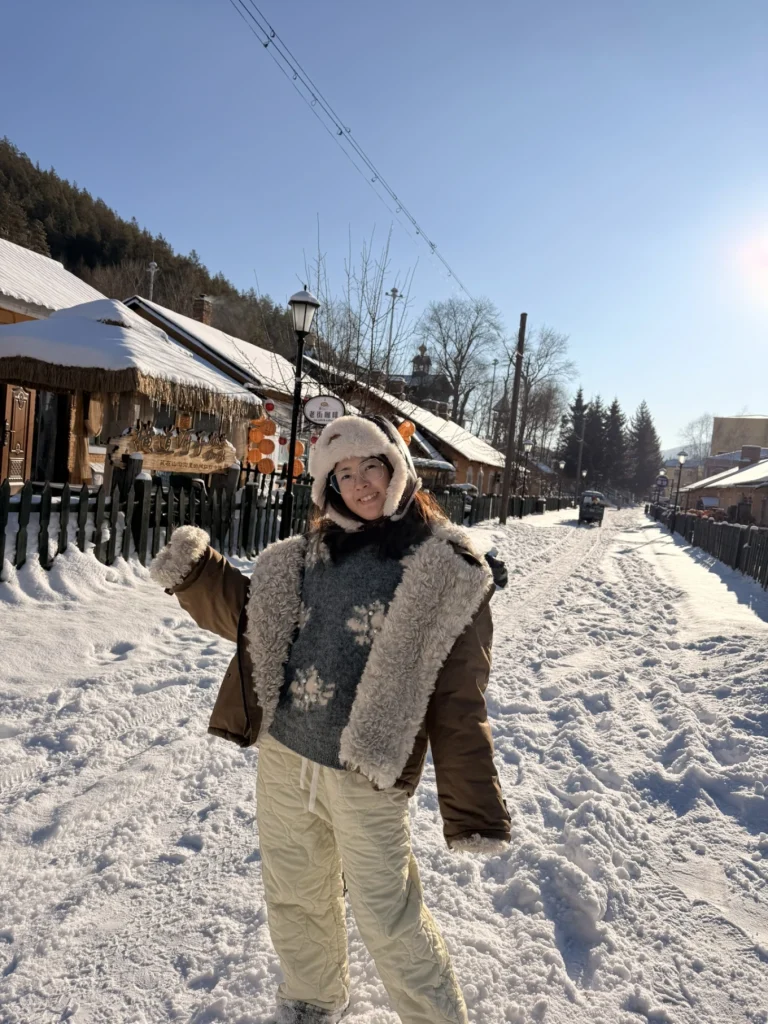
Walking on Russian Old Street, the Russian influence on architecture is in your face. Snow clings to window frames, and they all look a little storybook-like under a winter sky.
Chinese Eastern Railway Museum (Do Not Go on Monday)
The most important attraction in Hengdaohezi would be the Chinese Eastern Railway Museum, which tells the story of how this railroad helped build not just this town, but the whole region.
You will not go there on Monday.
We tried on Monday.
I wish we had not.
The entire museum was closed.
If this museum is on your agenda, plan ahead and do not visit on a Monday. It is considered one of the core Hengdaohezi sites for historical understanding, and missing out on it was our main regret of the day.
Guesthouse Slide, Kind Owner, Simple Lunch
An unexpected highlight was a slide at Karl Guesthouse.
It is a big slide outside that is tucked into their courtyard.
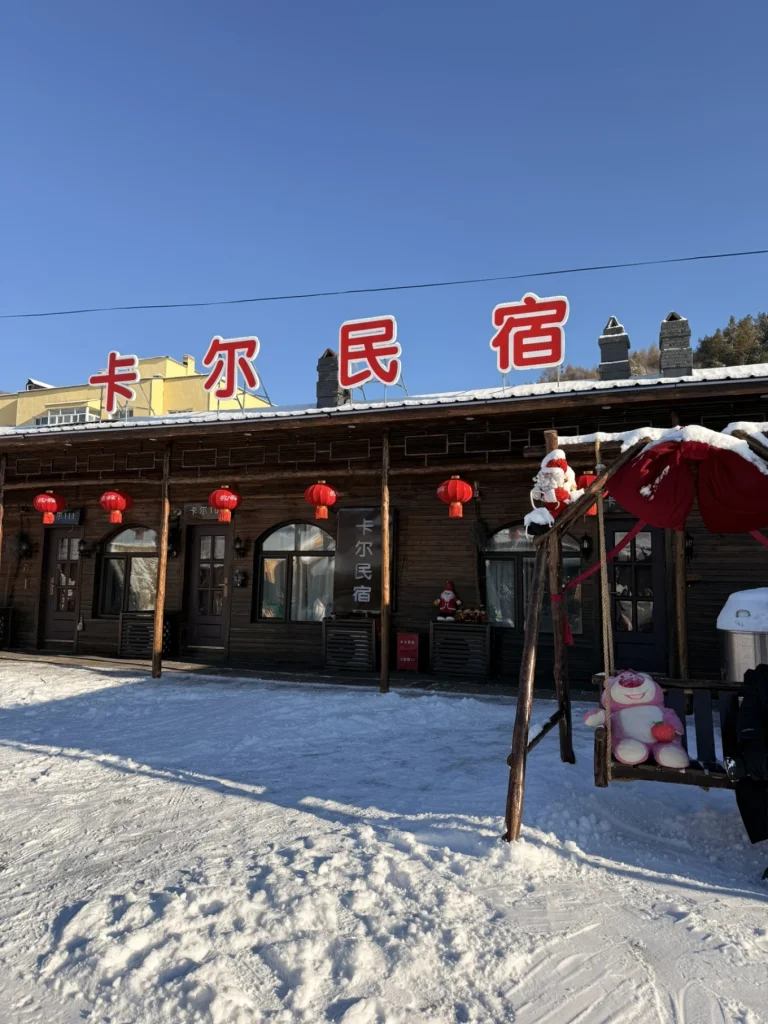
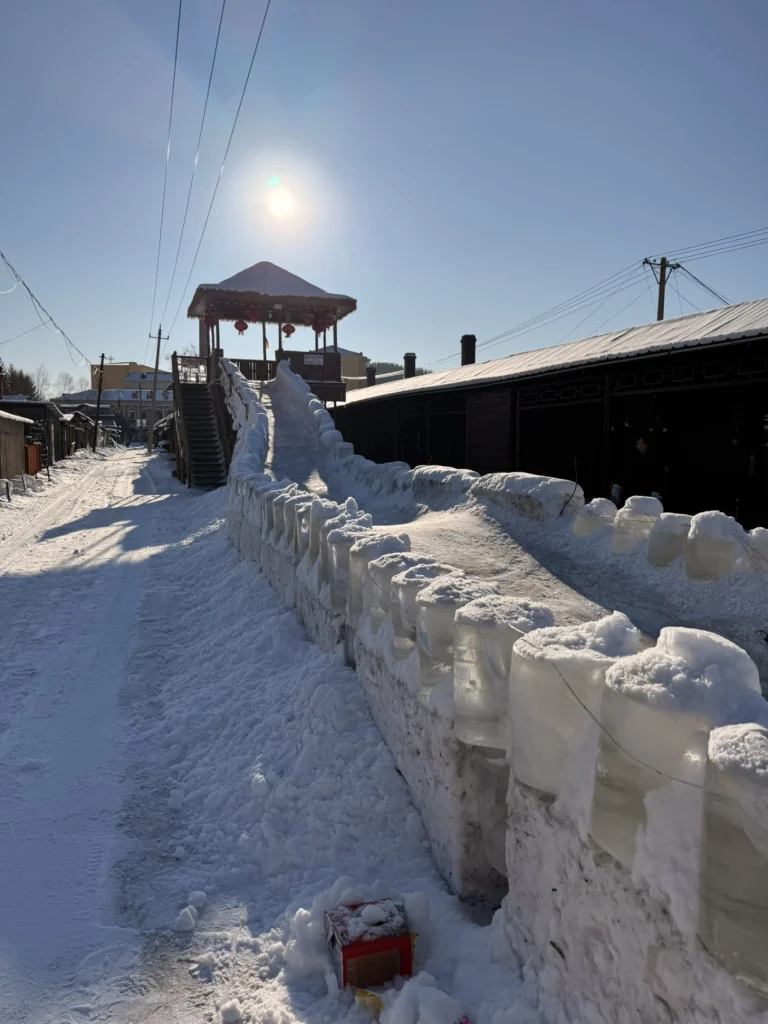
The owner saw my daughter watching, waved, and asked if she wanted to play. For free. The simple gesture immediately endeared them to us, so we decided to have lunch there, too.
The food was… fine. Let’s put it that way.
But the warmth, the kindness, the whole relaxed vibe made it memorable. Travel is not always about amazing meals. It is also about how a place makes you feel.
Sampling the Local Flavor: Forest Frog and Honest Curiosity
We also tried a local specialty: forest frog (林蛙).
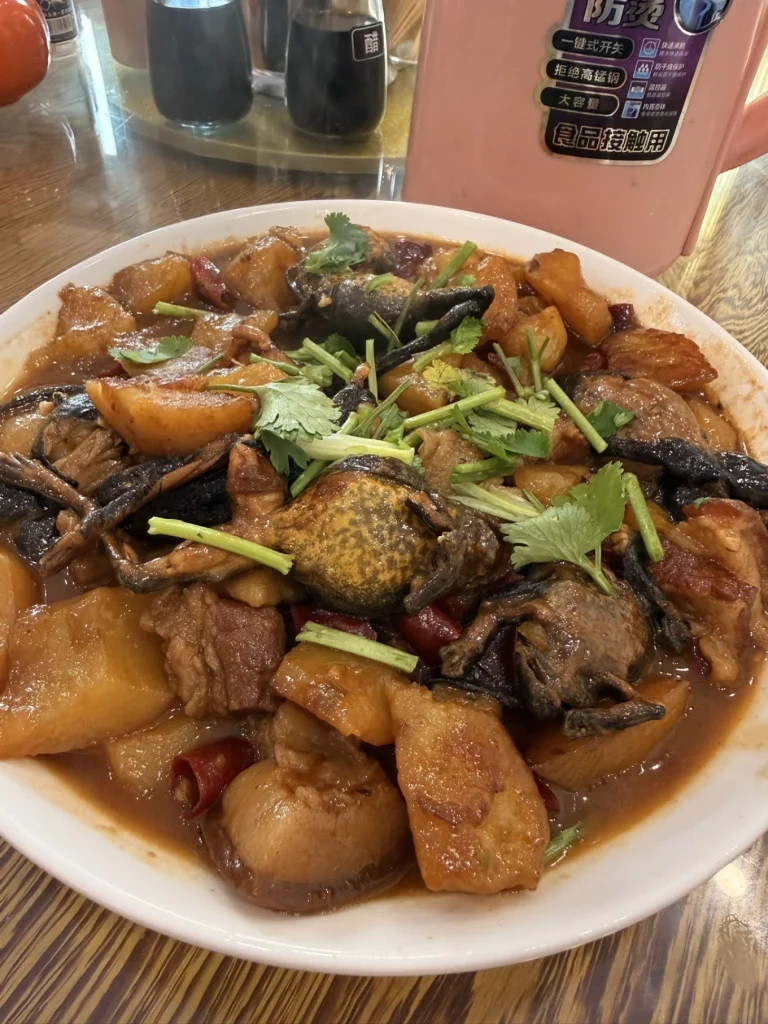
This is one of those “we are going to try this out of honest curiosity” kind of dishes. It is fair to say that it is an acquired taste. The texture is unusual, and, well, not for everyone. But we felt like sampling local specialties was part of understanding the place.
Walking Up: Hillside Scenic Area
After lunch, we decided to work our way up the hillside above town (半山腰)
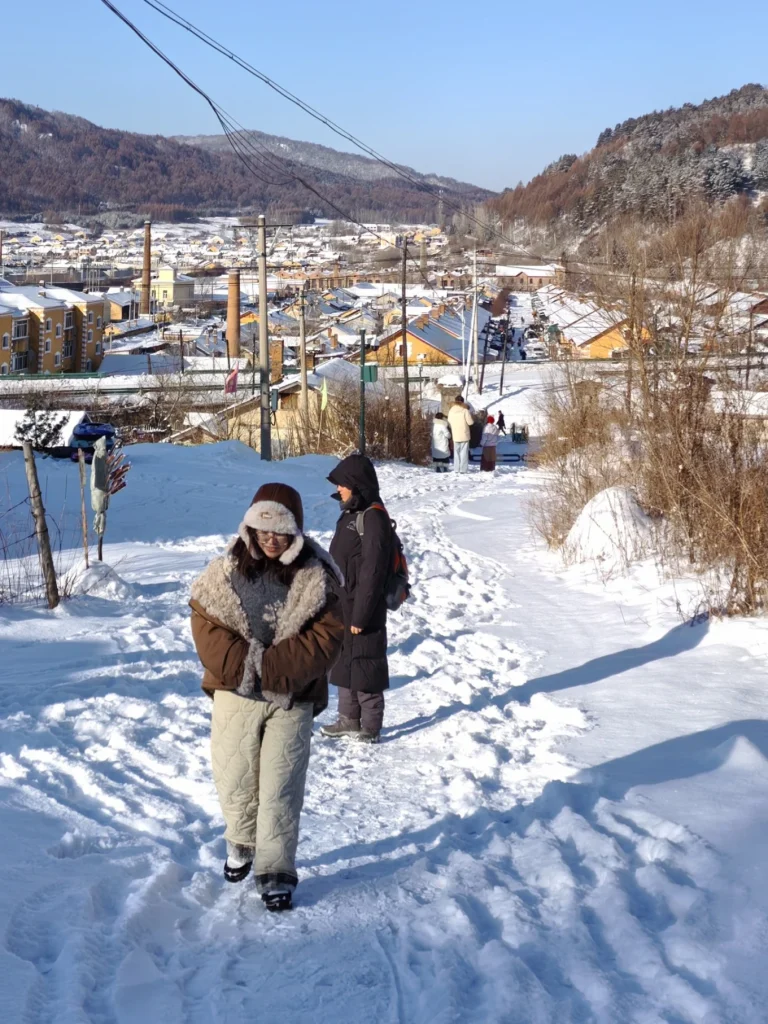
The whole area up there has been more formally organized into a scenic area lately. This means clearer paths, better signage for viewpoints, and curated photo areas. The entrance ticket (30 RMB) includes everything in the scenic area as well as a free cup of instant coffee, which was surprisingly welcome in the cold.
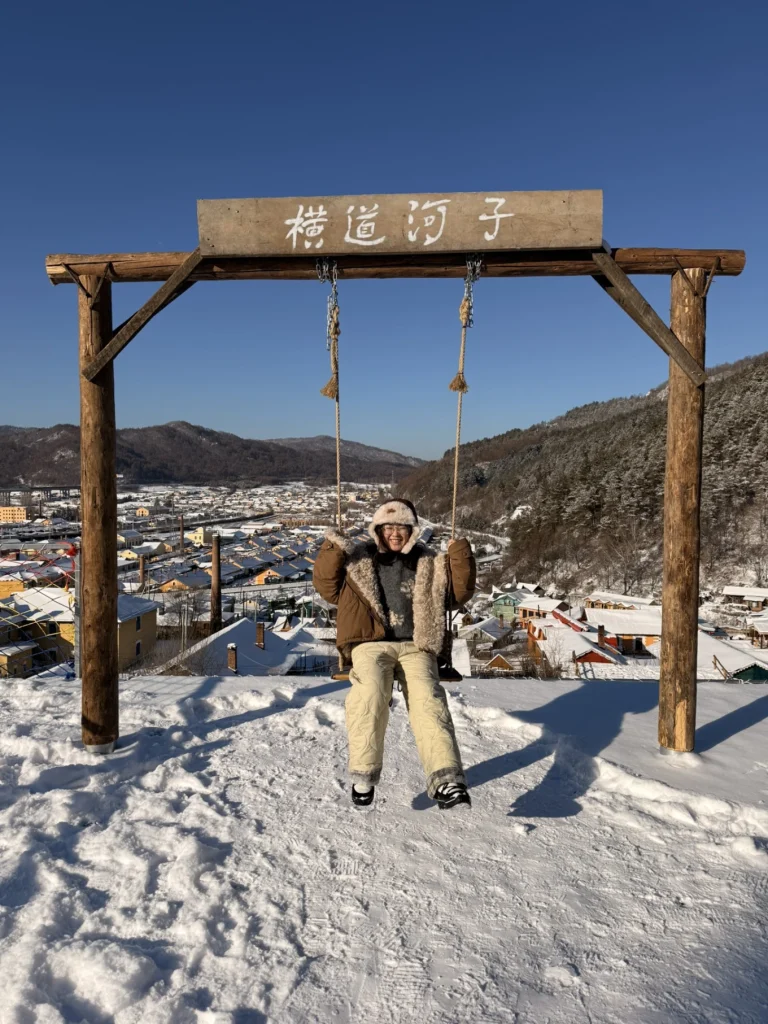
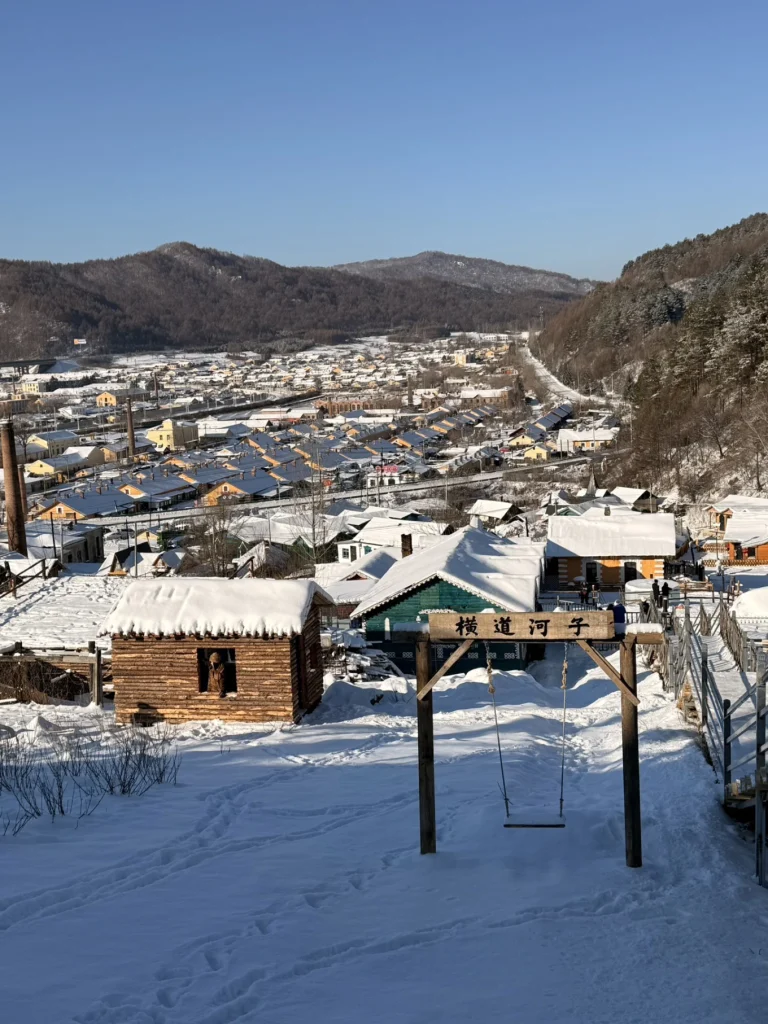
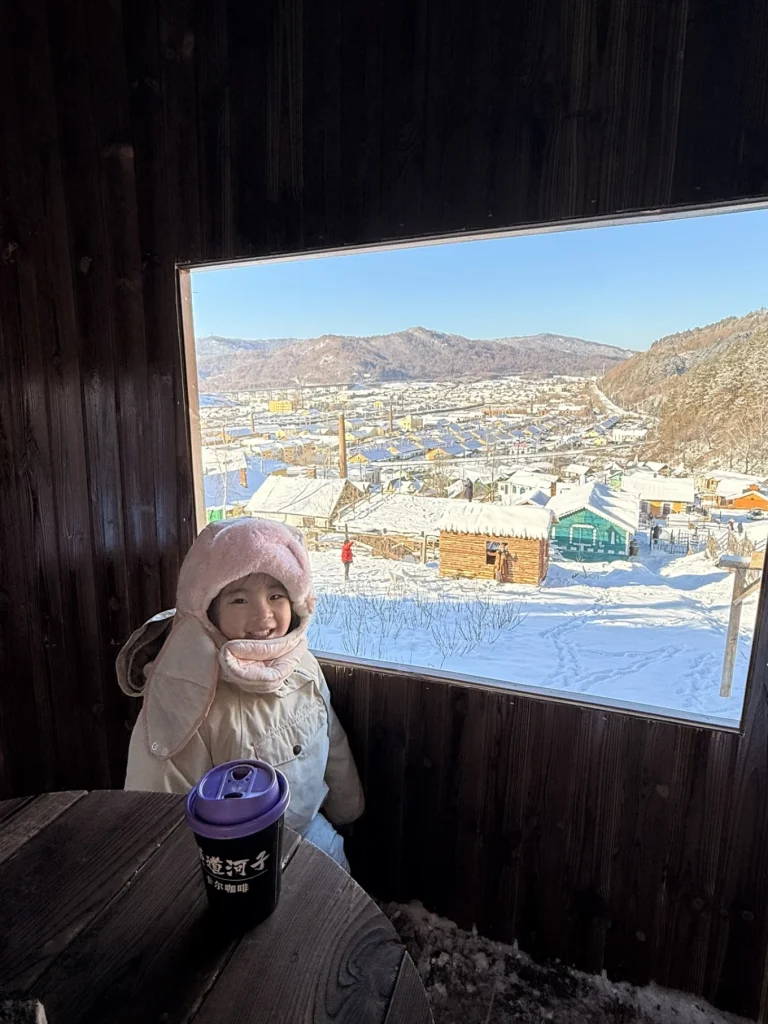
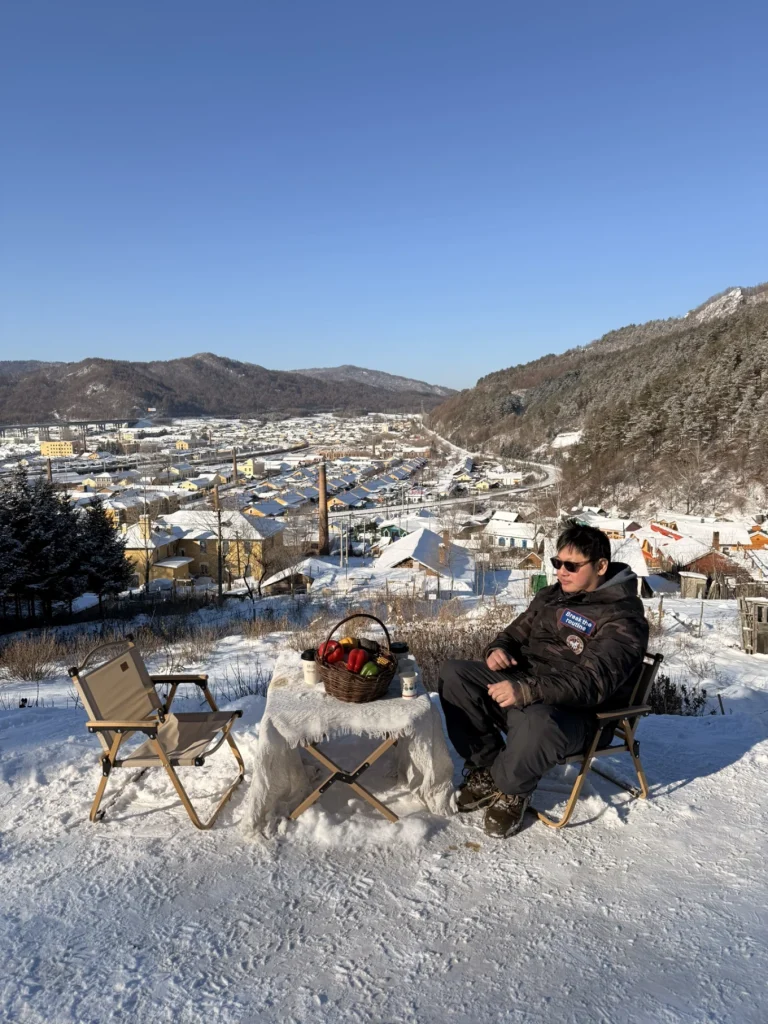
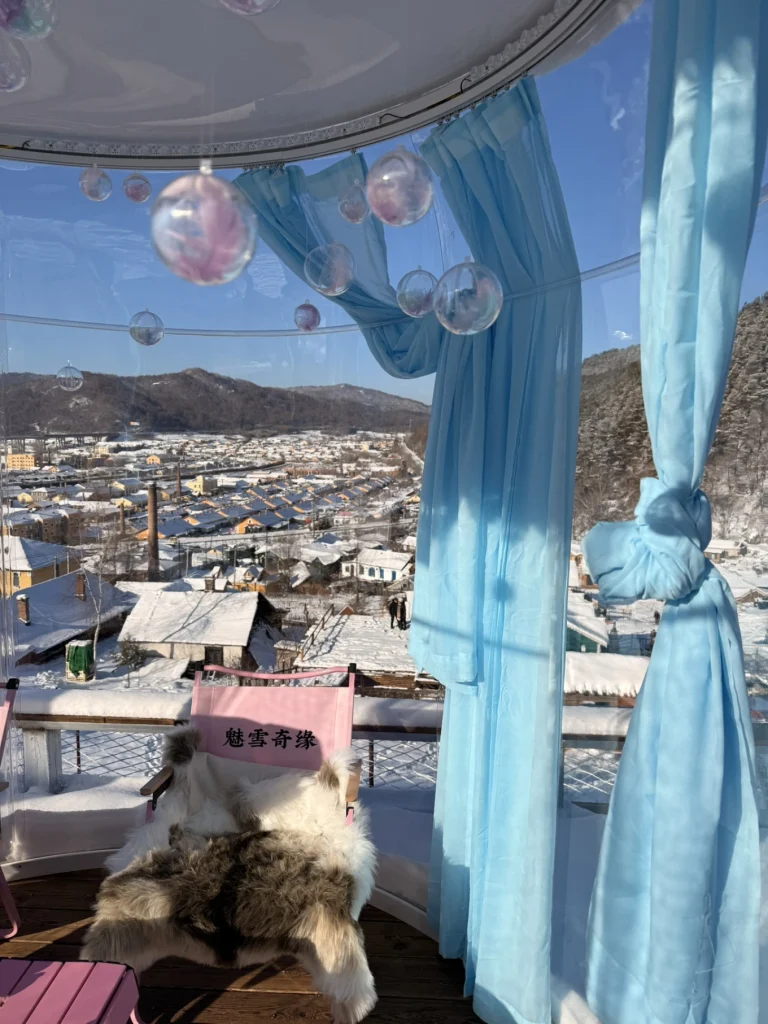
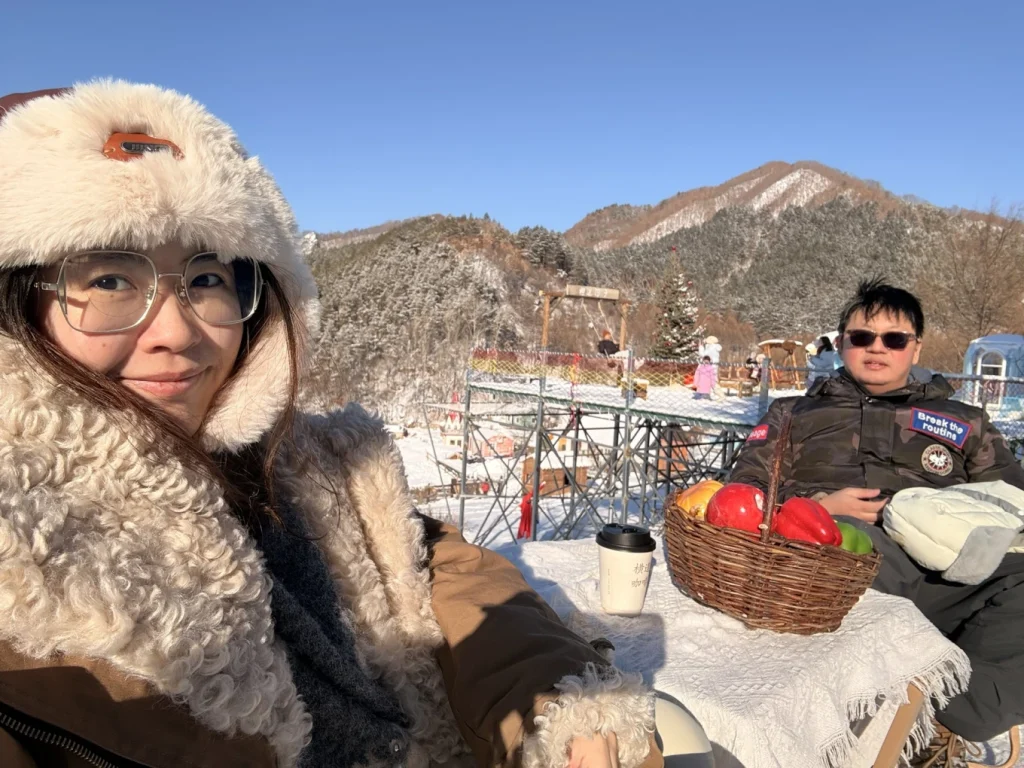
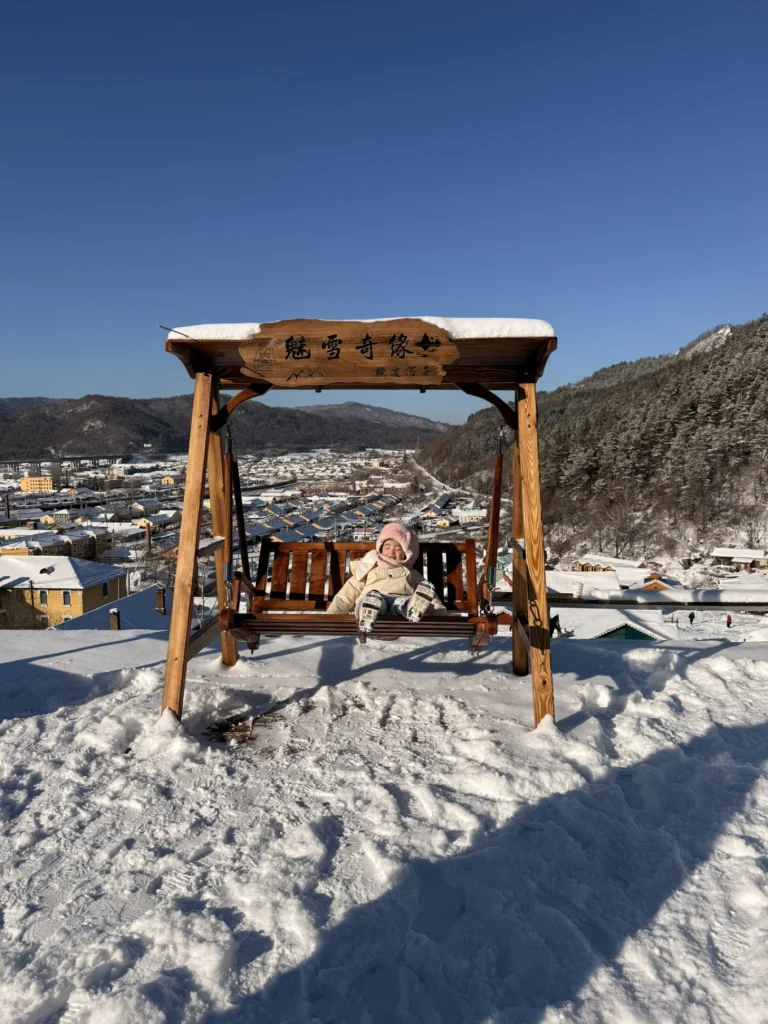
The view from above was a treat: the town looked like a miniature winter painting. Snow rooftops, curving streets, smoke from chimneys rising and then dissolving into the quiet air.
There is a big snow slide here, too. But this is more a thrill-seeking kind of slide and not for the youngest of kids. The magic carpet lift back uphill is convenient, though.
All in all, this area was quite worth the time and effort.
Oil Painting Village and a Train-Car Café
In the afternoon, we went to the Oil Painting Village. This was an area where art and tourism mesh naturally into the existing urban landscape.
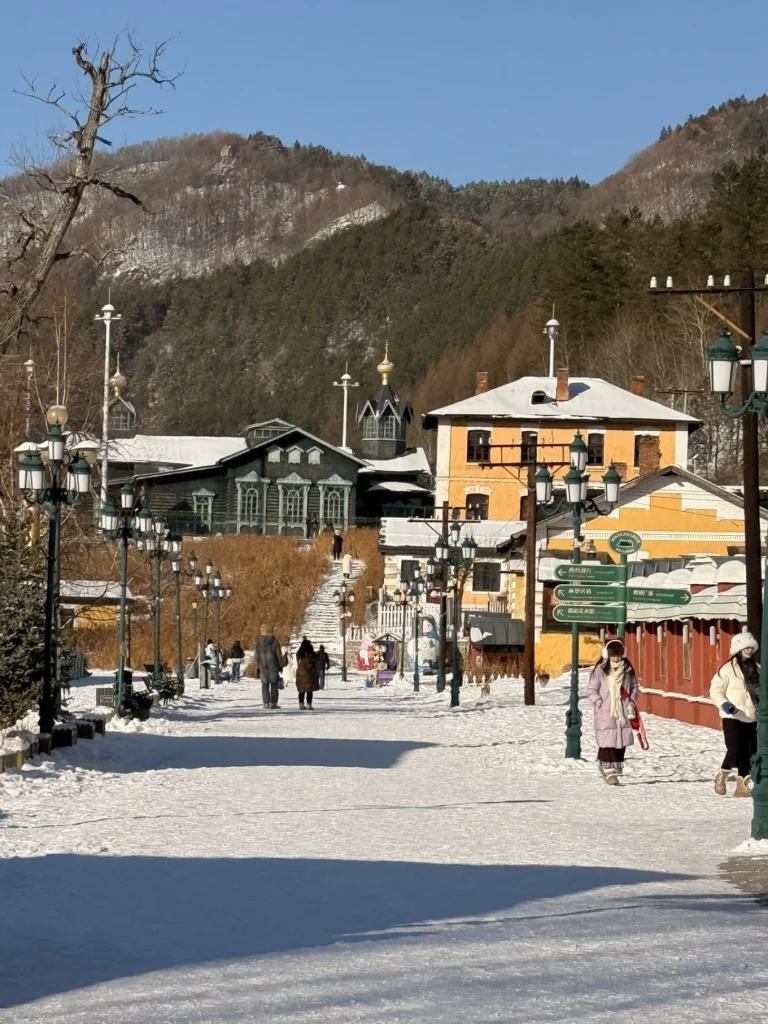
A standout here was a café housed in an old train carriage. Sitting inside, holding a warm drink, and watching snow outside made for a surprisingly nostalgic moment given the town’s railway history.
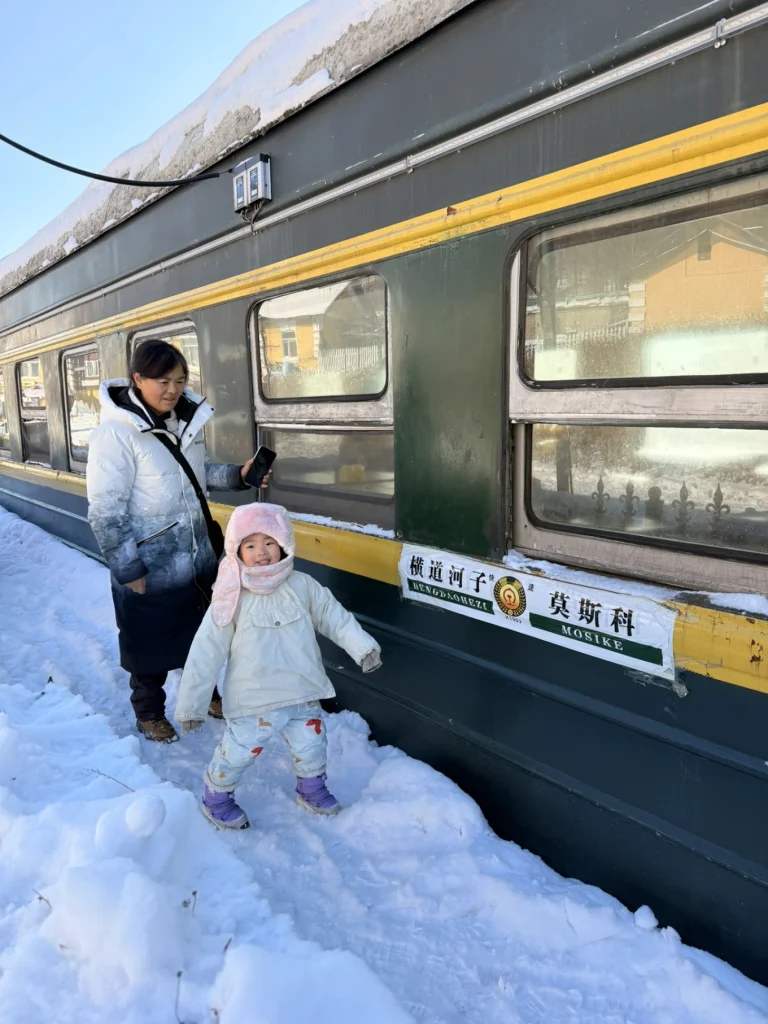
Wrapping Up the Day at Northeast Tiger Forest Park
The last stop was Northeast Tiger Forest Park, and we went there by taxi.
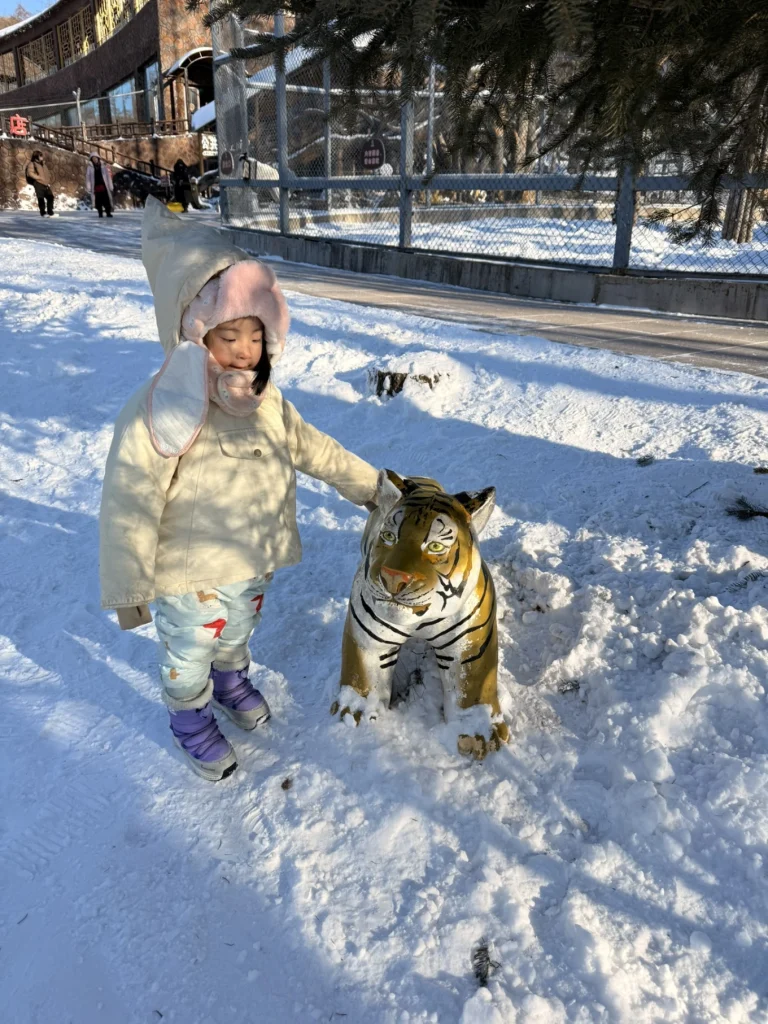
This park is the largest Siberian tiger reserve in Asia, and even other zoos buy tigers from here. It was impressive to see them in a snowy forest habitat.
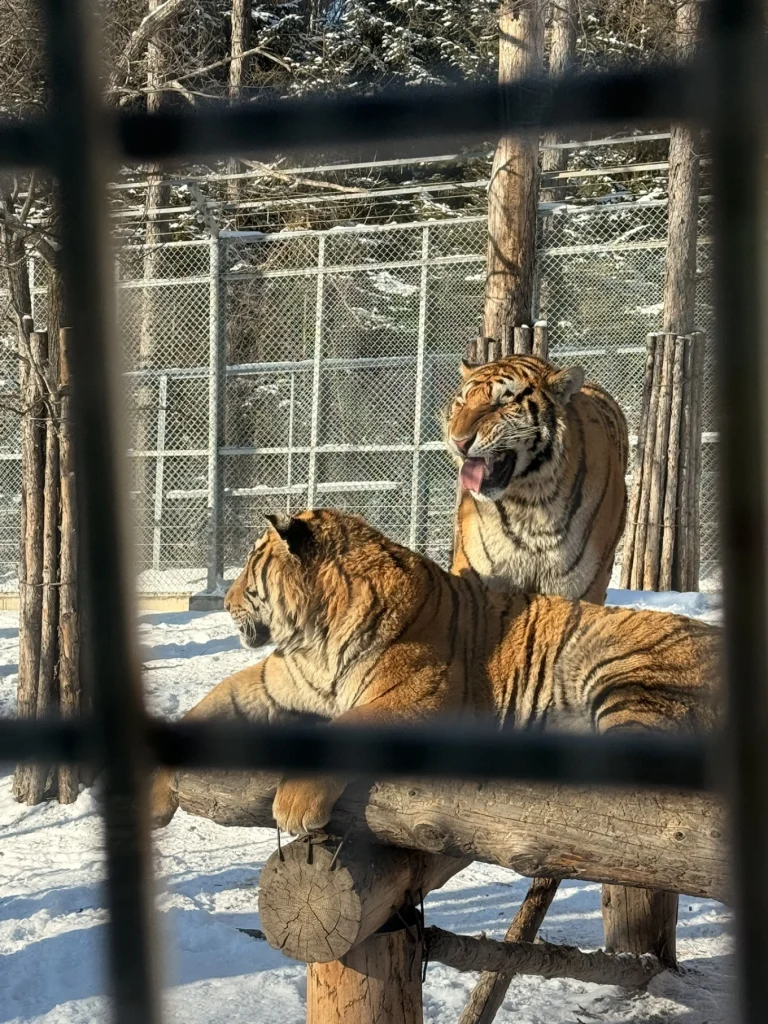
These tigers were big, a bit chubby, and far cuter than you would expect. It is even possible to feed them, which makes the whole experience quite unforgettable.
The scenery here really captured what people mean by Northeast China as “a sea of forest and snow.”
Is Hengdaohezi Is Worth Visiting in One Day?
Hands down yes.
Hengdaohezi is not about checking a list of famous attractions. It is about:
- Slow travel in the winter
- Architecture with a real history
- Snow-covered streets and quiet moments
- A town that does not feel like it is performing itself
Of all the places I visited during my Harbin trip, this one had the most lasting impact.
Practical Tips for Traveling to Hengdaohezi
- Best time to visit: winter
- Train tickets: buy as early as you can
- Museum visit: avoid Mondays if you plan to see the railway museum
- Footwear: wear proper snow boots
- Pace: plan to have downtime in your schedule for aimless wandering

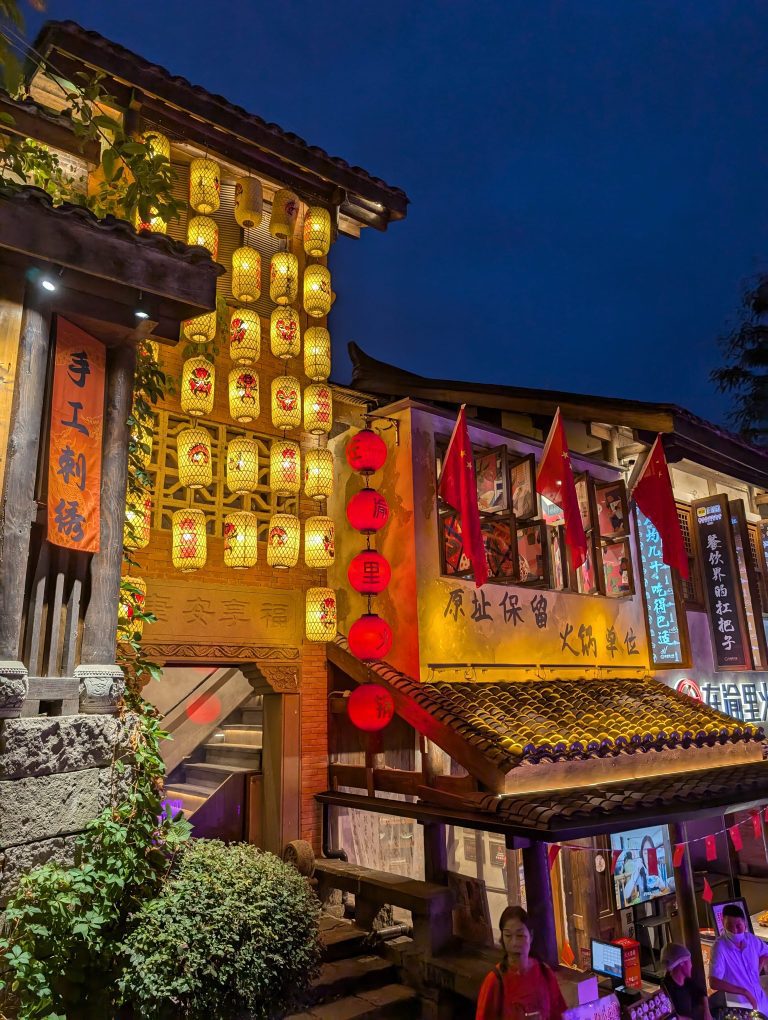




Hengdaohezi 1-Day Trip: Snowy Railway Town Near Harbin Travel Guide