


The number one travel mistake people make when booking hotels: Not treating peak seasons equally.
“If it’s busy, I’ll book early.” Sure, but early is VERY different for Kyoto’s cherry blossom season than it is for a week in Paris during summer. Book too early in Asia and you’re stuck scraping together smoking rooms at premium prices. Book too early in Europe and you could be losing out by not booking later.
Learn when to book hotels with this handy guide broken down by region, destination, and even specific peak periods.

Why Asia and Europe Require Different Strategies
Hotel prices in Europe are almost entirely driven by seasonality and weather. Summer (June-August) sees peak prices across most of Western/Southern Europe, and the demand curve is predictable/widely known. Supply is also quite high: Paris/Rome/Barcelona each have tens of thousands of hotel rooms combined. Dynamic pricing obviously moves around, but brutal sellouts for good budget/midrange selections are rare until within a month or two of travel.
Asia has a different cadence. Peaks tend to be based around festivals/natural phenomena with set dates that change year-over-year — cherry blossoms, Golden Week, Lunar New Year, Diwali. The window narrows, demand rushes in accordingly, and hotels in top cities (Kyoto, etc) are structurally limited. When that formula occurs, rooms at quality places don’t become pricey — they vanish, period.
Rule of thumb: Asia = Early bird. Europe = Smart bird.
Asia: When to Book by Peak Window
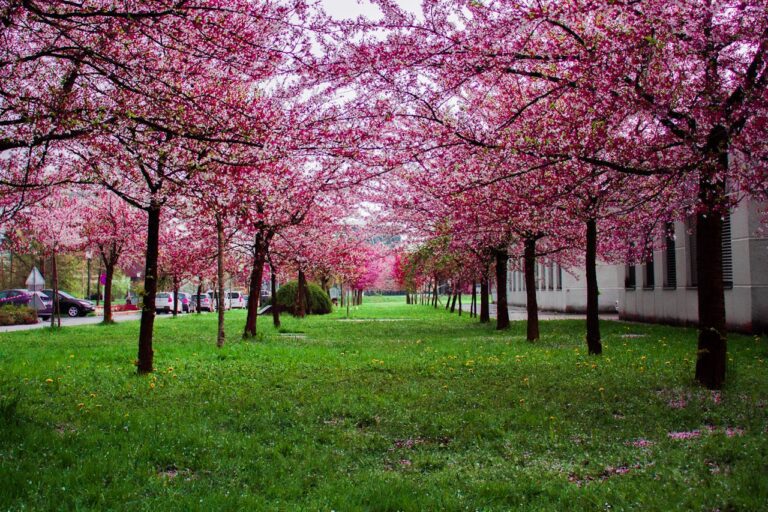
Japan — Cherry Blossom Season (Late March to Early April)
This is far and away the most competitive hotel season in Asia for international travelers. Demand is astronomical, timeframe is short (peak bloom only lasts around 1 week per city) and, most importantly for budget conscious travelers, Kyoto has very limited supply of nice hotels.
Book 6–10 months in advance for Tokyo and Osaka. Book 8–12 months in advance for Kyoto.
No that’s not a typo. Many booking sites only open reservations 6 months out for Kyoto specifically — when they do, good properties book within days. By 3 months out you’re choosing between the cruddy leftovers at premium prices. Hotel rates increase by 50–100% during sakura season compared to low season prices. A typical midrange hotel that costs ¥15,000/night in February might cost ¥30,000–¥40,000/night in late March.
The caveat: cherry blossom predictions vary year to year and you’ll be booking many months before these predictions are even announced. Common advice is to plan for your reservation to be during the first week of April — historically this has a higher than even chance of overlapping sakura season in Tokyo or Osaka — then shift later or earlier depending on predictions as they’re announced nearer your travel date.
If Kyoto books solid by the time you check, consider Osaka (30 minute train via shinkansen), Nara, or even Nagoya as alternatives with convenient day trip access.
Japan — Golden Week (Late April to Early May)
Golden Week is from around April 29-May 5 and overlaps a collection of national holidays into what is one of Japan’s busiest domestic travel weeks. International travelers only account for a fraction of hotel bookings this week, and if you’re staying at a hotel during this period you’ll be competing with the Japanese vacation rush. Golden Week demand is unprecedented for hotels and can push prices up significantly if you book late.
Book 4–6 months in advance minimum. Kyoto booking constraints apply. Tokyo has slightly more hotel supply and is a bit more forgiving but popular properties and central areas will still sell out far in advance.
Important note: Golden Week immediately follows cherry blossom season which means anyone looking to do both will have two separate narrow windows to tacklement. Late March – Early May is essentially one continuous peak season. If your dates span this range try and book accommodation as early as you can comfortably manage — I recommend 8–12 months in advance minimum for any portion of your stay in the Kansai region.
Japan — Autumn Foliage (Mid-November)
Autumn foliage season (Koyo) in Kyoto, Nikko and other parts of Japan sees similar demand to cherry blossom season but is slightly less known by novice travelers to Japan. Hotel rooms in Kyoto around mid-November book about as quickly as they do in April.
Book 5–8 months in advance if Japan is on your itinerary during this period and you’re visiting any destination known for autumn colors.
Southeast Asia — Cool/Dry Season (November to February)
Bangkok, Chiang Mai, Bali and Vietnam see unambiguously peak season from November – February when temperatures are cool, humidity is low and rainfall is at a yearly minimum. This is the timeframe that pulls most Western travelers into SE Asia and majority of hotels/bookings will be made within these 4 months.
Book 2–3 months in advance for Bangkok and Vietnam. Hotel supply is high and there is decent availability across midrange categories. Note Christmas/New Year period (roughly Dec 20 to Jan 5) is an exception to this rule — beachfront hotels in Thailand, Vietnam or Bali that are popular with digital nomads and longhaul travelers book extremely quickly 4–6 months in advance for these dates. Rates are regularly 100%+ higher than standard peak season.
Bali specifically: Christmas and New Year is a major holiday for villa and beachfront accommodations. Book 4–6 months in advance if you’re looking to stay in Seminyak or Canggu during December peak season.
China — National Golden Week (October 1–7) and Lunar New Year
National Golden Week creates crazy domestic demand within China. If you’re traveling to China during this week as an international visitor, popular scenic cities like Zhangjiajie, Guilin and Xi’an will be overrun with Chinese tourists and most nicer hotels will be booked.
Book 3–5 months in advance for National Golden Week. Book more if you’re trying to hit Chinese naturalscapes or heritage sites like the minority towns. Lunar New Year (usually Jan or Feb) is less predictable because it’s entirely dependent on when the holiday falls but most international tourist-centric cities in China will price sharply higher. Hong Kong sees high demand/limited promo deals this week as it’s popular with mainlanders. Areas of Southeast Asia popular with Chinese tourists will also see a big bump. Lunar New Year domestic migration within mainland China is the largest annual human migration on the planet — generally just avoid rather than plan for it.
Europe: When to Book by Peak Window
Summer Peak — June to August
European summer produces the easiest-to-guess peak of any global destination. Booking windows are a little more relaxed than Asia’s festival periods because there’s more supply, demand is wide, and prices — while high — don’t plummet into sold-out emergencies as swiftly.
The rule of thumb sweet spot for European summer travel is 3–5 months out.
That will get you most mid-range and upper-range properties in major cities. Within that, some important city-specific breakouts:
Venice: Supply is structurally low, demand is high, and the city regularly experiments with tourist access restrictions. Book Venice 4–6 months out in summer. It’s the one European city most likely to mimic Asia’s festival-city hotel markets — good rooms in popular areas do sell out very early.
Paris: Thanks to dynamic pricing, there’s less of a clear-cut answer for Paris. Our data from TripAdvisor shows that for Parisian stays in summer months, booking 2 months in advance has historically netted travellers the greatest savings against peak pricing periods. That said, Paris has lots of very popular small hotels (boutique properties, high-demand mid-range with strong repeat customer base) that book 4–5 months out for the best selection of room types and locales.
Rome: This one’s a lot like Paris — big hotel supply, wide range of properties with dynamic pricing. Book Rome 3–4 months out to ensure a stress-free choice of affordable rooms and great locations. Heads up if you’re coming for the sights — the biggies (Colosseum, Vatican) should be booked separately 30–60 days out, as they sell out weeks in advance of high season and are not included with your hotel reservation.
Barcelona, Amsterdam, Lisbon: Booking 3–4 months in advance should land you solid properties at prices that won’t make your eyes pop. Late deals within 2 weeks for Europe’s summer hotspots can absolutely happen ( hotels adjust prices based on last-minute cancellation flow ) but they’re tough to hope for if your travel dates are set in stone.
Smaller cities, or vacationing in Provence/Tuscany: Paid attention up top? Europe’s rural accommodations ( agriturismo in Italy, small hotels and vacation houses in France) often have very limited room counts and are made up of properties that book direct with repeat customers. If you’re spending summer in Provence or Tuscany, book your hotels 5–6 months in advance for best selection of best-value properties in popular areas.
Shoulder Season (May, September, October)
If you’re flexible on when to visit Europe, this is where the continent truly shines. Prices dip substantially outside of summer and winter months, with weather that’s often better than winter bargain season.
May and September/October are the single best booking windows for most European city breaks for one simple reason: You can usually book anywhere from 4–8 weeks out and still score great hotels for rates 20–40% cheaper than peak summer prices. Many properties also offer sharp discounts within 1–2 weeks of travel as they fight to fill rooms.
Christmas Markets and New Year (December)
Want to visit Germany, Austria, or the Czech Republic in December? Three words: Christmas markets.
Much like Asian festivals, hotels around Germany, Austria, and the Czech Republic’s festive markets sell quickly as tourists try to snag rooms during what is peak season — but locally speaking — in these destinations. Christmas markets usually run from late November to December 23.
Prague and Vienna in December are probably the two European cities that align most closely with Asia’s “festival city” hotel markets. These two destinations, along with Champagne-happy Strasbourg, France, should be booked 4–6 months out if you’re hoping to secure a room during Christmas markets. Domestic European travelers book these fast.
The Universal Rules That Apply to Both
Book refundable rates if the difference is negligible.
Hotel rates change constantly until your arrival date. By booking a refundable rate 4–5 months ahead of your trip, you lock in a level of certainty without fully committing — if rates decrease, simply cancel and rebook. If the lower, non-refundable rate will save you less than 15% compared to booking refundable now, book refundable.
Boutique properties require longer lead times than chains.
Boutique ryokans in Kyoto. Countryside agriturismo in Tuscany. Overwater bungalows in the Maldives. These properties have fewer rooms than larger chains, loyal repeat customers, and can’t afford to leave gaps in their booking calendars. If it’s a property with fewer than 20 rooms and is popular with foreign visitors, add 2–3 months to the standard window recommended above.
Mid-priced properties sell out before budget and first class.
There’s a sweet spot in every market. Hotels that hit that sweet spot have rooms that are clean, in a great location, have solid reviews, and are priced reasonably. Budget hostels turnover frequently. 5 star hotels have costly suites that will remain open longer. Expect to see sold-out magic occur in the mid-priced tiers during peak season.
Sunday is the best day to book.
Several independent data sets have shown that Sunday bookings – on average – get you marginally better rates. There’s less demand on the consumer side of the platform on Sunday, driving prices down very slightly. Book on Sundays. The savings are small, but they’re real.
Quick-Reference Guide
| Destination | Peak Window | Book How Far Ahead |
|---|---|---|
| Kyoto (cherry blossom) | Late March–early April | 8–12 months |
| Tokyo (cherry blossom) | Late March–early April | 6–9 months |
| Japan (Golden Week) | Late April–early May | 4–6 months |
| Japan (autumn foliage) | Mid-November | 5–8 months |
| Bali (Christmas/New Year) | Dec 20–Jan 5 | 4–6 months |
| Bangkok/Vietnam (dry season) | November–February | 2–3 months |
| Venice (summer) | June–August | 4–6 months |
| Paris (summer) | June–August | 2–4 months |
| Rome (summer) | June–August | 3–4 months |
| Tuscany/Provence (summer) | June–August | 5–6 months |
| Prague/Vienna (Christmas) | Late Nov–Dec 23 | 4–6 months |
| European cities (shoulder) | May, Sept–Oct | 1–2 months |
Bottom Line
“Book early for peak season” is good advice. But it’s not specific enough to be safe. Booking three months ahead of sakura season in Kyoto will find the hotels fully booked. Booking six months out for a trip to Paris in September will likely cost you more than necessary.
The guideline you can actually use: Is your peak season event-driven and specific (Asia’s festivals, Japan’s bloom seasons, European Christmas markets) or season-driven and diffuse (Europe in summer)? If it’s event-driven, you should book 6–12 months out like you would concert tickets. Season-driven peaks are more flexible — 3–5 months out should be fine, and booking refundable rates gives you a safety net if you need to change dates.
Book smart, not early.















Best Time to Book Hotels in Peak Season (Asia vs Europe)