

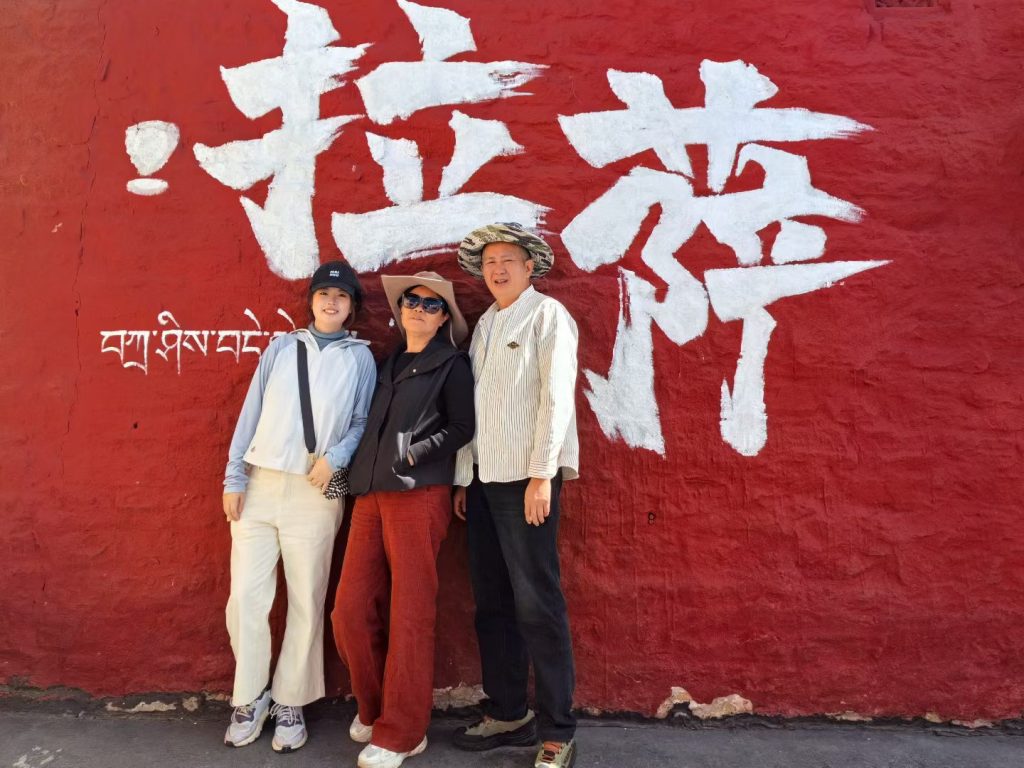
Arriving at Barkhor Street (八廓街) for the first time was like setting foot into the spiritual center of Tibet. The thin air buzzed with the sound of prayer wheels spinning, incense smoke wafting, and the steady stream of pilgrims walking clockwise around Jokhang Temple. This old-town street isn’t just a highlight for visitors — it’s a vibrant and centuries-old circle of devotion.
As a photographer and traveler who loves capturing authentic culture, Barkhor immediately captivated me from the moment I stepped on its smooth stone pavement. I’ll never forget how peaceful and lively it was all at once. Here’s what I discovered wandering the world’s most famous old-town street.
- The Vibe of Barkhor Street
- Spinning with the Kora Energy
- History of Barkhor Street
- Exploring the Side Alleys
- The Rooftop Café with Views
- Picnic Lunch with Panoramic Views
- Street Scenes & Local Encounters on Barkhor Street
- Capturing the Colors of Lhasa
- Jokhang Temple: The Heart of Barkhor Street
- Bird’s Eye View of Barkhor Street, Lhasa
- Tibetan Yogurt (Sky) Under Prayer Flags
- Visiting Barkhor Street, Lhasa: Travel Tips & Guide
- Final Thoughts
The Vibe of Barkhor Street
The first thing that hit me when I arrived at Barkhor was the kaleidoscope of colors. Bright prayer flags swayed in the wind, golden temple roofs glinted in the sunlight, and locals in dark robes meandered around Jokhang Temple. I started walking clockwise, matching their pace, and felt a sense of calm wash over me.
It was surprisingly emotional to be here too. Many Tibetans have walked for days, even weeks, from the distant provinces of Tibet just to make this pilgrimage circuit called Barkhor Kora. Every few meters, someone would stop to kneel down, place their palms together, and touch their foreheads to the ground. It was moving to witness this quiet act of devotion again and again.
Spinning with the Kora Energy
Even if you’re not Buddhist, you’ll feel like you’ve entered a meditative state walking the Kora. Locals would spin prayer wheels with one hand, whispering mantras in their other. I remember seeing an old woman with prayer beads wrapped around her wrist, eyes half-closed, totally in her rhythm.
The entire street loops about one kilometer around Jokhang Temple. The alleys on either side are packed with vendors selling everything from prayer flags and yak butter lamps to turquoise jewelry and wooden amulets. Every shopkeeper seemed to have stories to tell — not just about their goods, but their families, faith, and way of life in Tibet.
History of Barkhor Street
Barkhor Street is the soul of Lhasa’s Old Town and dates all the way back to the 7th century. Legend has it that King Songtsen Gampo built Jokhang Temple when he conquered Lhasa. Since then, this street has been a major religious and commercial hub for Tibetans and travelers from across Asia.
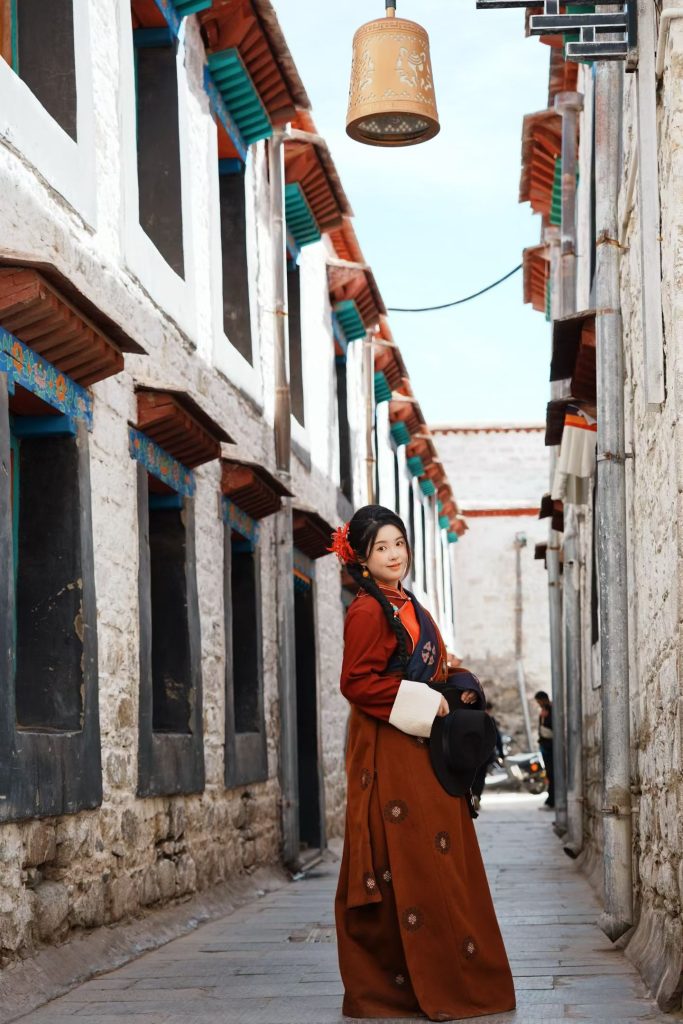
You can almost feel the centuries of history in every aspect, from the cobbled pathways to the sloped stone walls and intricately carved wooden window frames painted in rich reds and blues.
Exploring the Side Alleys
I took a left down one of the narrow alleys branching off Barkhor and realized how seamlessly this street fused together the sacred and the mundane. Monks would pass right next to souvenir sellers, and school children dashed around the feet of pilgrims in long robes.
It’s chaotic yet peaceful at the same time, which is a theme for much of Lhasa. This street has been bustling for over 1,000 years, but time seems to slow down here.
The Rooftop Café with Views

Whenever I need a short break, I always stop by Makye Ame Café, right along Barkhor Street. Its bright yellow façade and Tibetan-style windows are impossible to miss. The café’s name actually comes from a famous love legend.
Legend has it that the 6th Dalai Lama would meet his muse, a beautiful woman, in this very place. He wrote his best love poems when he was with her, so visitors come here to soak up some romance.
I sat by the window on the upper floor, watching the view of Jokhang Temple and the endless stream of pilgrims circumambulating it below. Butter tea went really well with the sunshine and the sound of distant chanting that drifted up from the street like a soft lullaby.
Street Scenes & Local Encounters on Barkhor Street
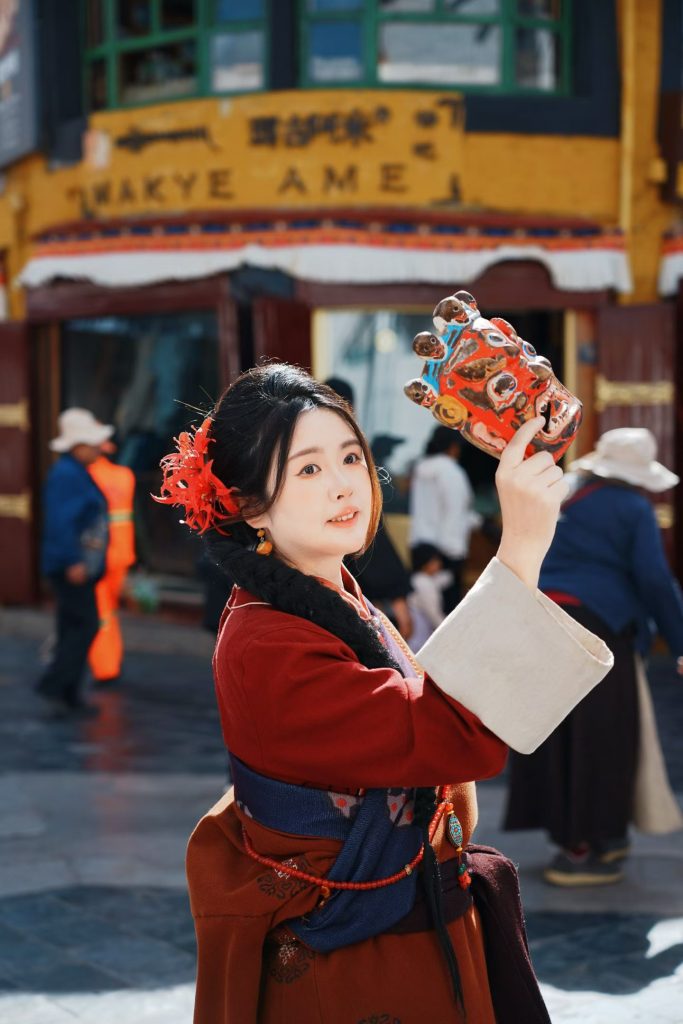
One of the things I enjoyed most about exploring Barkhor was interacting with Tibetans. Smiles are universal, even if we don’t always speak the same language. I met an amiable shopkeeper who patiently taught me how to hold a traditional Tibetan mask, painted in vibrant reds and blues.
As I held it up for a photo, I felt like I could sense the skill and tradition behind every brushstroke. It’s a living art passed down for generations. Everything here, from jewelry to rugs to masks, has the heartbeat of the Tibetan plateau in it.
Capturing the Colors of Lhasa
Walking deeper into the old town, I was mesmerized by the color palette of it all. The ochre yellow walls, the blue trims on the windows, and red doorframes all seemed to glow with life in the afternoon light. I couldn’t resist taking photos at every corner.
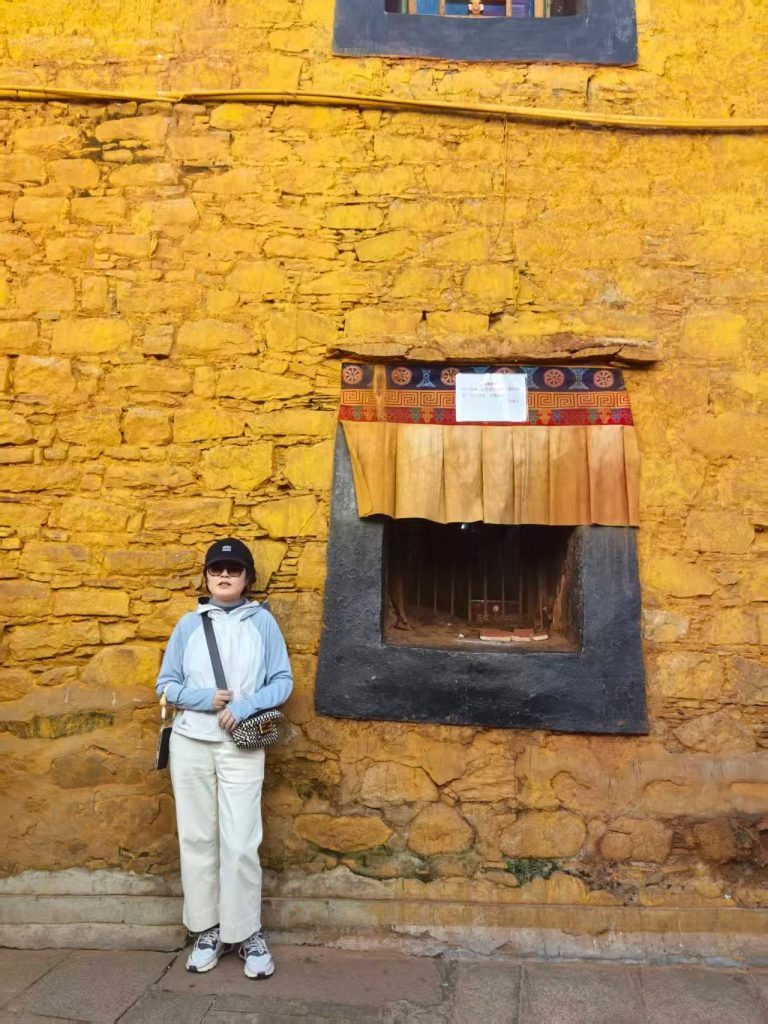
I remember thinking that even the walls seem to whisper stories of the travelers, monks, and merchants who had walked these same streets.
Jokhang Temple: The Heart of Barkhor Street
The spiritual core of Barkhor Street is Jokhang Temple, a key pilgrimage site in Tibetan Buddhism. The temple is over 1,300 years old and is said to house a precious statue of Buddha that was originally brought from Nepal by Princess Bhrikuti.
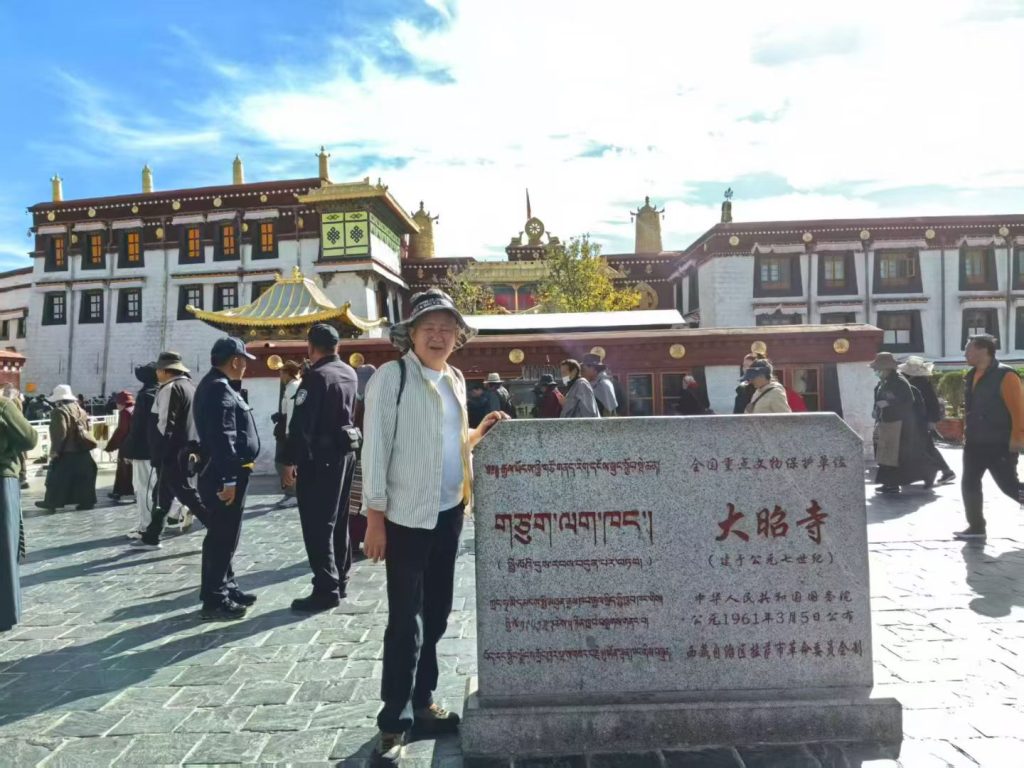
When I first entered the temple courtyard, the smell of burning juniper and yak butter was so strong and intoxicating. Monks were chanting softly while visitors made offerings and took incense smoke blessing. Despite the crowds, there was an overwhelming sense of peace.
Visitors can enter the courtyard and even have a look inside the temple at different altars and smaller prayer halls. Just outside, hundreds of pilgrims are making the ritual circumambulation around the complex.
Bird’s Eye View of Barkhor Street, Lhasa
From the rooftop, Barkhor Street looked like a living mandala. Jokhang Temple is the center, with the street unfurling around it like a great golden prayer wheel and the snow-capped mountains framing everything in stillness.

It’s one of those scenes you just stop and stare at, feeling both small and connected to everything at the same time. The mix of bright prayer flags, whitewashed walls, and cobalt blue sky is something I’ll never forget.
Tibetan Yogurt (Sky) Under Prayer Flags
Before I left Barkhor, I treated myself to a small bowl of fresh Tibetan yogurt. It’s thick, creamy, and slightly sour, topped with caramelized yak butter and crunchy nuts. Sitting under a mass of prayer flags flapping in the mountain breeze, it was the perfect ending to my day.
I sipped it slowly and thought about how these simple joys — food, sunlight, a shared laugh — connect us all, no matter where we come from in the world.

Visiting Barkhor Street, Lhasa: Travel Tips & Guide
If you’re planning to visit Barkhor Street in Lhasa, here are a few things I learned:
- Timing: March to October is best, when the weather is clear and not too cold.
- Altitude: Lhasa is 3,650 meters above sea level. Drink lots of water and go slow, resting if needed.
- Dress modestly: Shoulders and knees should be covered when entering temples.
- Temple etiquette: Always walk clockwise around Jokhang Temple.
- Photography: Respectful of monks and locals. No flash and ask permission.
- Access: Barkhor Street is in the center of Lhasa’s Old Town, within walking distance of most major attractions.
Final Thoughts
Walking Barkhor Street was easily one of the most meaningful travel experiences of my life. It was more than just sightseeing — it was about feeling the pulse of Tibetan culture and the shared devotion of the pilgrims.
Every sound, smell, and smile will stay with me for the rest of my life. If you’re ever planning a trip to Tibet, don’t just rush through Barkhor. Walk slowly, breathe deeply, and let its energy wash over you.
It’s not just a street — it’s the very soul of Lhasa.


Barkhor Street Lhasa Guide: My Walk Through the Heart of Tibet