

The Japan Rail Pass used to be a no-brainer. Buy it before you fly, exchange it for a physical pass at the airport, and ride any shinkansen you want. That was pretty much the one thing anyone traveling to Japan for the first time was told.
Until October 2023. JR increased the price of their nationwide pass by nearly 70%, and the math changed overnight.
The 7-day pass increased from ¥29,650 to ¥50,000. The 14-day pass rose from ¥47,250 to ¥80,000. The 21-day pass increased from ¥60,450 to ¥100,000. This isn’t exactly keeping up with inflation – it’s completely reshaping what the pass is worth and who it makes sense for.
Starting in 2026, the truth is: it depends. If you’re planning certain trips, the JR Pass will still be worth it. But for other trips – including the most popular Japan itinerary of all – it actually loses you money. Let’s break down the math so you know which is which.
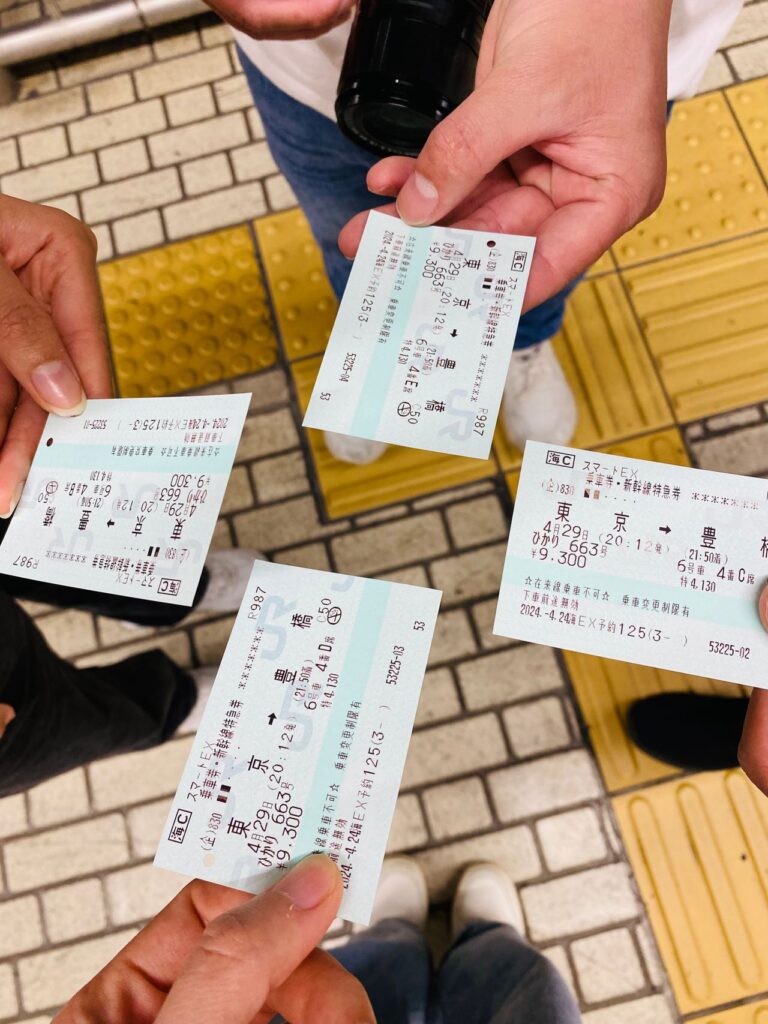
What the Japan Rail Pass Actually Covers
Before we dig into the math, I want to be explicit about what you get with the pass because there are a lot of misconceptions floating around.
What you get:
- Unlimited travel on all JR Group trains nationwide, shinkansen included
- JR local and express trains anywhere in Japan
- Certain JR buses, and the JR Ferry to Miyajima
- Reservation fees are included (these can now be handled through the JR app)
What you don’t get:
- Tokyo Metro and private lines (you’ll want a Suica or IC card for these no matter what)
- Metro systems in cities like Kyoto, Osaka, etc.
- Certain lines to tourist destinations not operated by JR (ex. some trains in Nikko, parts of Hakone)
- Express train discounts on the Nozomi and Mizuho shinkansen without an additional ticket
This last bullet is a big one. Most people coming to Japan want to ride the Nozomi between Tokyo and Kyoto. It’s fastest, has the shortest travel time between the top stops, and is the most frequently scheduled train. You can take the Nozomi with a JR Pass, you just have to pay a supplemental fare of ¥4960 each way as of 2026. If you don’t pay the supplement you’re stuck with the slow lane, the Hikari, which is only about 5–10 minutes slower overall.
2026 JR Pass Prices at a Glance
| Pass Type | Ordinary Class | Green Car (First Class) |
|---|---|---|
| 7-day | ¥50,000 | ¥70,000 |
| 14-day | ¥80,000 | ¥110,000 |
| 21-day | ¥100,000 | ¥140,000 |
Important note for 2026: A further price increase is scheduled for passes purchased through overseas agents from October 1, 2026. The 7-day Ordinary pass will rise to ¥53,000 through those channels, while the official Japan Rail Pass online store is expected to hold at ¥50,000. If you’re buying before October 2026, buy direct through the official JRP reservation site or as early as possible.
Children aged 6–11 pay half the adult fare. Under-6s travel free if sitting on a lap.
The Route Math: When the Numbers Actually Work
Is the JR Pass worth it? The only question that needs to be asked is if the shinkansen tickets you would otherwise purchase individually totals more than the price of the pass. Let’s see how that equation breaks down on some common travel routes.
Scenario 1: Tokyo → Kyoto → Osaka (Golden Route Only)
Japan’s most popular tourist route. Since the 2023 price increase, the JR Pass no longer covers the cost of this route.
| Route | Individual Ticket |
|---|---|
| Tokyo → Kyoto (Hikari) | ¥13,320 |
| Kyoto → Osaka | ¥570 |
| Osaka → Tokyo (Hikari) | ¥13,750 |
| Total | ~¥27,640 |
That’s roughly half the cost of a 7-day JR Pass. Even adding a few local JR rides in Tokyo or Kyoto, you won’t get close to ¥50,000. For this trip, buy individual tickets.
Scenario 2: Tokyo → Kyoto → Hiroshima → Fukuoka → Tokyo
This is where the pass starts earning its keep. Adding Hiroshima and Fukuoka to the route means two more long-distance shinkansen legs — and the math flips.
| Route | Individual Ticket |
|---|---|
| Tokyo → Kyoto | ¥13,320 |
| Kyoto → Hiroshima | ¥10,980 |
| Hiroshima → Fukuoka (Hakata) | ¥5,940 |
| Fukuoka → Tokyo | ¥22,220 |
| Total | ~¥52,460 |
That’s already over the 7-day pass price — and you haven’t counted any local JR rides, day trips, or airport transfers. This itinerary makes the pass a clear winner.
Scenario 3: Tokyo → Hakone → Kyoto → Kanazawa → Tokyo
A popular itinerary that mixes regions. Important caveat: the Hakone Tozan Railway and Romancecar within Hakone are not covered by the JR Pass — you’d want a Hakone Free Pass for that section. But JR lines to and within the rest of the route apply.
| Route | Individual Ticket |
|---|---|
| Tokyo → Odawara (JR to Hakone) | ¥1,490 |
| Odawara → Kyoto | ¥12,010 |
| Kyoto → Kanazawa (Thunderbird) | ¥7,130 |
| Kanazawa → Tokyo | ¥14,380 |
| Total | ~¥35,010 |
Not quite break-even on the 7-day pass, but close — and if you’re adding day trips from Kyoto (Nara, Osaka day trip via JR) and local JR rides in Tokyo, it tips over into pass territory.
When to Buy the JR Pass
Buy the JR Pass if your Japan trip:
- Consists of three or more segments of long-distance Shinkansen travel (e.g. Tokyo-Kyoto-Hiroshima-Fukuoka)
- Includes substantial additional rail travel outside of major urban centers (Kanazawa, Nagasaki, Kagoshima, Sapporo)
- Involves day trips which use JR trains/routes (e.g. Hiroshima to Miyajima by JR ferry, Kyoto to Nara by JR Nara Line)
- Allows you to travel spontaneously, and not having to worry about individual ticket prices is worth it
Skip the JR Pass if your Japan trip:
- Consists of only Tokyo plus day trips to Nikko or Kamakuru (these can be done cheaper on IC card or point-to-point)
- Is a simple Tokyo + 1 area return trip (Kyoto/Osaka) – you’ll save much more by buying individual tickets
- Focuses on just 1 region (Kansai or Tokyo-only, etc)
- Will be spent traveling at a more leisurely pace where you don’t plan on taking as many trains total
TLDR; If you would pay ¥45,000 or more on shinkansen tickets alone, the pass is worth it. Otherwise, save the money and buy individual tickets.
Regional JR Passes — The Overlooked Alternative
You may have noticed we haven’t mentioned one JR pass at all. That’s right – consider skipping the Japan Rail Pass entirely if your travels will take you within a single region of the country. Regional passes cover a specific area for fractions of the cost of a nationwide pass — and if you’re only traveling within one region, they will almost always save you more money than the Japan Rail Pass.
JR East Pass (Tohoku Area Pass)
Tokyo northward including Tohoku and some Niigata prefecture. Valid for 5 days and costs around ¥20,000. Ideal for travelers hitting anywhere in northern Honshu.
JR West Sanyo- San’in Area Pass
Osaka, Hiroshima, and other areas of west Japan. Valid for 7 days and costs around ¥23,000. If you’re planning a trip focused on Kansai all the way down to Kyushu, this pass is cheaper than the Japan Rail Pass.
Kansai Wide Pass
Osaka, Kyoto, Hiroshima, Kobe, Nara, and parts of Wakayama prefecture. Covers 5 days and costs around ¥12,000. One of the best value passes out there — perfect for a trip centered around Kansai.
JR Kyushu Pass
All of JR Kyushu’s rail lines. Valid for 3 days from around ¥8,500. Ideal for anyone spending a few days in Fukuoka, Nagasaki, Kumamoto, or Kagoshima without needing to venture to the rest of Japan.
Hokuriku Arch Pass
Tokyo to Osaka via Kanazawa and the Hokuriku region. A newer pass that’s gained a lot of traction with travelers wanting to hit the Japan Sea coast. Costs around ¥24,000 for 7 days.
Don’t Forget: You’ll Need an IC Card Too
Regardless of whether or not you purchase a JR Pass, you’ll still want a Suica/IC card for travel within cities. Tokyo Metro, Osaka Metro, buses, and most private rail lines are not covered by JR at all — the JR Pass won’t work there.
Purchase ¥3,000–5,000 worth of value when you arrive and add value as necessary. You can use it to pay for purchases at convenience stores, vending machines, and lockers as well. Essentially, it’s as close to a magic payment card in Japan as you’ll get. It’s honestly more useful day-to-day than the rail pass will be for most of your urban travel.
Practical Buying Tips
Buy in advance. You must purchase the pass as a voucher before arriving in Japan (you redeem it for the actual pass at specified JR offices within the country). The exception is that now you can buy it within Japan if you must — for a small premium — but the out-of-country price is less and you’ll skip lines.
Timing is everything when activating. When you exchange your voucher for the pass, you select the date you want to activate the pass — you have 30 days from your exchange date to choose that start date. So if you’ll be spending the first couple of days in Tokyo and won’t need any long distance trains, activate it the day you depart for Kyoto, not the day you arrive. That gives you the maximum time with your pass to account for days you’ll be traveling.
Make seat reservations online. JR Pass holders can now make seat reservations using their smartphone, through the JR East or JR West apps, or by scanning the QR code at ticket gates. Say goodbye to lines at the ticket windows to make seat reservations, although you can still do that if you want.
October 20,the Japan Rail Pass price increase overseas. If you purchase your Japan Rail Pass through an authorized overseas agent after October 1, 20,the price of a 7-day pass will be ¥53,000 instead of ¥50,000. Purchasing directly from the official Japan Rail Pass website eliminates the agent’s surcharge.
The Verdict
| Your Itinerary | Recommendation |
|---|---|
| Tokyo only | Skip — use Suica |
| Tokyo + Kyoto/Osaka return | Skip — buy individual tickets (~¥27,000) |
| Golden Route + Hiroshima | Buy 7-day pass |
| Golden Route + Hiroshima + Fukuoka | Buy 7-day pass — clear winner |
| Kansai-focused trip | Kansai Wide Pass |
| Northern Japan (Tohoku) | JR East Pass |
| Slow travel, one region | Skip nationwide, check regional pass |
| Two weeks, multi-region | 14-day pass — run your numbers first |
| Three weeks, extensive travel | 21-day pass |
The JR Pass is not dead. But it is no longer the automatic purchase it once was. Run your actual route through the numbers — or use the Japan-guide.com rail pass calculator — before you buy. For the right itinerary, it still represents genuine value and real convenience. For the wrong one, you’re leaving tens of thousands of yen on the table.













Leave a Comment