
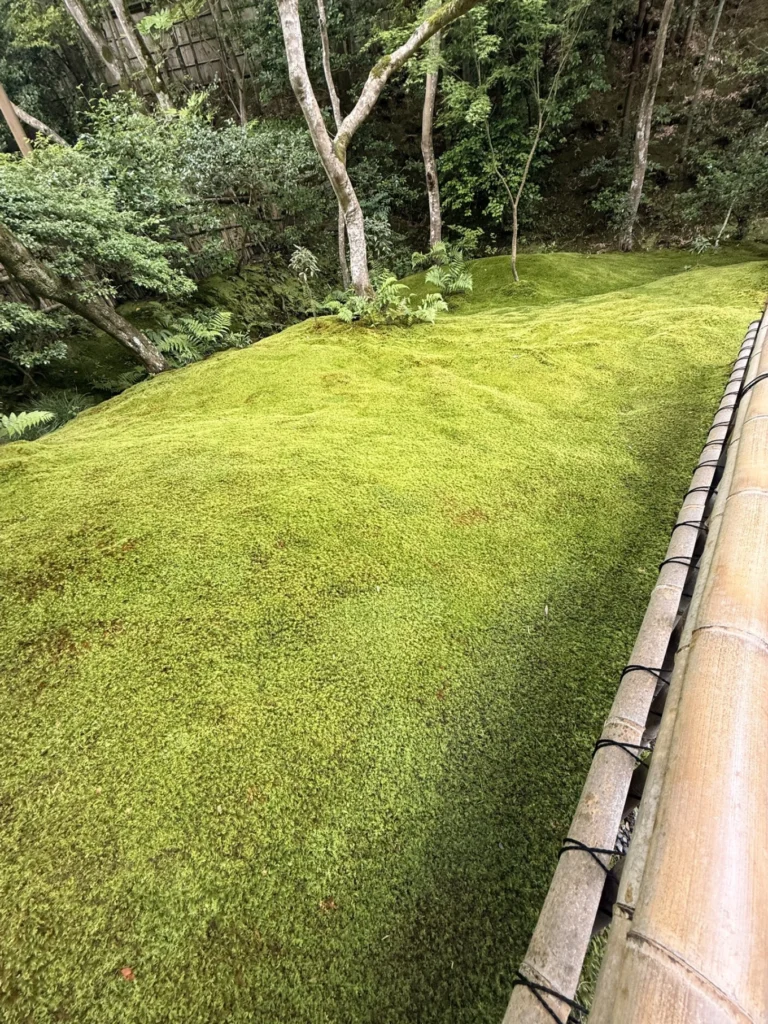
Tucked away in Arashiyama’s quieter northern sections, Gioji Temple (祇王寺) is another of Kyoto’ secret moss temples. Almost every surface of its garden is covered in lush green moss which sprouts up over the earth in soft hills, drapes around exposed tree roots and carpets the ground beneath a dense woodland of maple trees.
Walking inside instantly feels like you’ve entered another world. It feels cooler inside the trees, the light dims to a gentle shade and the sound of Arashiyama fades away behind bamboo fences.
That being said, Gioji Temple is very small.
As beautiful as its moss garden was, we completed its main visitor circuit much quicker than we thought we would. Charging adults ¥500 for admission, we didn’t feel it held incredible value as a “destination” attraction. Unless you have a lot of time on your hands, it’s best visited on a longer walk through northern Arashiyama, rather than as a reason to visit Kyoto itself.
- Gioji Temple at a Glance
- Our Honest Verdict: Is Gioji Temple Worth Visiting?
- Arriving at Gioji Temple
- Inside Gioji Temple’s Moss Garden
- A Temple Best Experienced Slowly
- The Tragic Story Behind Gioji Temple
- How Long Do You Need at Gioji Temple?
- What to Combine With Gioji Temple
- When Is the Best Time to Visit Gioji Temple?
- Photography Tips for Gioji Temple
- Practical Tips Before Visiting
- Frequently Asked Questions
- Final Thoughts on Visiting Gioji Temple
Gioji Temple at a Glance
| Visitor information | Details |
|---|---|
| Japanese name | 祇王寺 |
| Location | Northern Arashiyama, Kyoto |
| Address | 32 Kozakacho, Sagatoriimoto, Ukyo-ku, Kyoto |
| Opening hours | 9:00am to 5:00pm |
| Last admission | 4:30pm |
| Adult admission | ¥500 |
| Child admission | ¥100 |
| Suggested visit | 20 to 40 minutes |
| Best for | Moss gardens, quiet walks and photography |
| Main drawback | The grounds are very small |
Opening times and admission fees can change, so check the official temple website before travelling. The details above were last verified in July 2026.
Our Honest Verdict: Is Gioji Temple Worth Visiting?
Gioji Temple is worth visiting when you are already exploring northern Arashiyama, but we would not make a special trip solely for this temple.
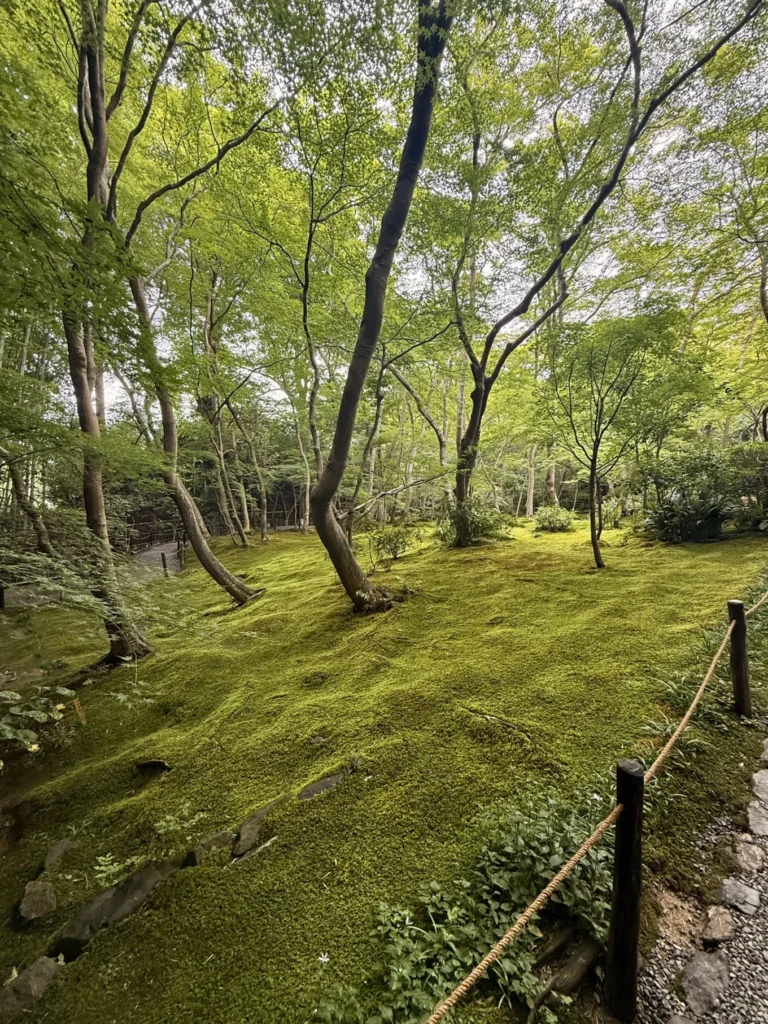
The moss garden itself is very pretty. At its peak saturation, the whole scene glows in varying shades of green, with skinny tree trunks jutting out of a carpet that appears deceptively plush. Really, it’s one of those gardens that isn’t decorated by plants: It is the plants.
That being said, it doesn’t take long to see everything. The walkway throughout the temple grounds makes a small circuit around the moss garden and tiny temple structures. Despite stopping often to take photos, we didn’t spend much time there at all.
While ¥500 isn’t expensive for Kyoto, you have to consider the value you’re getting from the temple as a whole. Other temples nearby are larger and contain much more architecture and history to explore for about the same price.
So we can only recommend Gioji if you’re coming for its atmosphere and not as a full-fledged temple experience. It’s best as a quick, calming 30-minute intermission between other spots in Arashiyama.
Arriving at Gioji Temple
Gioji Temple is set apart from Arashiyama’s busiest district. North of the Bamboo Grove, Togetsukyo Bridge and main shopping roads, the streets progressively thin out and grow quieter.
Stepping away from the crowd is part of the charm.
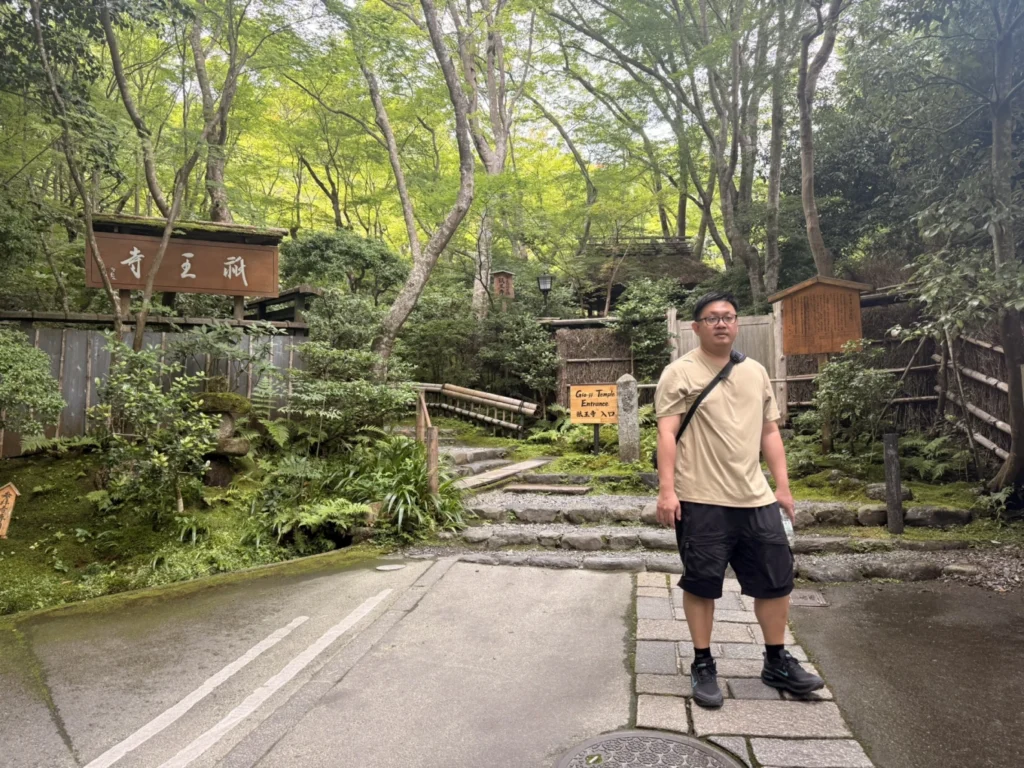
The path to Gioji Temple winds past residential streets, traditional bamboo walls and tree-covered hills. By the time we arrived at the entrance, the crush of tourists common around central Arashiyama was nowhere to be found.
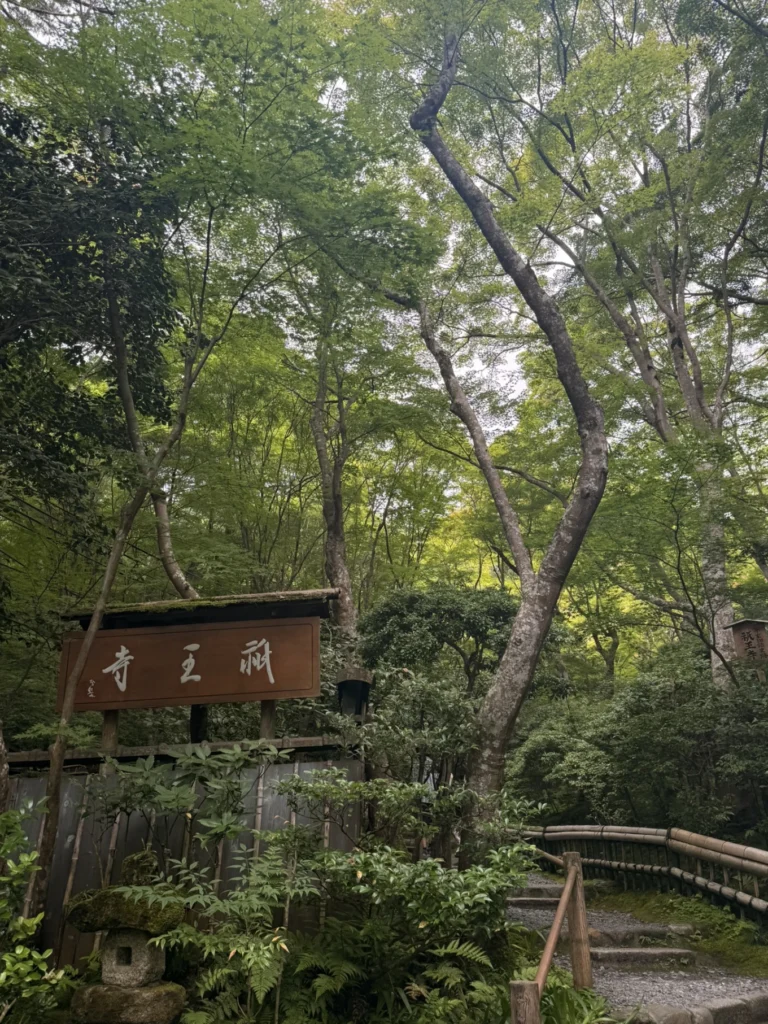
At the temple’s entrance, a wooden plaque displays the Japanese name of the temple among ferns, shrubs and moss-covered rocks. Bamboo fencing and uneven stone stairs set the tone. You feel you’ve stumbled upon something special even before buying your entrance ticket. Rather than feeling like popular tourist site in Kyoto, it feels more like the start of a trail through the woods.
Kyoto’s official tourism website estimates it takes 20 minutes to walk to Gioji Temple from JR Saga- Arashiyama Station or Randen Arashiyama Station. The walk from Hankyu Arashiyama Station is about 30 minutes.
These times are just approximations. If you stop by the Bamboo Grove, Jojakkoji Temple or any of the other sites along the way your trip will certainly take longer.
Inside Gioji Temple’s Moss Garden
As soon as you pass through the gate into Gioji Temple’s garden, the transition is complete.
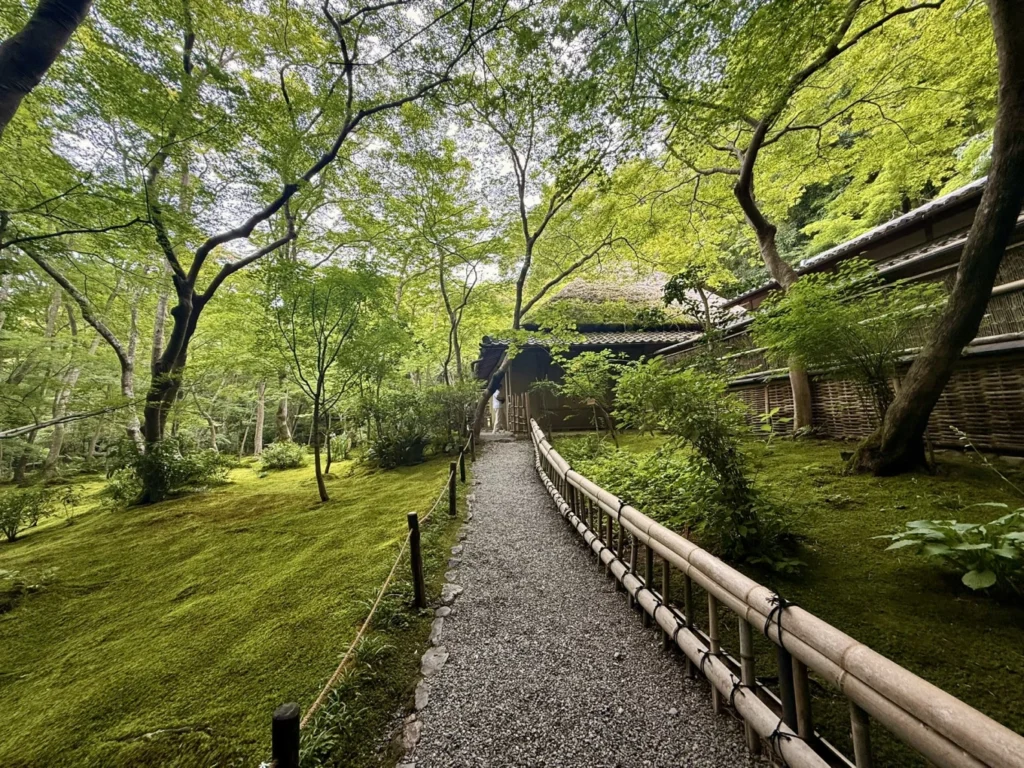
Walking up a short path of gravel that snakes between wooden railings, bamboo fences and moss-covered inclines, trees frame the walkway and their leafy branches create a loose tunnel above. Their shade provides cool respite while also maintaining the dampness the moss loves so much.
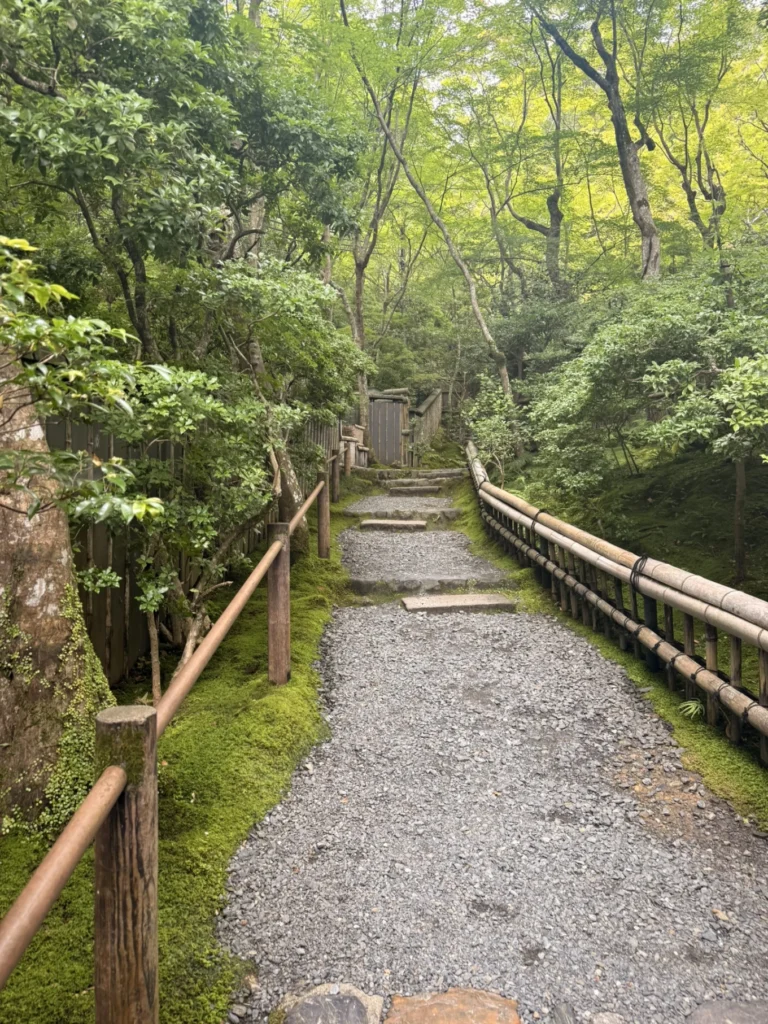
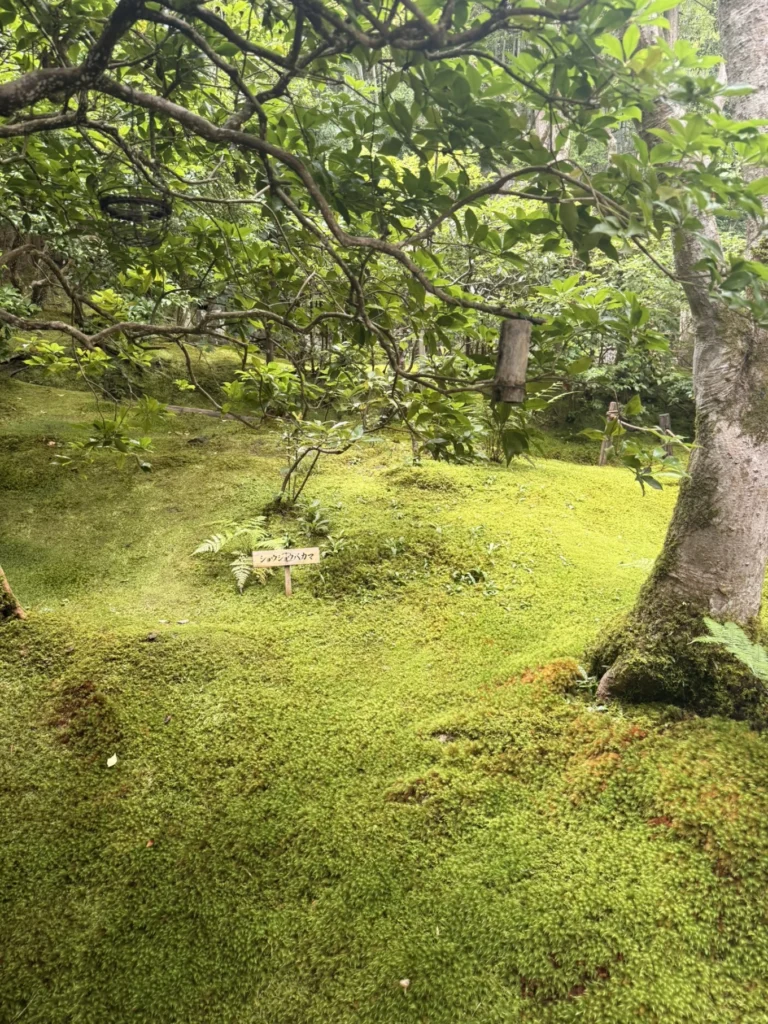
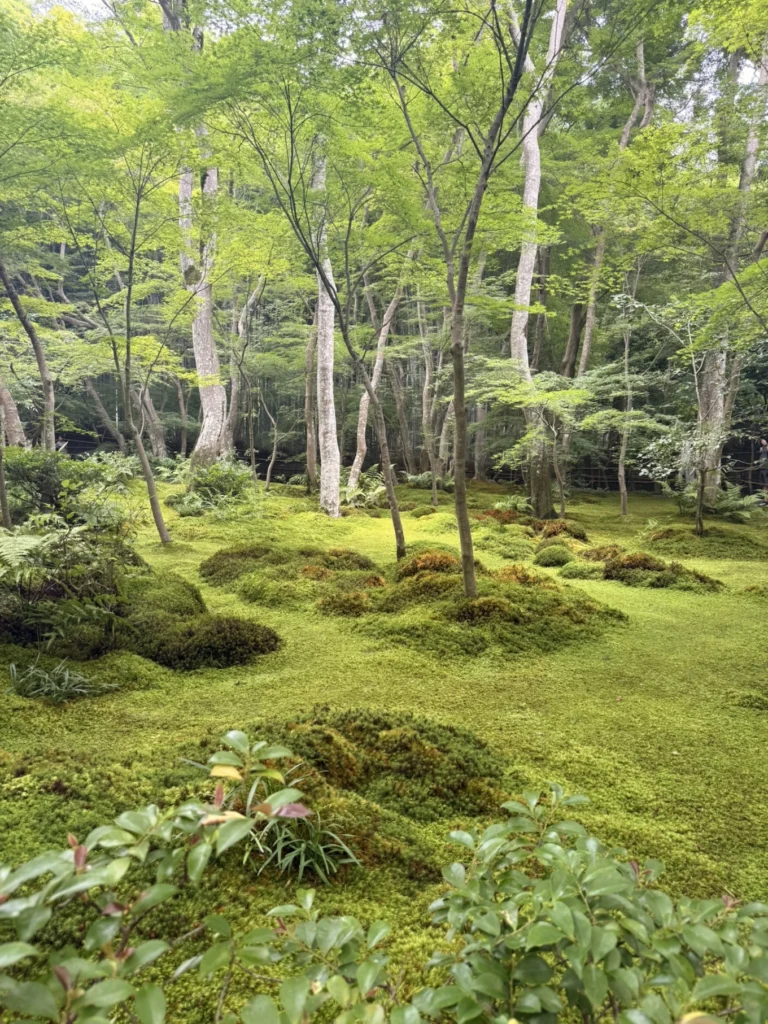
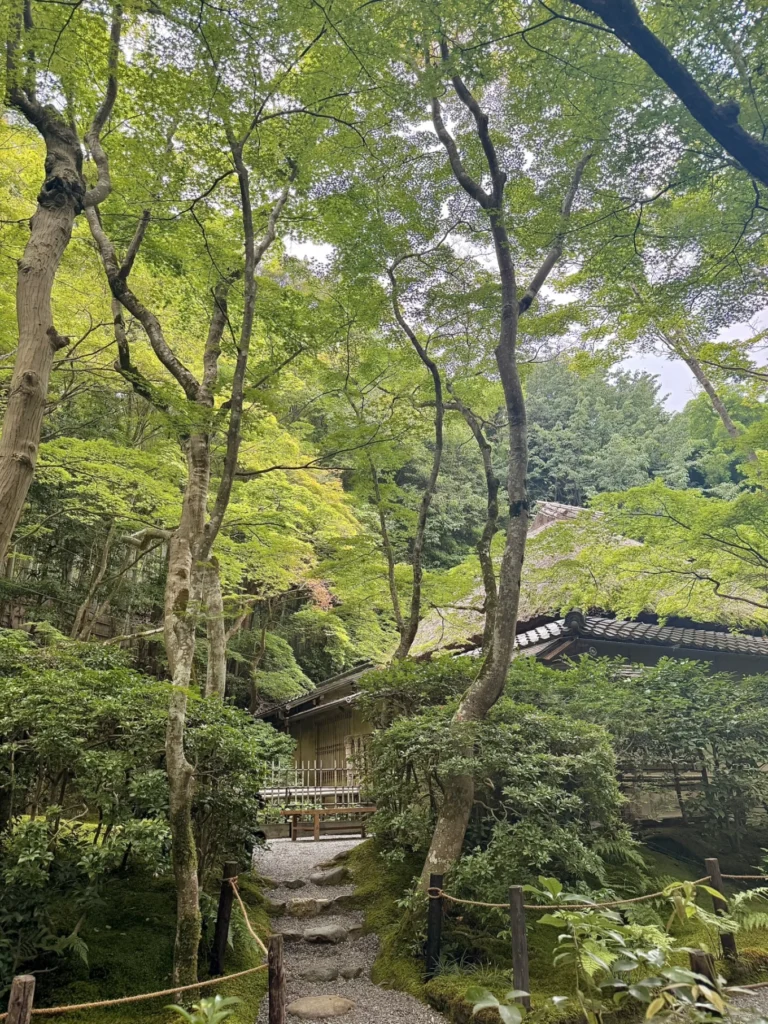
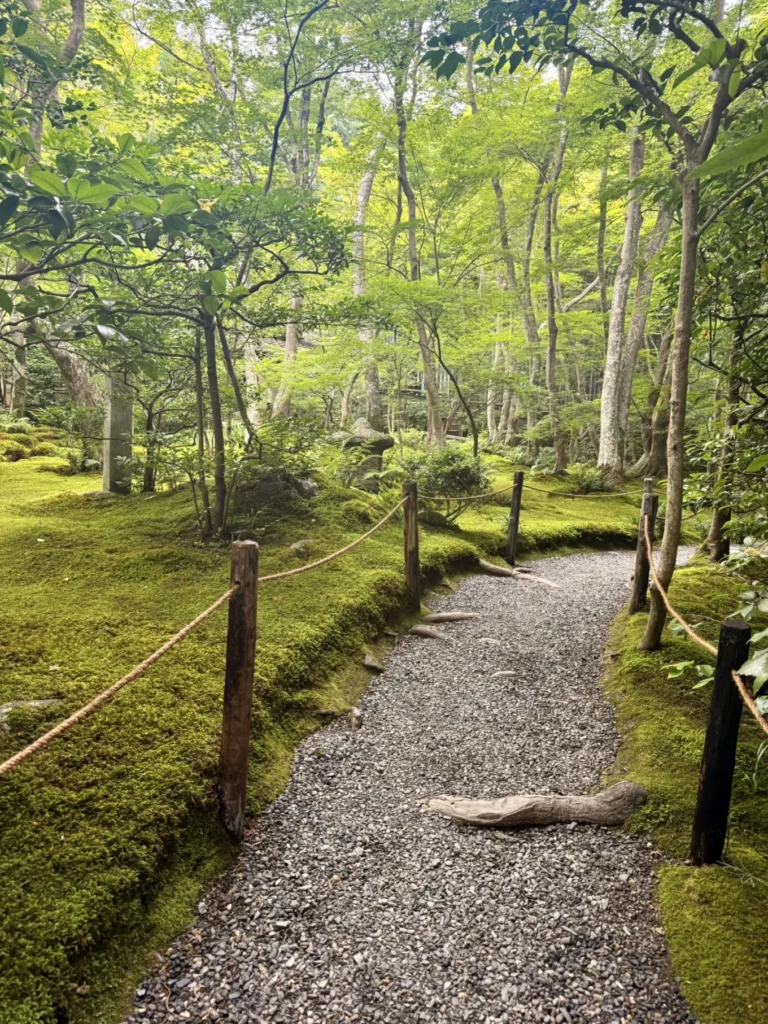
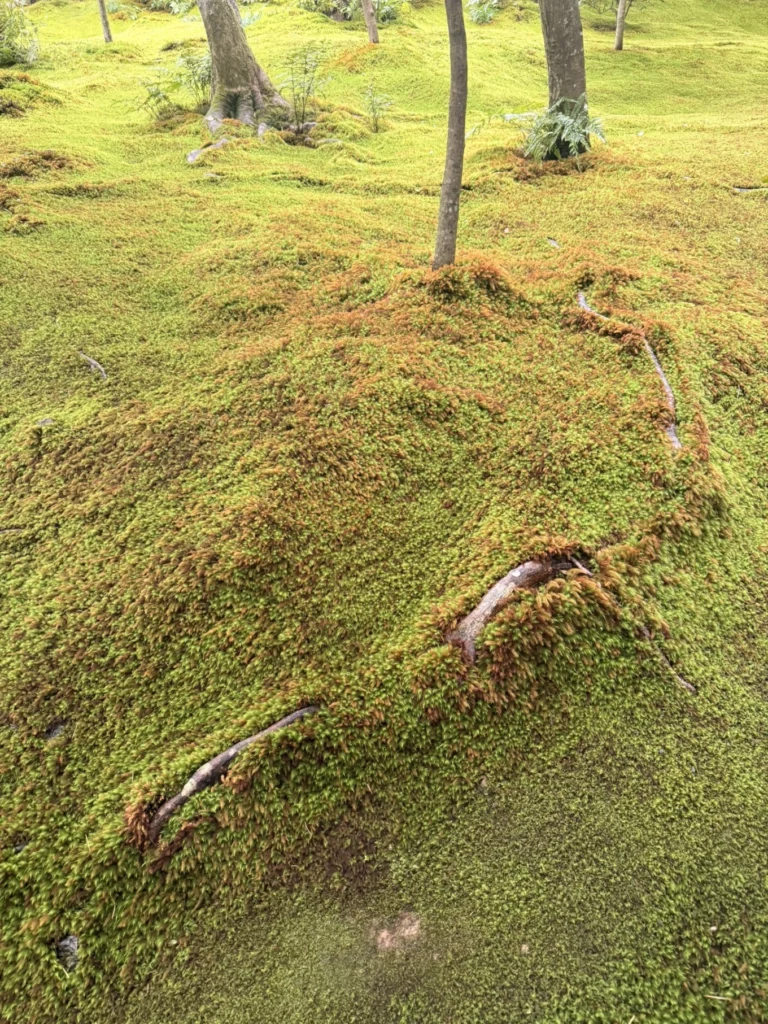
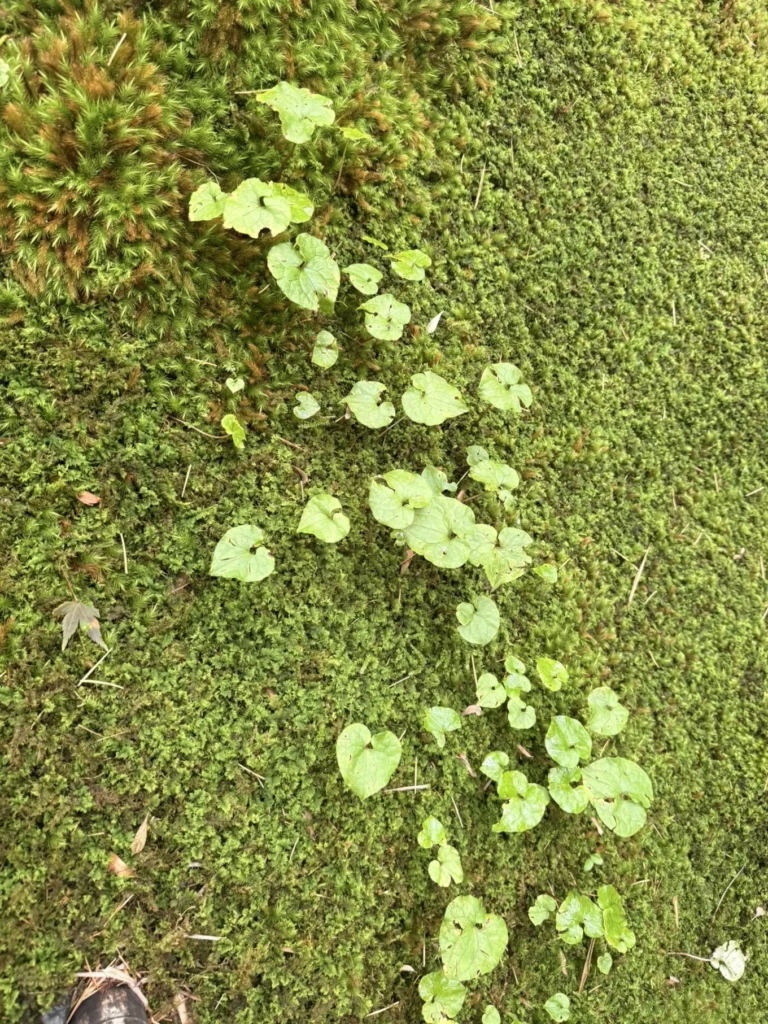
Rather than boasting a dramatic pond, monumental gate or impressive temple hall out front, the allure of Gioji lies in its textures.
Parts of the moss garden look like a soft green carpet. Elsewhere the mossy hills are rounded mounds of emerald, olive and buttery-yellow-green. Small ferns and foliage peek out from between patches of moss while tree roots weave organic lines across the floor of the garden.
We found the moss garden to be at its finest when the path opened up to reveal a wider area. Up here the trunks of maple trees popped up from a sea of moss that stretched as far as the eye could see. It looked almost otherworldly, like something out of a fantasy film.
However, we did not feel as if we were in another world. Uneven patches of moss, scattered tree branches and even some patches of brown reminded us this was real—a living garden, not a manicured lawn.
Kyoto Travel Guide explains how sunlight peeking through the leaves onto moss garden floor is what really makes Gioji stunning.
“A moss garden with trees all around, Gioji is deeply shaded. It is most striking when the shafts of sunlight filter through the moss.”
A Temple Best Experienced Slowly
Gioji Temple is so small you could technically visit it in ten minutes, snap a few photos, and leave.
Sure, you’ll see the sights, but you’d be missing out on why it’s worth visiting in the first place.
Your visit gets better when you stop looking for “things to see” and open your eyes to smaller details: mosses of different species, water droplets on leaves, textures like woven bamboo fences and dappled sunlight throughout the garden.
Scattered around are small displays of moss in ceramic bowls. They’re there to remind visitors that what you’re seeing isn’t one single type of moss spread across the garden. Up close, you can see each variety has a different color, thickness, and shape.
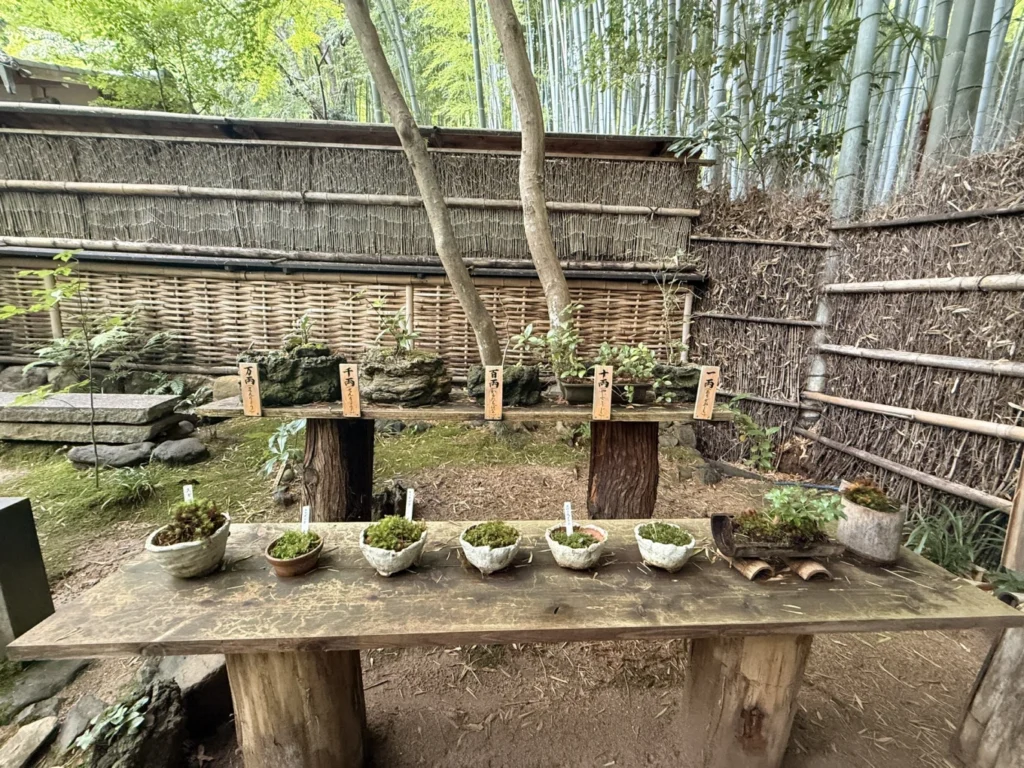
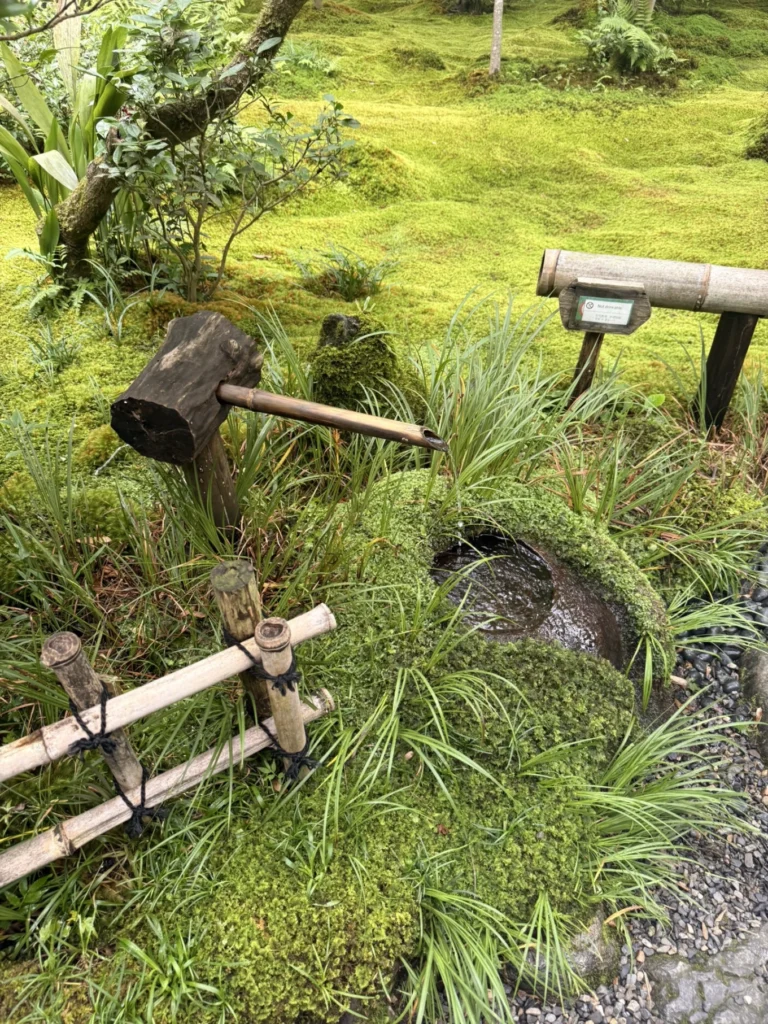
Grazing grasses and moss surround a moss-covered water feature. The sound of water is subtle rather than overpowering, but it fits – there’s an emphasis on silence and tranquility at Gioji Temple.
If you’re going off a list of “things to do” in Kyoto, you might skip Gioji. But if you enjoy peaceful gardens, photography, and exploring Kyoto at a slower pace, you’ll appreciate what this temple has to offer.
The Tragic Story Behind Gioji Temple
Cloaked in quiet beauty, Gioji Temple’ holds a tragic history from Japan’ most famous classic: The Tale of the Heike.
Named after Gioji, a dancer linked to Taira no Kiyomori (the leader of the Heike Clan), the temple came to be following her exile. After losing Kiyomori’ favor, she fled the capital alongside her mother and younger sister. The trio shaved their heads and took to life as Buddhist monks. Later, another one of Kiyomori’ mistresses joined them.
Gioji Temple itself is located on what was once the grounds of the Ojo-in Temple. The current temple describes Gioji as the “convent of tragic love.” Ojo-in Temple was supposedly founded by Ryochin, a student of Buddhist leader Honen. As time passed, Ojo-in declined, and Gioji Temple remains as a small sanctuary on its grounds.
Stepping inside the main hall, you’ find statues that illustrate Gioji’ story. In addition to those figures, there’ also a statue of Dainichi Nyorai. Known as the Buddha of Light, his presence here connects Gioji to the many other Buddhist temples in the area. Made of wood, the statues depicting Gio and her friends link the small temple to Japanese medieval literature and the politics of the era.
Knowing Gioji Temple’ history adds a certain sadness when visiting. What once felt secluded now feels purposeful. It serves as a reminder that this little slice of peace was once a place of withdrawal from the dangers and politics of the imperial court.
How Long Do You Need at Gioji Temple?
20-40 Minutes
If you spend less than 20 minutes, you’ll likely be rushing through the garden. Spending around 40 minutes will allow photographers, moss enthusiasts, and fans of Gio’s story to linger a little longer.
Visitors will rarely need more than an hour. While exploring Gioji, most will find themselves spending 20 to 40 minutes inside the gardens. Since the wheelchair accessible areas are somewhat limited, guests will find it hard to fill an entire day here. Consider visiting neighboring attractions in addition to Gioji.
What to Combine With Gioji Temple
Gioji is located on one of northern Arashiyama’s nicest walking paths.
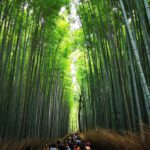
A good itinerary could involve starting at the Arashiyama Bamboo Grove before heading towards Jojakkoji Temple and Nisonin Temple. Head north to Gioji and continue on to Adashino Nenbutsuji and the remaining historic district of Saga Toriimoto.
Jojakkoji is approximately five minutes away from Nisonin by foot. Gioji is a short walk north of there. Adashino Nenbutsuji is about 12 minutes past Gioji. Kyoto’s tourist bureau website maps these temples together as a one-day course through Saga- Arashiyama’s less busy side.
Pair Gioji with Daikakuji Temple if you choose. The official Gioji website guesses it takes 25 minutes to walk from temple to temple.
Combining temples helps with our biggest issue of value. Gioji might seem lackluster if it’s the only thing you pay to see on your itinerary, but it makes for a pleasant green destination in the middle of a day full of temple hopping.
When Is the Best Time to Visit Gioji Temple?
Late spring and summer
Moss looks lush during warm, humid months. Patch upon patch of green plants create the fairy-tale aesthetic that this temple is famous for.
Overcast weather will usually be your friend. Even lighting means fewer shadows and better exposure for the different hues of green.
Autumn
Fall is one of the most picturesque times to visit Gioji. Deep red and orange maple leaves provide a pop of color to contrast against the green moss. This adds visual interest without disrupting the garden’s tranquil vibe. Kyoto’s official tourism website spotlights this season as one of the temple’s top views.
The downside is the foliage season is popular and there will likely be more tourists in Arashiyama.
After rain
The moss garden can look its best after a bout of light rain. When wet, moss turns a deep shade of green and glistens. Rocks may be slick from rain, so walking shoes with some traction are recommended.
We understand the temptation, but visitors should not walk on the moss. (Even for photos.) The garden’s ecosystem is fragile and there are ropes along the pathway to delineate where visitors should stay.
Photography Tips for Gioji Temple
Gioji is a photogenic paradise, but the shade makes shooting tricky.
Camera phones tend to compensate for low light with high exposure, washing out the moss into neon green or sickly yellow hues. Dialing down the exposure by a few notches will retain more detail and produce a photo more representative of the garden’s actual colors.
Wide angle photos are great for conveying the size of the moss carpet and encompassing trees. Up-close photos are just as rewarding, because they allow you to appreciate tiny details and plant variety that wider shots simply don’t capture.
Photographers will find their favorite shots along stretches where the gravel path loops around. Framing your photo with the rope barrier, bamboo railing, or tree trunk in the foreground adds depth while helping to ensure visitors only wander the roped-off path.
Practical Tips Before Visiting
Wear walking shoes you don’t mind getting dirty. You will likely walk a fair distance to get to Gioji, as it is located off the beaten path in Arashiyama. Parts of the walkway through the temple consist of gravel and rock steps/even surfaces.
Bring water if visiting in the summer, especially if you plan on hitting the Bamboo Grove and northern Arashiyama sights in the same trip. There aren’t as many shops/vending machines away from the main artery of tourist sights.
Budget plenty of time to get back to the station. Gioji is not right next to any of Arashiyama’s main train/subway stops. It might be more exhausting walking back to the station after a full day of walking around.
Finally, just have realistic expectations when you visit. This is a small garden, not a large temple.
Frequently Asked Questions
Is Gioji Temple worth the ¥500 entrance fee?
The moss garden is nice, but we didn’t find the temple grounds expansive enough to be a must-see attraction on their own. You’ll find better value if you visit as part of a northern Arashiyama walking route.
How much does it cost to enter Gioji Temple?
Entrance for adults is currently ¥500 and ¥100 for elementary, middle and high school students. Officially open from 9: 00am to 5:00pm, although the last entry is allowed until 4:30pm.
How long does it take to see Gioji Temple?
Allow around 20-40 minutes. If you’re only going to stroll through, then you could do it in under 20 minutes. Allow more time if you’re taking lots of photos.
Is Gioji Temple close to Arashiyama Bamboo Grove?
Kind of. It’s not right next to it but it’s not far either. Gioji Temple is located further north in Arashiyama. You’ll have to walk through the Saga district.
Final Thoughts on Visiting Gioji Temple
Gioji Temple is one of Kyoto’s greenest and mossiest temples. It has a fairy-tale atmosphere like few other spots we visited in Arashiyama. Walking through Gioji’s shaded garden felt like stepping into another world.
Its grounds are coated with moss in soft, cushiony layers.
Gioji is peaceful, photogenic, and has ties to Japanese literature that makes it easy to remember. Unfortunately, we couldn’t shake the feeling that we were done with the temple once we’d seen everything. Gioji is extremely small, and it doesn’t take long to walk around the main route. And at ¥500 per adult, we didn’t feel it offered great value, compared to some of Kyoto’s larger temple gardens.
Gioji Temple shouldn’t be skipped altogether. It just needs to fit into the right travel itinerary. Walk this temple while exploring northern Arashiyama.
Take your time, snap some mossy photos, and enjoy Gioji as a tranquil break between larger attractions.








Gioji Temple Kyoto: Is the Moss Garden Worth Visiting?