

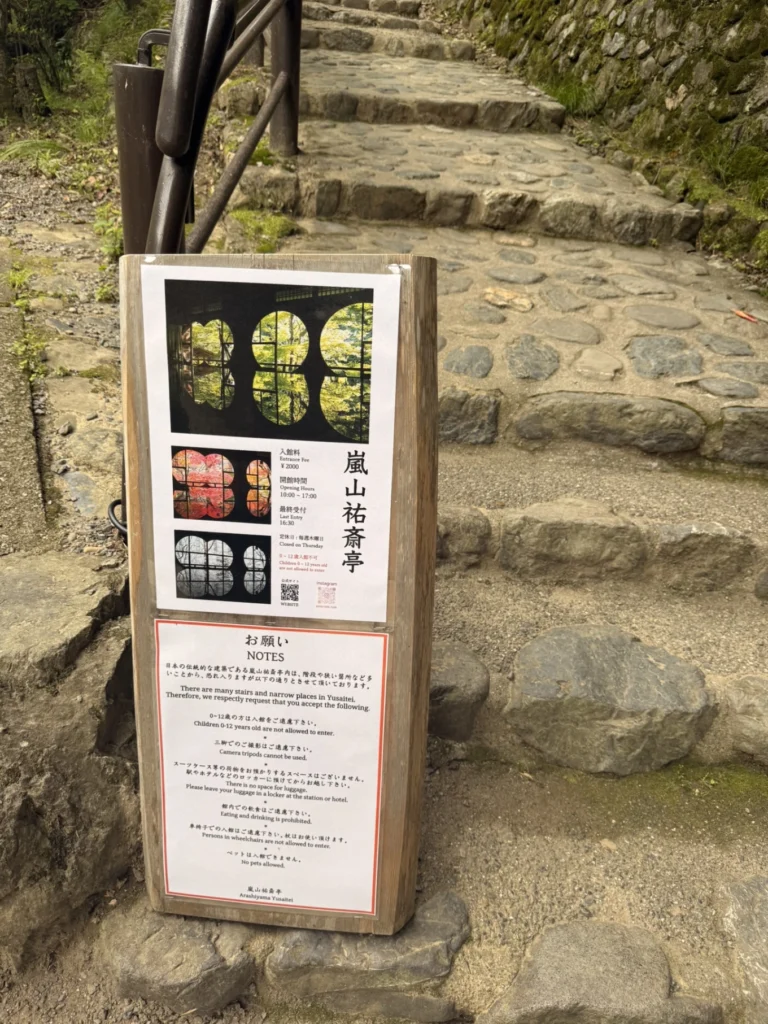
You probably know Arashiyama best from Instagram or Pinterest. The perfectly framed images of circular windows with views of bright red maples trees, reflections on water, and colorful silk scrolls blowing in the wind? Those pictures were most likely taken from Arashiyama Yusai-Tei (嵐山祐斎亭).
We visited Arashiyama Yusai-Tei on our most recent trip to Kyoto and had been dying to see it. Popular. Crowded. Like much of Kyoto, those are words that can easily describe this famous area. But Yusai-Tei isn’t your typical tourist destination.
After exploring the historic villa for almost two hours taking photos in every room and just people watching over the Katsura River, we saw why Yusai-Tei is one of the most photographed attractions in Kyoto.
There’s a stark contrast between visiting popular temples in Kyoto that may have crowds at various times of the day versus Yusai-Tei. This isn’t just a place to add to your sightseeing checklist. Arashiyama Yusai-Tei offers visitors an experience like no other by seamlessly blending traditional Japanese architecture with nature, art, and lighting.
Wondering if Arashiyama Yusai-Tei is worth the ¥2,000 entrance fee? Is it something you should add to your Kyoto itinerary? Here’s our honest review from our first visit.
- Quick Facts About Arashiyama Yusai-tei
- What is Arashiyama Yusai-tei?
- How to Get to Arashiyama Yusai-tei
- First Impressions
- A Hidden Garden Before You Even Enter
- The Beautiful Gardens Overlooking the Katsura River
- More Than Just an Instagram Spot
- The Famous Water Mirror Room
- Photographing the Reflection
- The Circular Windows Everyone Comes For
- A Different View From Every Room
- Contemporary Art Meets Traditional Architecture
- The Riverside Veranda
- Photography Tips for Visiting Yusai-tei
- Is the ¥2,000 Admission Worth It?
- Best Time to Visit Arashiyama Yusai-tei
- Things to Know Before Visiting
- Nearby Attractions to Combine With Yusai-tei
- Who Should Visit Arashiyama Yusai-tei?
- Frequently Asked Questions
- Our Honest Verdict
Quick Facts About Arashiyama Yusai-tei
| Information | Details |
|---|---|
| Attraction | Arashiyama Yusai-tei (嵐山祐斎亭) |
| Location | Arashiyama, Kyoto |
| Admission | ¥2,000 per adult |
| Opening Hours | 10:00 AM – 5:00 PM |
| Last Entry | 4:30 PM |
| Closed | Thursdays |
| Visit Duration | 45–90 minutes |
| Best Time | Early morning or weekday afternoons |
| Reservations | Recommended during peak autumn season |
What is Arashiyama Yusai-tei?
Simply known for its iconic cylindrical windows, Arashiyama Yusai-Tei holds a deeper history than most visitors are aware of.
Constructed in the Meiji Period over 150 years ago, Yusai-Tei was originally built as a ryokan facing the Katsura River. Nobel Prize winning author Yasunari Kawabata was known to stay at this villa while drafting parts of his famous book The Sound of the Mountain. Standing amidst the wooden interiors of Yusai-Tei gazing out at the mountainous horizon, one can see how he may have found inspiration here.
Now owned by textile artist Yusai Okuda, the interiors of the villa are adorned with his world-renowned Yume-Kourozome dying technique. Contemporary Japanese art seamlessly compliments the historic architecture of Yusai-Tei.
When renovating the villa, Yusai made sure to maintain the ambience of the original structure. Yusai-Tei is now home to one of Kyoto’s most Instagrammable settings.
How to Get to Arashiyama Yusai-tei
Address: 6 Sagakamenoocho, Ukyo Ward, Kyoto, 616-8386, Japan
Locating Yusai-tei is surprisingly simple.
From the famous Togetsukyo Bridge, it’s literally just a five minute walk down by the river until you come across some stairs leading up a hillside.
You will probably miss it at first though as there are no giant tourist signs pointing you there. There’s just a quaint stone staircase hidden among all the trees which instantly makes you feel like you aren’t in the busy shopping district anymore.
We only passed a couple other people on our way up the stone steps when we visited.
Even just getting there gave us a sense that we were about to find something magical.
First Impressions
The moss covered stone steps leading up to the temple set the tone.
There are no massive gates to pass through, souvenir shops at the entrance, or throngs of tourists like at Kyoto’s bigger temples. The pathway meanders gently upwards tucked underneath lush maple trees until you arrive at the graceful wooden entrance gate.
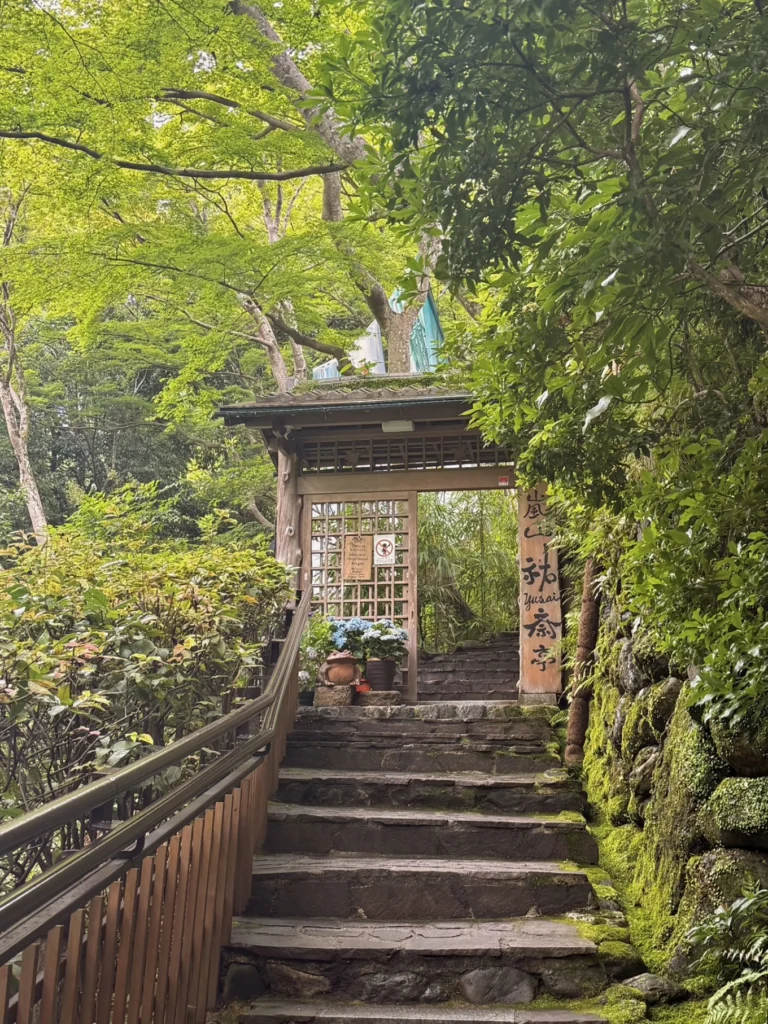
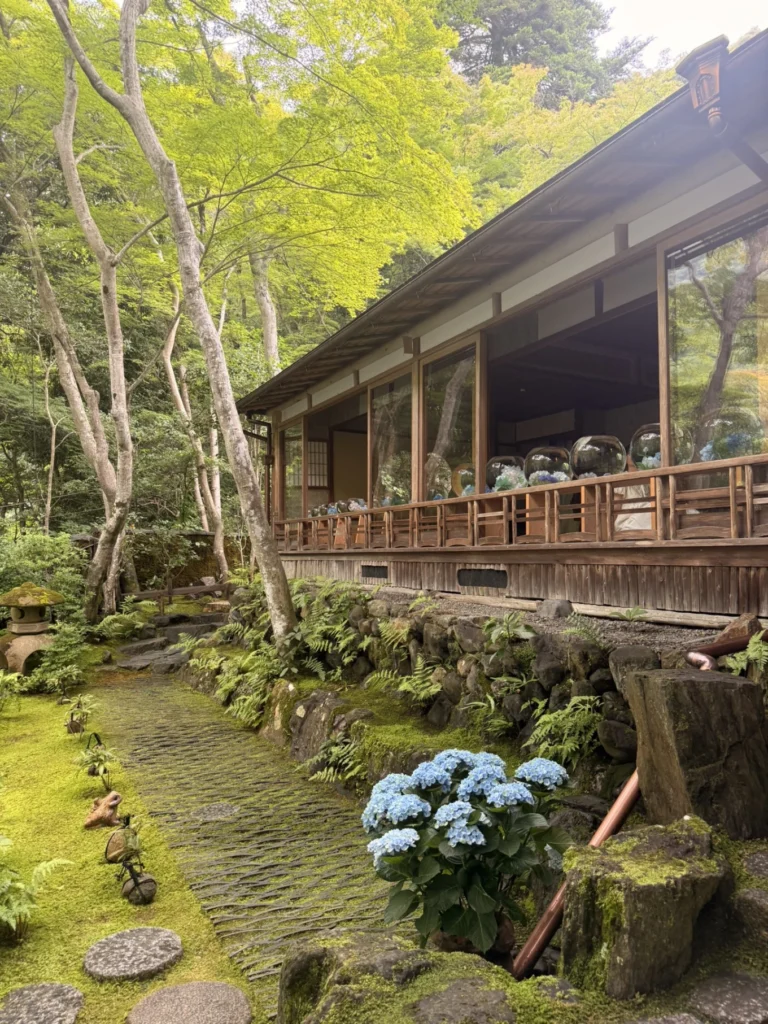
Early summer brings beautiful blue hydrangeas that dot the front path, offering a pop of unexpected color amongst the faded wood and mossy stone walls.
I felt like I was entering someone’s private mountain home rather than a place people traveled to see.
We really enjoyed the calm atmosphere.
Even before stepping foot inside the building, visitors hushed their conversations. Cars were replaced with chirping birds and the surrounding forest encouraged everyone who passed through those gates to slow down.
For us, this moment was one of our most relaxing times in Kyoto.
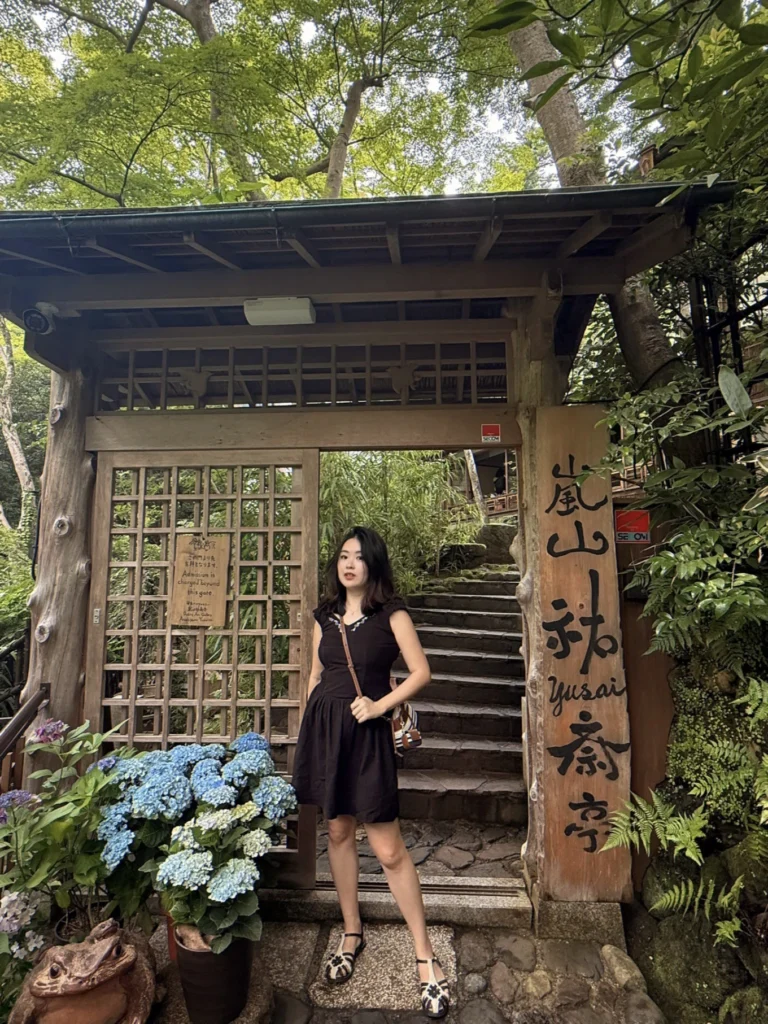
Heading into the villa. Stop for a moment before going through the entrance.
Enjoy strolling through the landscaped garden.
The hydrangeas blooming by the entrance were gorgeous when we visited. Pale blue flowers against lush green maple tree leaves was a delightful combo.
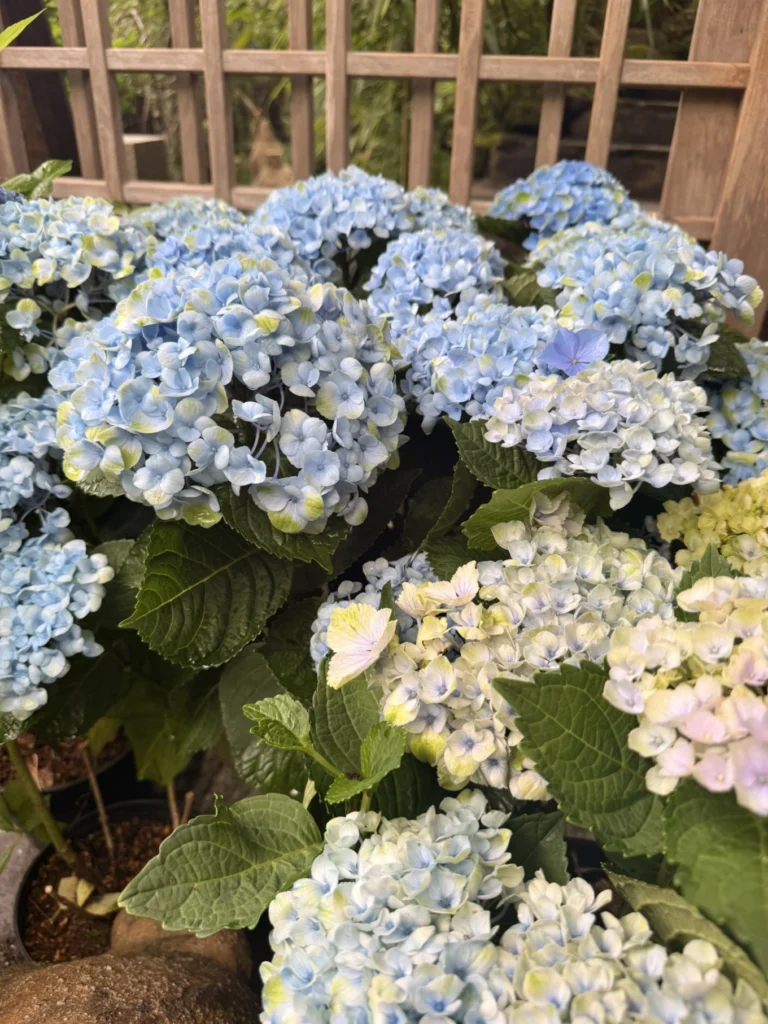
As you head downhill towards the villa you can also look down towards Arashiyama. It’s one of those spots many people pass without taking notice and can be great for photos with less people.
Not like those busy spots where tourists run from photo spot to photo spot.
Yusai- tei lets you meander. There are no trails. There are no guided paths.
Guests can roam around at their leisure. You’ll discover small nooks that show you something different each season.
The Beautiful Gardens Overlooking the Katsura River
Our favorite outdoor space was easily the riverside garden.
As we exited the building you are greeted with row after row of flowering hydrangeas cascading over the dense forest that lines the Katsura River.
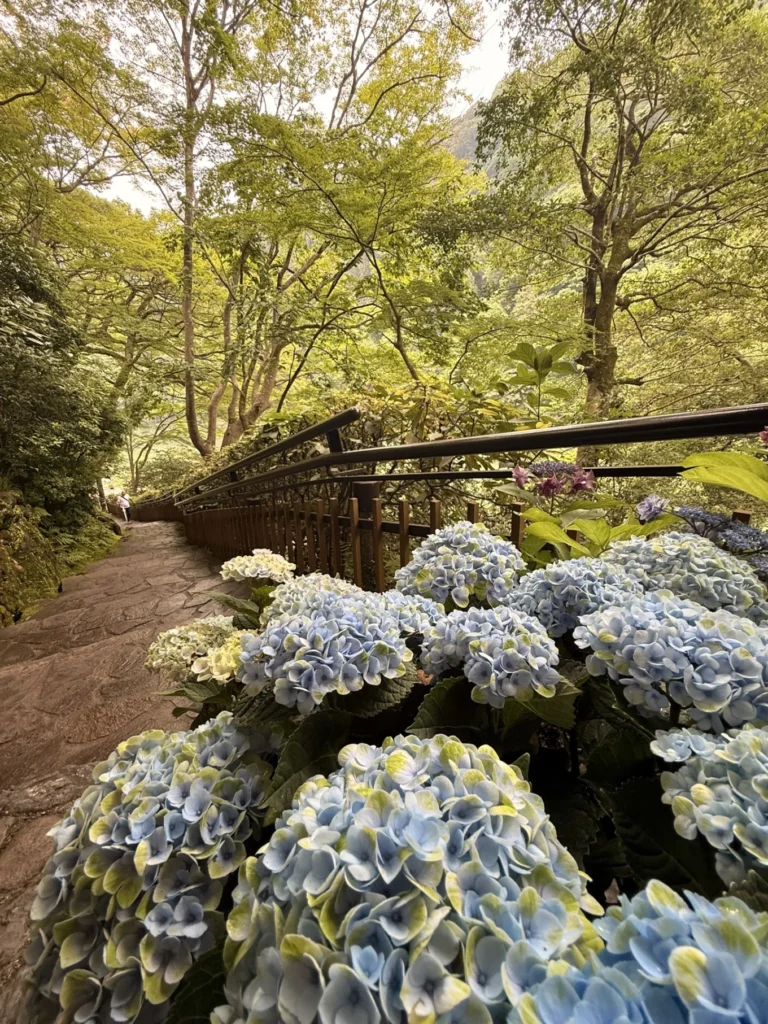
Everything seemed so tranquil.
No annoying tour groups. No souvenir shops. No incessant loudspeaker announcements. Just the swishing of maple leaves in the wind.
The moss garden really made the entire compound feel ancient.
You’ll even forget you care about photography because every few steps you just have to stop and take in the view.
The riverside garden is also the perfect way to kick off your exploration of Yusai Okuda’s textile artwork.
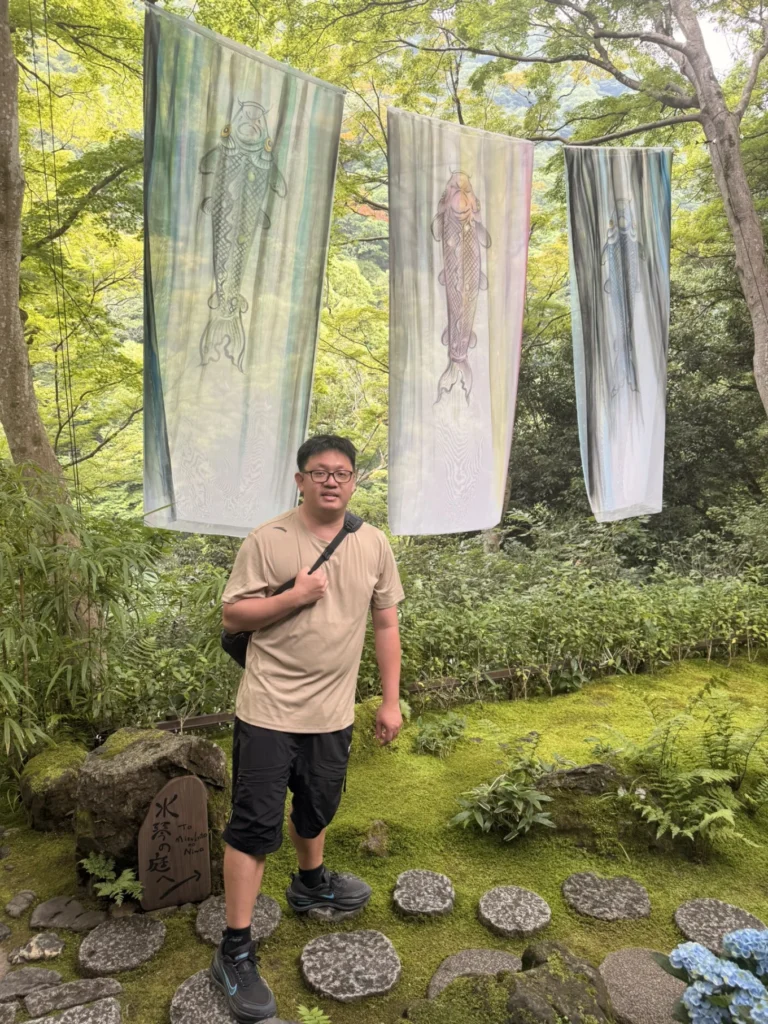
Gorgeous flowing sheer silk screens adorned with koi fish float above the moss garden creating this really interesting juxtaposition between traditional Japanese gardens and modern art.
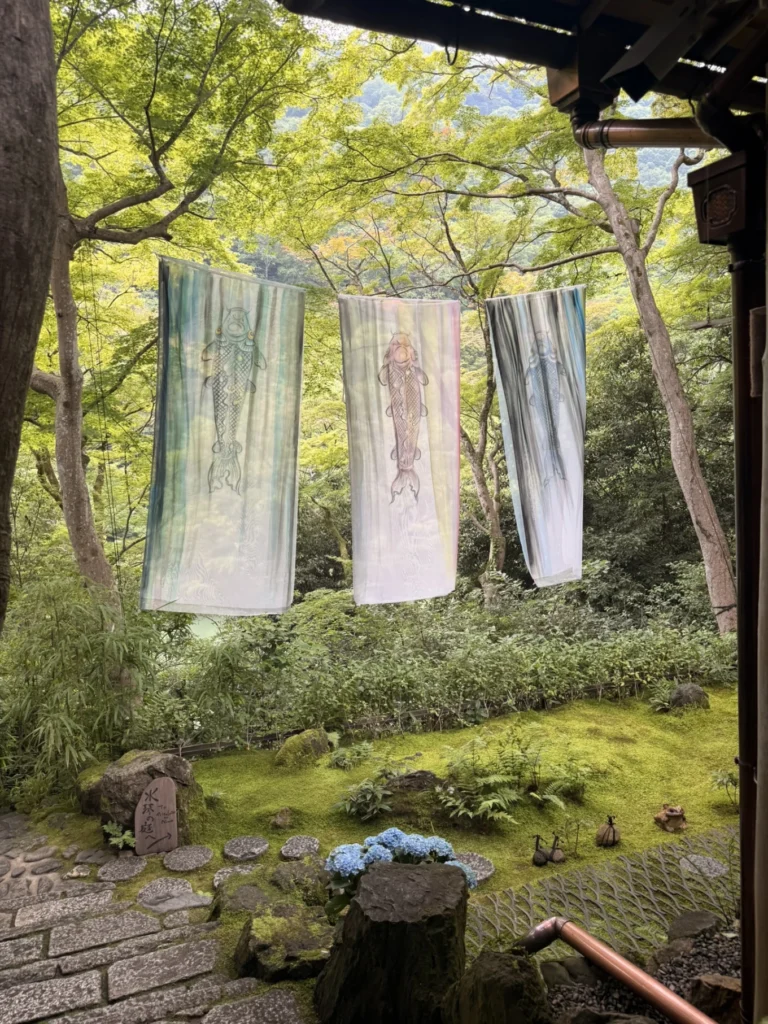
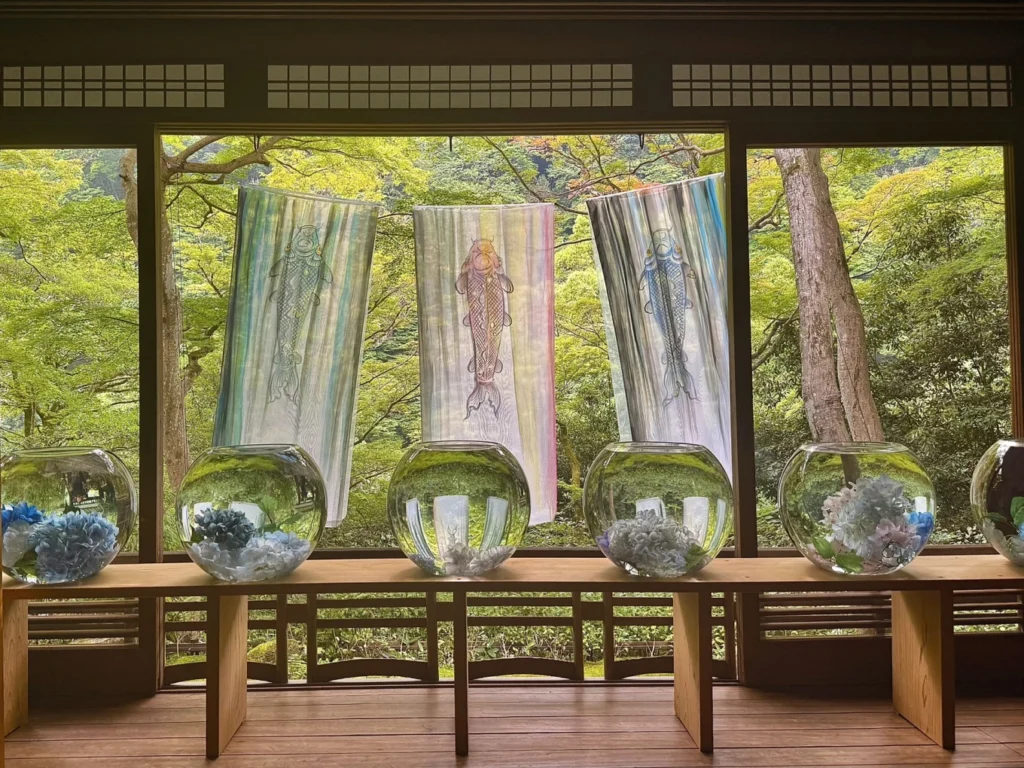
The textiles take on a life of their own as sunlight filters through the dyed silk and they almost look like they’re hovering amongst the trees.
It’s truly one of a kind installation we’ve seen anywhere in Kyoto.
More Than Just an Instagram Spot
Before going, we were sceptical about Arashiyama Yusai- tei. Was it just another Instagram gimmick?
Our minds were changed once we visited.
Sure, each room is photo-ready.
But Yusai-tei doesn’t feel like a space built just for social media likes.
The historic building has been well preserved, guests are invited to soak in the serene atmosphere and the art enhances the architecture rather than taking centre stage.
Instead of scrambling for the perfect picture, we found ourselves sitting and enjoying the view for minutes.
We ended up slowing down and that became one of our favourite Arashiyama moments.
The Famous Water Mirror
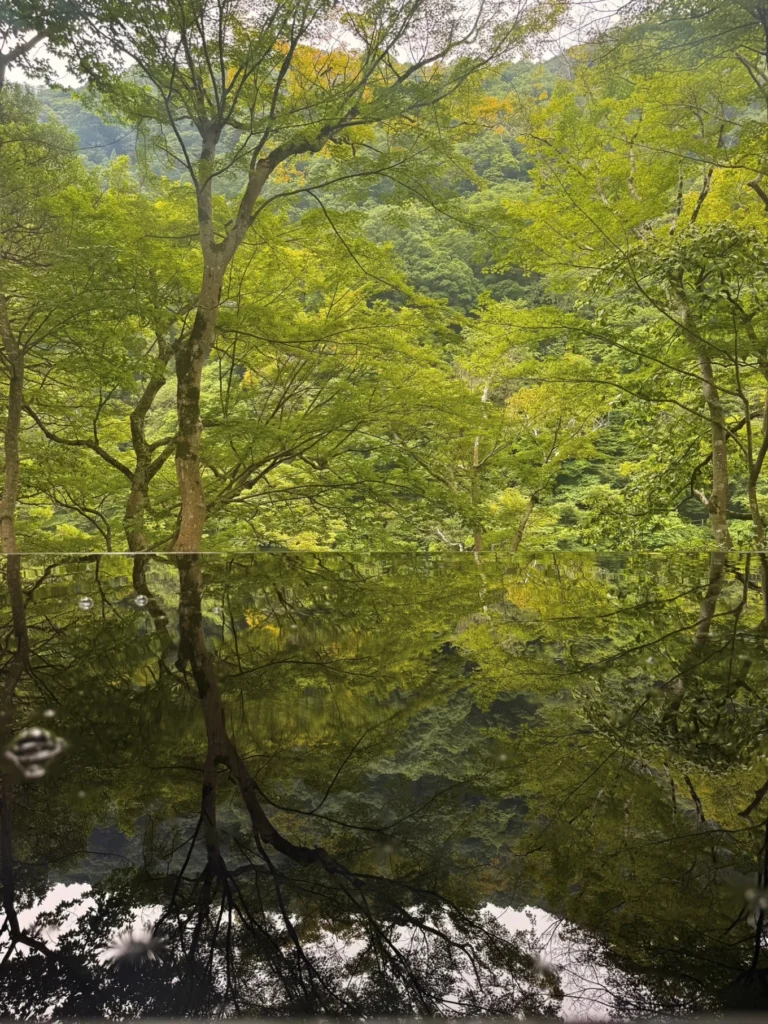
There is a good chance you’ve scrolled past Arashiyama Yusai-tei’s Instagram photo, but what caught your attention was the photo of the water mirror scenery concept.
If not… it did for us.
By timing it just right while the maple trees outside covered the windowpane, the trees outside reflect creating what looks like an endless forest floor beneath you.
The reflection here is natural versus a plain mirror installed for the photo opp, so the trees shift every minute with the clouds and subtle movements. Every picture will look different.
We ended up spending almost twenty minutes mesmerized by how the scenery shifted every few seconds.
This was easily a one of those perfect moments while traveling where your real life photos turned out better than what you seen online.
Photographing the Reflection
Staff also gently requests visitors not to touch the glass.
To maintain that seamless mirror like effect for everyone.
Ensuring that fingerprints will not ruin anyone’s chance of taking that beautiful picture.
Through our own experience, we found taking photos low to the ground with both the window and reflection taking up the entire frame gave us the best results.
For couples traveling together, the room also makes for one of Kyoto’s most romantic silhouette photos.
Taking advantage of the bright green backdrop that the maple leaves provided us, Nicole’s silhouette became one of our favourite pictures we took throughout our entire Japan trip.
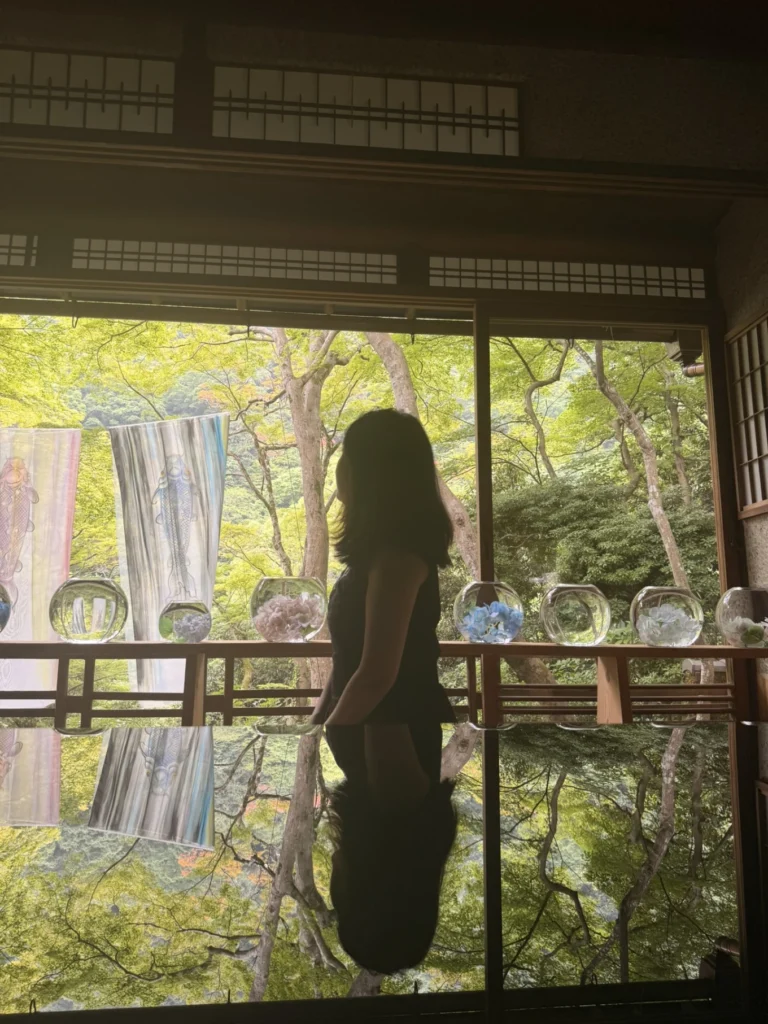
Having the reflection underneath her helped give the photo twice as much depth. It was peaceful and dream-like.
Another benefit of visiting here is that unlike other popular attractions, where you spend your whole time waiting for people to get out of your shot; everyone inside Yusai-tei waits nicely for their turn.
Round Windows Room Everyone Comes For
Leaving from the mirror room, we finally arrived at our most anticipated attraction of the day.
The infamous marumado aka circular windows.
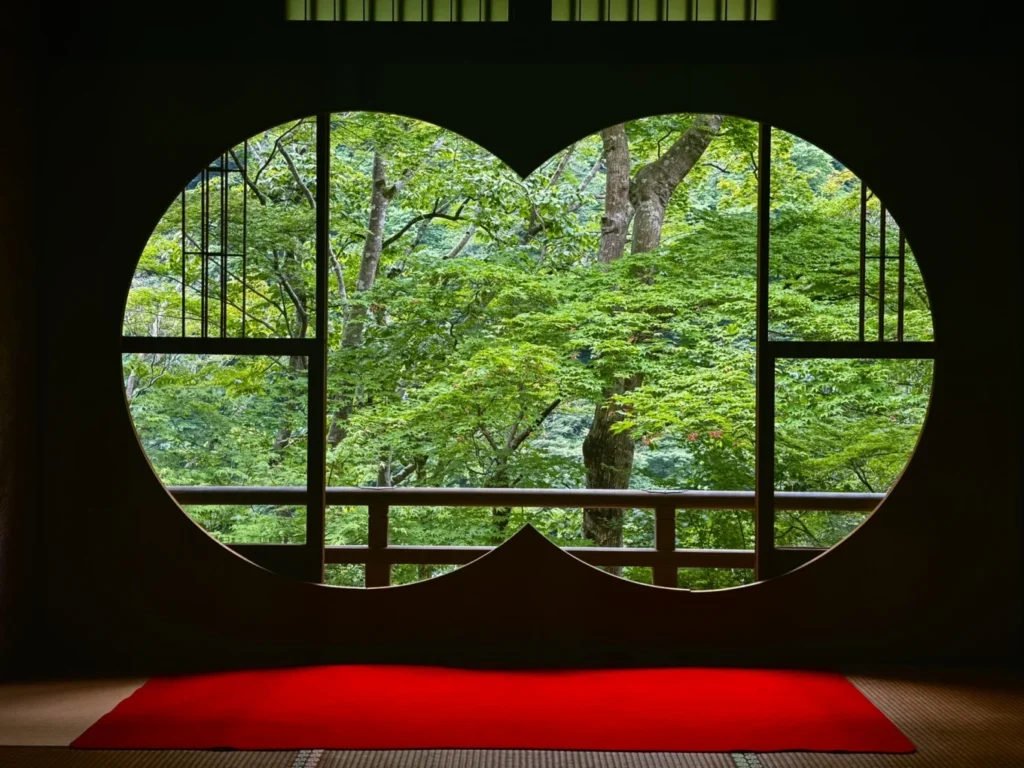
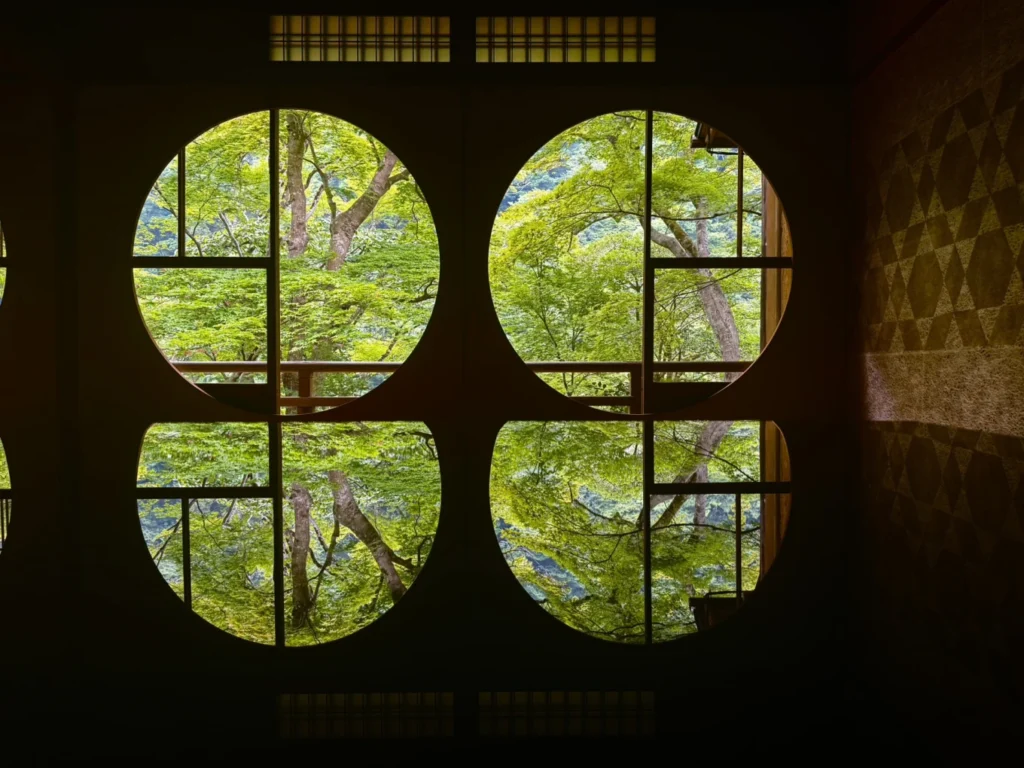
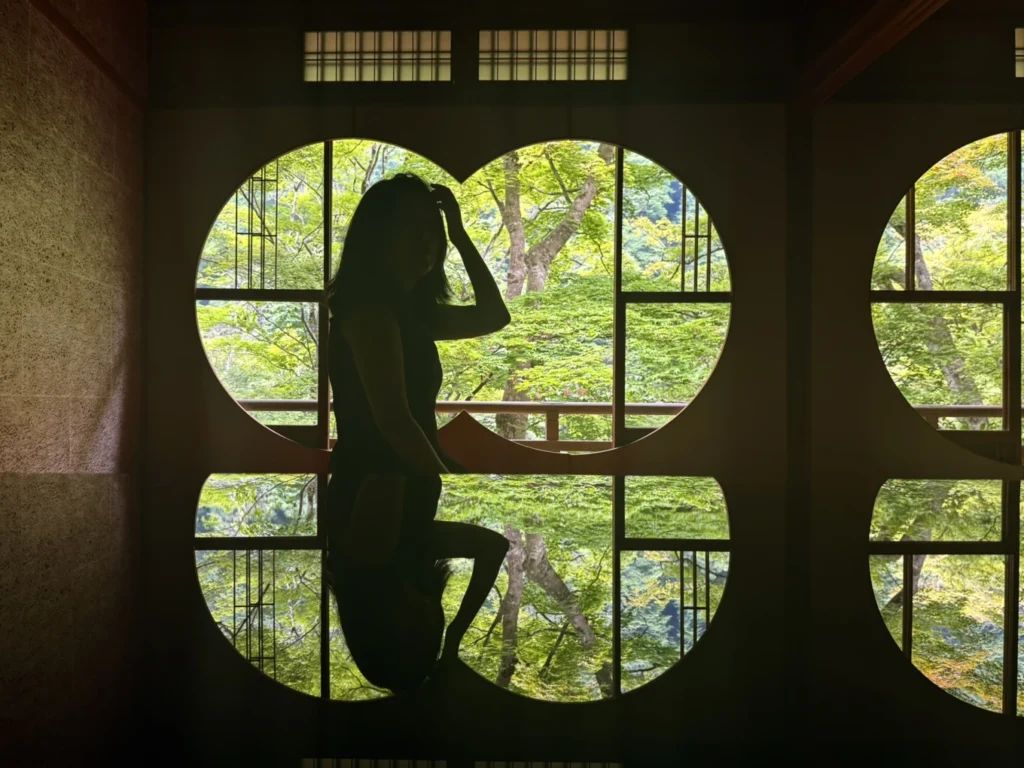
They’ve now become one of Kyoto’s most iconic spots for photographers; regularly rivalled against similar windows at nearby Rurikoin Temple.
But we actually liked Yusai-tei better.
Instead of framing manicured gardens, these windows gaze out upon wild forests which hug the Katsura River.
It feels untamed. Raw.
Every tree branch, maple leaf and season weaves itself into a living masterpiece.
Our visit in early summer showed layers upon layers of fresh green maple leaves stretching across the mountainside.
Sure autumn will turn it into a sea of fire, but I don’t think I could ever get tired of that fresh, vibrant green.
A Different View From Every Room
One thing that we enjoyed about Yusai-tei was that no two rooms are identical.
Instead of offering the same view multiple times, each room offers a slightly different perspective of the area around it.
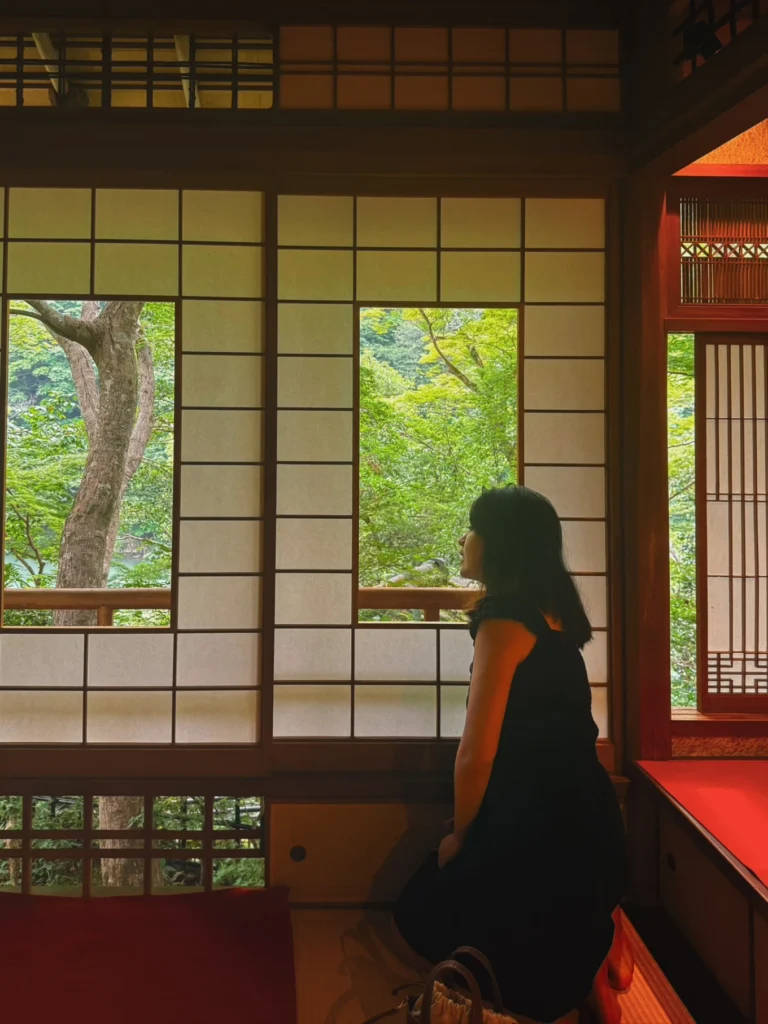
Some rooms had shoji windows.
Others had balconies that faced out over the river.
Still more just invited you to sit on the tatami mats and take in the view.
My favorite room framed the trees with square shoji doors instead of round windows.
The crisp geometry of the traditional Japanese building stood out against the curves of the forest.
It made us remember that visiting Yusai-tei isn’t just about taking photos. It’s about observing how Japanese buildings are designed to frame nature.
Contemporary Art Meets Traditional Architecture
One of the other things we loved was how organic Yusai Okuda’s artwork felt.
Instead of plastering every wall with paintings or statues, the artwork is understated.
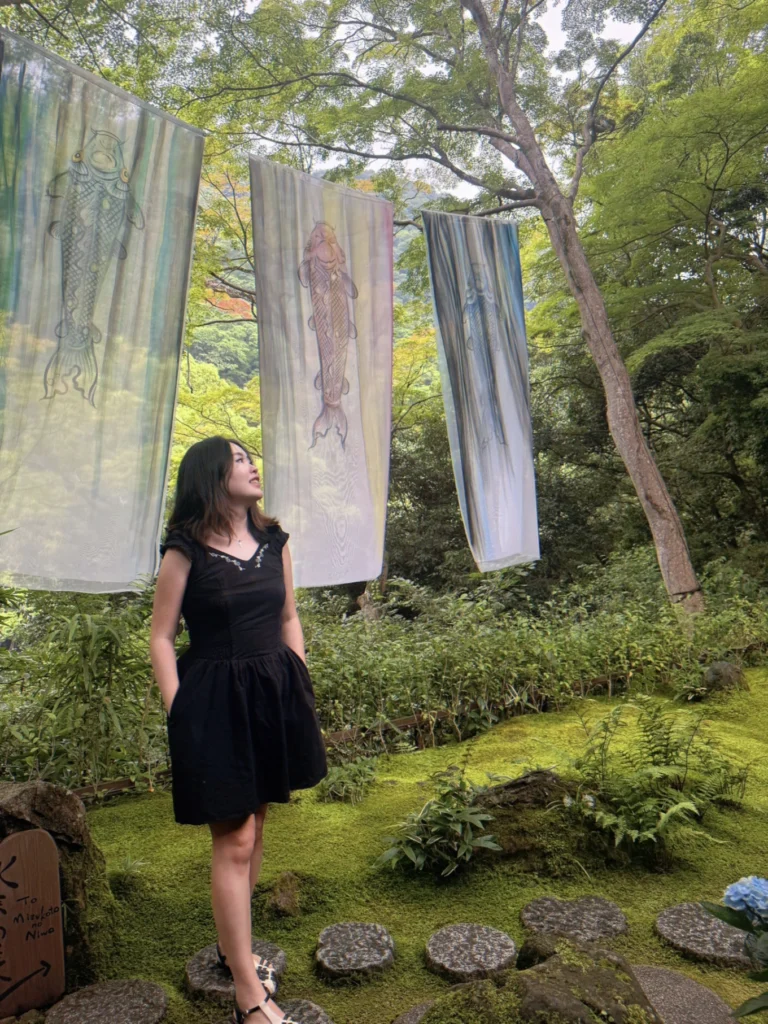
Our favourite bit was these sheer silk panels that draped outside of the porch.
Emblazoned with beautiful koi imagery, the silk swayed lightly in the wind while framing the mountains behind them.
Light filtered through the silk, causing the colours to constantly change.
From different angles the koi would either vanish or reappear behind tree branches.
It wasn’t overbearing, the installation felt tranquil.
Instead of distracting from the view, it complemented it.
We ended up taking a lot of photos of this area because every little shift in the wind gave you a new picture.
The Riverside Veranda
One of the less visited areas of the villa is the open veranda that looks out onto the Katsura River.
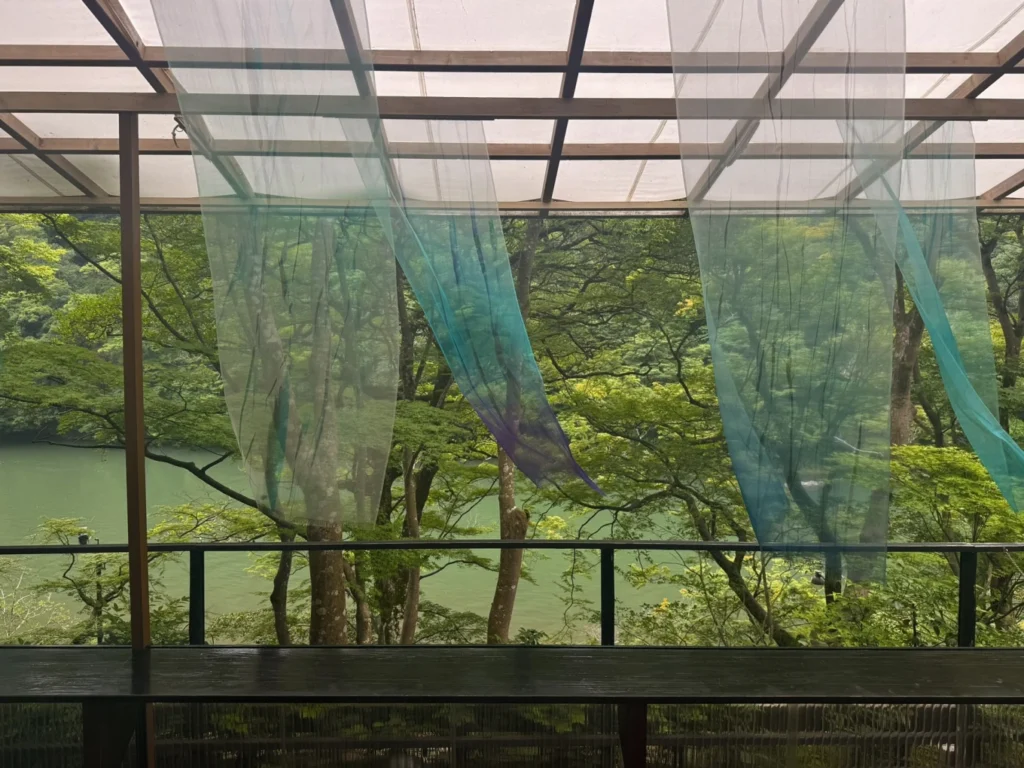
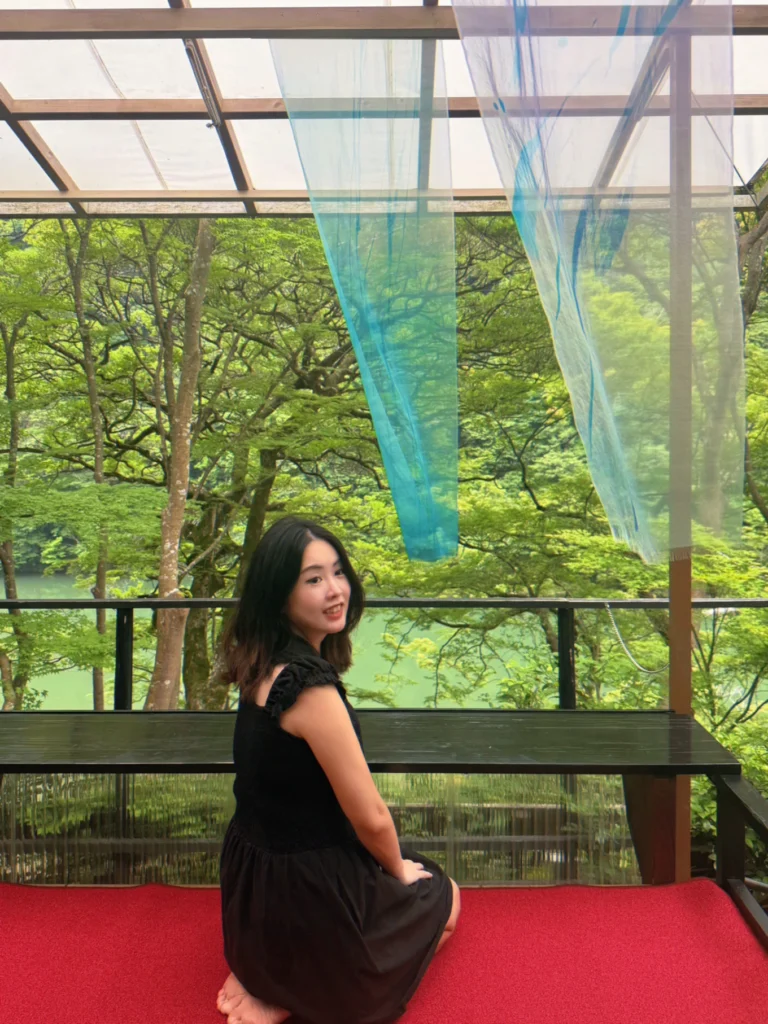
Tourists were few and far between here compared to the famous indoor rooms.
That’s how we benefitted.
Plush seats by the river front were adorned with flowing fabric canopies made of sheer blue material.
The movement of the fabric, river, and rustling of nearby maple trees was oddly mesmerizing.
We didn’t feel rushed to go find the next photo opportunity. Instead, we sat for a few minutes soaking it all in.
This moment became one of our favourite memories from our visit. Sometimes they aren’t the pictures you take, but when you put your camera down.
Photography Tips for Visiting Yusai-tei
If photography is one of your main reasons for visiting check out our few tips we learned from visiting.
Visit close to opening time. Although the crowds are regulated you can’t avoid the infamous mirror room being super busy.
Opt for darker colors if photographing reflections. Black, navy or earth tones popped so nicely with the vibrant green maple leaves and didn’t create a nasty reflection.
Use a wide-angle lens if shooting with a camera. The rooms are actually on the smaller side so you can fit more of the architecture and scenery in each photo.
Slow down.
The villa isn’t that big so to rush through would defeat the purpose. We ended up spending about 90 minutes here and we never felt like we were rushing.
Take your time, enjoy the relaxing vibes and that’s what makes it so fun to visit.
Is the ¥2,000 Admission Worth It?
Don’t let the price deter you, we almost didn’t go ourselves.
We hesitated at the ¥2,000 entrance fee at first as we were used to Kyoto temples only charging a couple hundred yen at the most.
Once we saw Yusai-tei ourselves, we had a change of heart.
When you pay the admission fee, you’re not just paying to go inside a temple.
You’re paying to go inside a gorgeous private villa that’s been impeccably preserved, experience rotating textile art displays, stroll peaceful gardens, and photograph some of Kyoto’s coolest locations.
Another thing we loved about Yusai-tei was that they keep tour groups small enough where you never feel rushed or crowded inside the buildings.
Every visitor has room to roam around and admire the interiors.
We spent a decent amount of time here and ended up taking a lot of our favorite Kyoto pics at Yusai-tei. So we felt it was well worth the price.
You might even consider it to be among the best ¥2,000 you spend if photography is a big part of your Japan experience.
Best Time to Visit Arashiyama Yusai-tei
Arashiyama Yusai-Tei is one of our favorite places to revisit in Kyoto because it looks completely different with each changing season.
We knew Arashiyama was stunning in autumn, with trees full of bright red maple leaves. We didn’t expect it to be so beautiful when we visited in early summer though!
While autumn’s fiery colors are swapped out for countless shades of fresh green leaves through every window, Yusai-tei is equally serene and refreshing. It feels worlds away from Kyoto’s crowded temple district.
Here’s what you can expect if you visit Yusai-Tei during each season of the year.
Spring (Late March – April)
Arashiyama is covered in cherry blossoms during spring, though Yusai-tei is better known for it’s maple trees rather than sakura.
The gardens around Yusai-tei become greener and fuller, and temperatures should be comfortable for visiting and walking around.
As with any sakura season in Japan, prepare for bigger crowds during this time of year.
Early Summer (June – July)
We visited Yusai-Tei during early summer, and we couldn’t have asked for better weather.
The maple leaves were bright and full of life. Countless shades of green covered every room, and fresh hydrangeas around the entrance garden made for pops of color.
The textile displays sway slowly in the summer breeze, creating a soothing atmosphere that makes you forget about the summer heat.
The best part about visiting Yusai-Tei during this time of year?
Lesser crowds.
Unlike some of Kyoto’s other tourist attractions, you won’t have to wait long to snap the perfect photo.
Autumn (November)
Yusai-Tei is busiest during November. Everything you’ve heard about autumn in Japan applies here.
Colors are brighter. Crowds get bigger. You should try and visit right when it opens and buy your tickets ahead of time.
The circular windows surround you with shades of red. The gardens are stunning, and the reflection table is one of Kyoto’s most photographed locations.
Winter
Winter is quieter. Calmer.
You lose the bright colors of Yusai-Tei, but dusting snow on the garden brings out a whole new atmosphere that photographers go crazy for.
Things to Know Before Visiting
A few house rules before you go:
- Kids under 12 years old are not allowed inside. This helps keep the villa peaceful.
- Not allowed to enter with wheelchairs. (There are no rooms to temporarily store wheelchairs.) Walking sticks are permitted.
- There is no Yusai-Tei parking lot.
- Large suitcases should be stored at your hotel or at the station lockers. There are narrow wooden pathways that lead to your room, and they are not friendly to rolling suitcases.
- Tripods and professional photography gear are not allowed. Most people take photos with their phones or small handheld cameras.
- In the event of a disaster or for reasons related to the safety of customers that Yusai-Tei deems it necessary to close the facility, Yusai-Tei will temporarily close the gate. If Yusai-Tei is closed, we will refund the entire amount of those who paid in advance.
Rule number one might just be… don’t talk loud. There are no lines at Yusai-tei filling with people trying to see who can talk the loudest. People will naturally talk quietly and you’ll notice that everyone is quite respectful.
We really enjoyed that part 🙂
Nearby Attractions to Combine With Yusai-tei
Arashiyama Yusai-tei is located directly next to the Katsura River, so it is easy to visit multiple popular spots in Arashiyama together.
Here is one possible itinerary:
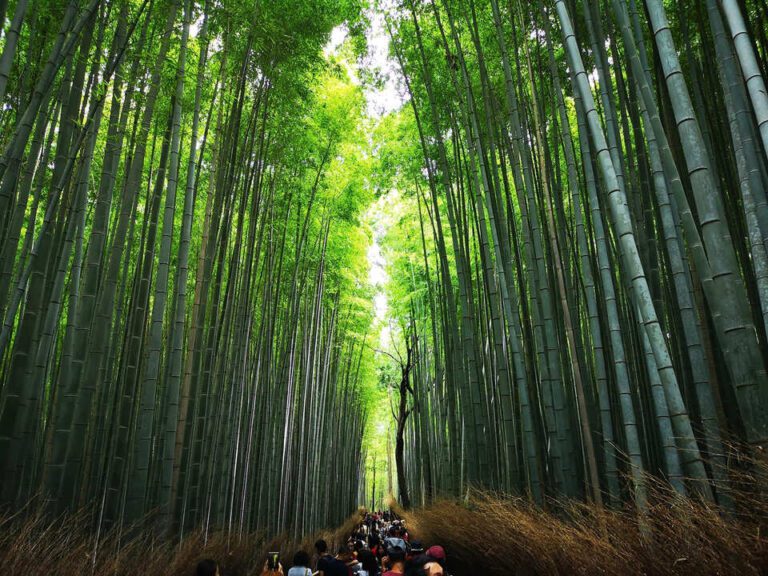
- Begin at Arashiyama Bamboo Grove early in the morning
- Head to Tenryu-ji Temple
- Walk over Togetsukyo Bridge
- Visit Arashiyama Yusai-tei
- Have lunch along the river
- Finish at Kimono Forest and Arashiyama Station
With only about an hour and a half needed to visit Arashiyama Yusai-tei, you can easily squeeze it into one full day in Arashiyama.
Who Should Visit Arashiyama Yusai-tei?
Yusai-Tei is perfect for:
- Photography enthusiasts.
- Fans of traditional Japanese buildings.
- Explorers looking for Instagrammable spots.
- Anyone who wants to see unique things outside of the main tourist areas.
- Japan trip enthusiasts who love Japanesque gardens.
- Anyone with lots of time in Arashiyama.
Avoid if:
- You’re visiting with kids under the age of 12.
- Only have a few hours in Arashiyama and don’t want to miss out on seeing Kyoto’s most popular attractions (such as the Bamboo Grove and Tenryu-ji Temple).
Frequently Asked Questions
Is Arashiyama Yusai-Tei worth visiting?
Yes. If you’re into photography, Japanese architecture, or tranquil gardens, this is one of Kyoto’s most worthwhile hidden gems. While ¥2,000 admission is more than you’ll pay at most temples, the experience feels worlds more exclusive.
Do I need reservations?
For most of the year, simply arrive and buy tickets if there’s availability.
Note: During peak foliage season, advanced reservations online are STRONGLY recommended due to popularity.
How much time should I plan to spend here?
45 minutes to 1 hour 30 minutes is typical.
Photography buffs may want to linger for two hours or more to capture all the rooms.
Is Yusai-Tei child friendly?
Unfortunately not. Guests under the age of 12 are not allowed inside Yusai-Tei.
Can I take pictures?
Yes! Photography is permitted throughout most of the villa. Just be sure to mind your surroundings and follow directives from staff.
Tripods and bulky photography equipment are not permitted.
Our Honest Verdict
Before visiting Arashiyama Yusai-Tei, we had questioned whether it was truly worth going based on the information we had seen online. Was it just another Instagram photo spot that wouldn’t live up to expectations in person?
We’re happy to report that this was not the case at all.
The photography opportunities at Arashiyama Yusai-tei are truly unbelievable.
But more than that, it is the atmosphere. From the impeccably maintained historic wooden villa to the carefully manicured gardens, unique flow of textile artwork, reflections, and the views overlooking the Katsura River, everything just feels purposeful.
We found ourselves taking time to pause and soak in the serene environment, rather than feeling hurried to snap picture after picture.
This is something you can’t often say for other popular tourist spots in Kyoto.
Did we enjoy our visit? You bet we did.
In fact, we can’t wait to go back in the fall to see how the scenery transforms.

Arashiyama Yusai-tei Review: Kyoto’s Most Beautiful Hidden Gem (2026)