

Whenever I travel, especially across Asia, I find myself drawn to the sensory details which are the taste of street food, the architecture, the language, and yes, the smell of incense wafting from temples, markets, and traditional homes. One item that keeps catching my eye (and nose) is the incense burner. Whether in a tucked-away Kyoto temple, a Beijing antiques market, or a Balinese resort spa, these beautiful objects quietly tell stories of centuries-old traditions.
In this post, I want to take you beyond the souvenir shop and into the fascinating history and craftsmanship behind incense burners from Ming Dynasty cloisonné to elegant hanging burners found in Buddhist halls.
Whether you’re planning to explore artisan quarters, shop for cultural keepsakes, or just curious about the stories behind these fragrant companions, here’s what every traveler should know about the ancient and modern art of incense burners.
Among ancient Chinese crafts, most were shared by officials and civilians. For example, porcelain, there are official kilns and civilian kilns. Jade, both in the palace and among the people. Only one unique craft was exclusive to the palace before the Tongguang Restoration in the late Qing Dynasty, and did not enter the public. This is copper-based cloisonne enamel, also known as cloisonne.
Cloisonne Enamel: Once A Precious Palace Artifact
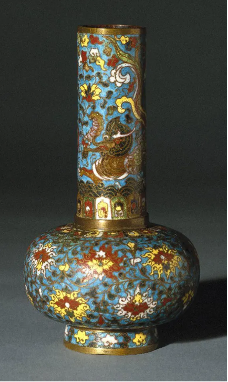
Filigree refers to the use of fine copper sheets to pinch patterns on the copper base, fill in various colorants, and then burn and grind it to become a finished product. This is cloisonné enamel. Cao Zhao’s “Ge Gu Yao Lun” in the early Ming Dynasty recorded under the entry “Da Shi Kiln”: “(Enamel) is made of copper, and the five-color flowers are burned with medicine, which is similar to the French inlay. I have seen Lucky incense burners, vases, boxes, cups, etc., used in the ladies’ boudoirs.”
Among the artifacts of the Ming Dynasty, copper is a large category. In addition to the Xuande furnace, cloisonné is also a large category.
Folk Kiln Incense Burner: Potential Market Investment Value
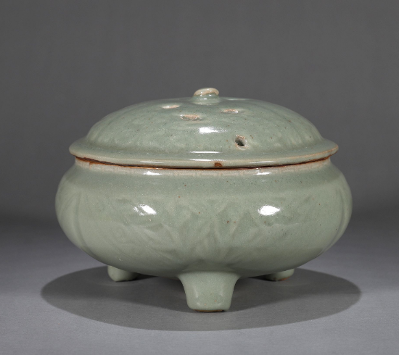
Overall, the current high prices are still the porcelain incense burners made in the five famous kilns of Ru, Guan, Ge, Ding and Jun. There are few fine products from official kilns, and the prices are high, so there are certain risks in collecting. However, folk kiln incense burners have been produced in all dynasties, and both the craftsmanship and the shape are not inferior to those of official kilns. Interested collectors may wish to choose folk kiln incense burners.
In the Ming Dynasty, Jingdezhen had a large number of folk kilns, which were the main body of my country’s ceramic kilns. The thickness of its products was not much inferior to that of official kilns. Among them, the more famous ones are Cui Gong Kiln, Zhou Gong Kiln, Hu Gong Kiln, Xiaonan Kiln, etc.
With the exploration and segmentation of the market, many folk kiln porcelain stoves that were not optimistic in the past have undergone obvious changes. For example, in recent years, the top-quality incense burners that can be seen in Europe are mainly blue and white. Europeans like the painting and color of blue and white, and mainly focus on its decorativeness, not just focusing on official kilns, while Chinese collectors take into account both practicality and decorativeness.
Porcelain Incense Burner: Price Are Rising In Recent Years
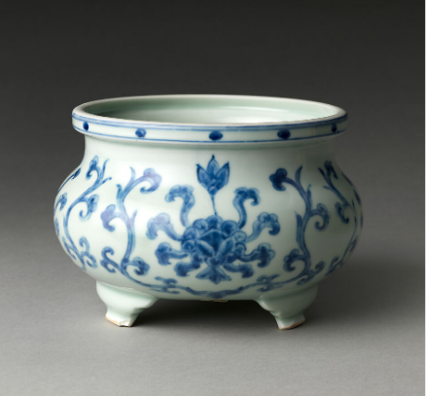
Incense burners are closely related to culture and social life. They are a carrier of interest and artistic conception. As an artifact with complex shapes and materials, they have become the new favorite of collectors nowadays. Porcelain incense burners, especially porcelain incense burners and incense boxes from the Song and Yuan dynasties, have become the focus of people’s collection. People’s understanding of incense and incense utensils has returned to the level of cultural understanding, and porcelain incense burners are also very popular.
Brass Incense Burner: Classic Texture
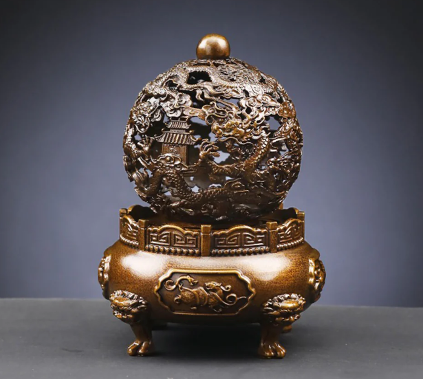
As early as in ancient times, brass was favored by craftsmen for its bright color and durable characteristics. Its color is similar to gold and exudes a luxurious atmosphere. Whether it is an exquisite incense burner made by the court or a practical incense burner worshipped by the people, brass can add a solemnity and elegance to it. Craftsmen can fully display their skills by making incense burners with brass. Through casting, complex and diverse shapes can be created, ranging from simple geometric shapes to exquisite bionic shapes. Using carving techniques, delicate patterns can be carved on the surface of the incense burner, which may be traditional cloud patterns or auspicious flowers, birds, fish and insects. Each cut tells the ingenuity of the craftsman.
Hanging Incense Burner: Smart And Elegant
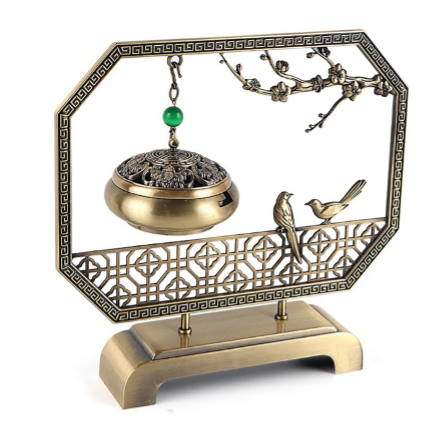
The Lucky hanging incense burner is unique in the incense burner family with its unique hanging method. Its original design may be derived from the consideration of space utilization, or it may be to create a unique incense burning atmosphere.
From a structural point of view, the hanging incense burner usually consists of a furnace body, a hanging device and a spice placement part. The furnace body has rich and varied shapes, including round, square, oval, etc. Some furnace bodies also draw on the shapes of traditional utensils, such as tripod style and gui style, and incorporate deep cultural heritage. The hanging device is the key, which may be a delicate chain or a strong rope, connecting the furnace body and the hanging point, allowing the incense burner to be lightly suspended in the air. Some of the spice placement parts are designed as openable compartments to facilitate the addition and cleaning of spices.
When in use, the hanging incense burner is more beautiful. When the smoke rises, the incense burner sways slightly, and the light and shadow interweave with the smoke, creating a dreamlike atmosphere. In ancient temples, large hanging incense burners were hung high in the hall, and the smoke was filled, adding a bit of mystery and solemnity to the solemn Buddhist hall. In the study of literati, small hanging incense burners are hung in a corner of the desk, accompanied by the fragrance of ink and books, becoming an embellishment of elegant life.
When the heavy texture of brass is combined with the smart shape of the hanging incense burner, a masterpiece with both practical value and artistic charm is born. The solidity of brass provides a stable structural support for the hanging incense burner, making it not easy to be damaged during hanging and use; the gorgeous color of brass complements the unique shape of the hanging incense burner, whether it is a classical Chinese style interior environment or a modern and simple space layout, it can become a visual focus.
Brass and hanging incense burners, one carries the heavy history of metal, the other interprets the smart aesthetics of space. Their combination is not only a fusion of material and form, but also the inheritance and innovation of traditional craftsmanship and cultural connotation. Over the long river of time, it continues to exude charming ancient charm and brilliance.
Have you spotted unique incense burners on your travels? Whether in a bustling night market or a serene monastery, I’d love to hear your stories—and if you’ve brought one home, how it’s become part of your space. Drop a comment or share a photo!

















Why Travelers Keep Falling in Love with Incense Burners: A Cultural Guide to Their History and Beauty